There’s a certain kind of silence that lingers long after a film ends. 36 Chowringhee Lane leaves you with exactly that.
Released in 1981, it was Aparna Sen’s debut directorial effort. It is named after a building where Miss Violet Stoneham (Jennifer Kendal) resided. Having stumbled upon the film about two decades back, I wondered why it was named so. After all, the story was all about Miss Stoneham. Today, I realise how her tiny home is a significant pillar that holds the plot together. There is no better day than Mother’s Day in 2021 to write about the film that traverses the life of an aged spinster who sought company in two youngsters, only to be welcomed by unpleasant realities.
A House That Holds a Life
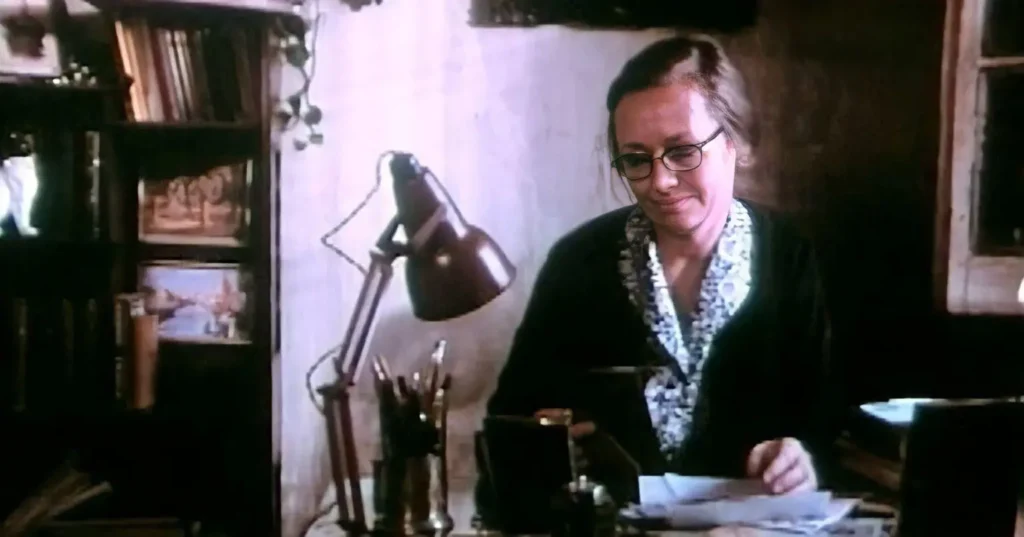
36 Chowringhee Lane is set in the early 80s. Violet Stoneham, who works as a teacher in a girls’ high school, is unmarried. She lives all by herself in a tiny two-room house in a building that is more temperamental than any of the film’s characters. There are frequent power cuts, a constantly dysfunctional lift, bickering residents, and a buzzing telephone that is placed on the ground floor. One who specialises in Shakespearean literature, it wasn’t a surprise that Violet named her sole companion, her beloved cat, Sir Toby. The film opens with a fascinating opening credit sequence that effectively chronicles the monotony that encapsulates Miss Stoneham’s routines. With her walks to the cemetery, lonely rickshaw rides, and visits to the seafood market, Aparna Sen magnificently establishes the premise with the opening stretch.
Violet does not have too many relatives who are alive or present in India. Her brother Eddie (Geoffrey Kendal) is housed in an old people’s home. Cranky and diabetic, it would have been a tough task for Violet to take care of him by herself. She visits Eddie every Thursday without fail. She feeds him his favourite chocolate biscuits, besides fetching him Archie Comics that he loves. Eddie, on the other hand, is unrelenting towards those who discarded him for better prospects abroad, one being his son, Kenneth.
A World Slowly Slipping Away
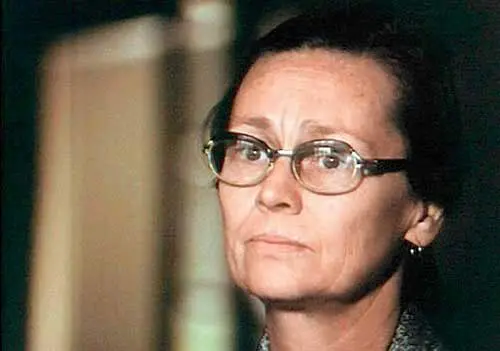
Though surrounded by enough Anglo-Indians, Violet is aware that they are unacknowledged remnants of the colonial era whose elitism is slowly diminishing. Their social standing linked to educational qualifications might still have been there, but people from the native communities were fast catching up. The first impact that she has in her immediate universe is when a young Miss Majumdar replaces her to teach Shakespeare in the higher classes. In a decision taken by Principal Mrs Swaminathan, Miss Stoneham is instructed to teach English grammar in smaller classes. With her privilege stripped off, the old woman has one less reason to be happy about her professional career. Her Anglo-Indian colleagues frequently criticise these alterations that occurred due to the change in the larger socio-economic scenario. However, Sen does not leave a chance to portray how Violet’s displacement is also a result of her inability to adapt to evolving times. Shakespeare is great fun for ninth graders under Miss Majumdar’s refreshing tutelage.
Violet lives alone. She is lonely indeed, but isn’t necessarily depressed about it. She has her share of regrets but keeps herself busy so that memories and deficiencies seldom overburden her. Violet has the company of the fluffy Sir Toby and the letters she occasionally receives from her niece Rosemary (Soni Razdan), who is now settled in Australia with her husband.
Through tiny flashbacks and conversations, Aparna Sen gives us glimpses of Anglo-Indian life in that period. Rosemary is shown to be in a relationship with a Bengali Hindu man and is all set to tie the knot. Yet, a sudden breakup, seemingly from parental opposition from the groom’s side, forces her to marry on a rebound to someone of her ilk. Upon being advised against it by her aunt Violet, Rosemary is quick with a curt rejoinder. She does not wish to live a deserted, miserable life and eventually end up in an old people’s home.
When Company Feels Like Family
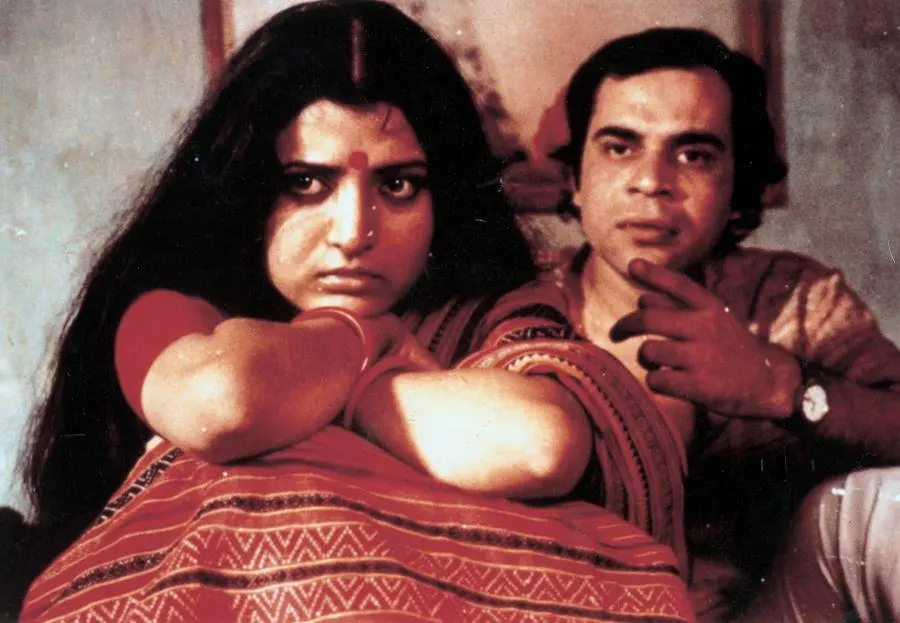
In Sen’s film, people constantly seek comfort. They desire companionship, although in different degrees or at different junctures in life. For Violet, the wish gets activated when she meets one of her former students, Nandita (Debashree Roy) and her boyfriend Samaresh (Dhritiman Chatterjee). One rendezvous leads to another, and the couple becomes frequent visitors at Violet’s apartment. With two youngsters who could well be her daughter and son-in-law filling the house with activity and anecdotes, the house finally becomes a home in a conventional sense.
Violet opens up. She makes conversations that are not formal and customary. She breaks into peals of laughter, munches on Indian street food, unpacks her rack of vintage vinyl records, and even opens a treasured bottle of alcohol, besides talking from nine to nineteen to Eddie about the duo. Violet had started going to sleep with a vivid smile on her face. But she also forgets to visit Eddie on a Thursday. She misses out on reading Rosemary’s letter in one sitting. She unknowingly soils a student’s book with an ice cream spill. Life has changed for Miss Stoneham most startlingly. If all Nandita and Samaresh desired was a daytime stopover for their sexual romps, Miss Stoneham had made them the pivots of her life.
An Illusion That Doesn’t Last
Life changes almost overnight for Violet when Samaresh bags a job. Nandita’s wealthy parents demand that the couple get married at the earliest, which they do. As they move into a plush bungalow gifted by Nandita’s parents, Violet is left with an unpleasant hangover from their absence. As is the habit, the aged teacher rings the bell at her residence in the evening, only to be welcomed by Sir Toby’s meows from the other end. Nandita and Samaresh no longer stop by. It is Violet who shows up at their plush home, only to feel too small in its grandeur. Having turned into rich socialites, the couple now mingle with the city’s crème de la crème, a gentry among whom Miss Stoneham would be a ‘fish out of the water’, as per Samaresh.
ALSO READ: ‘A Death in the Gunj’ review – Empathy is not on the family menu
The finale of 36 Chowringhee Lane is not the most rewarding if we look at it through the lens of righteousness. Miss Stoneham realises that she has been deceived. Nandita and Samaresh do not get a slice of her heart to repent over. Then again, the screenplay’s decision to avoid sermons and overt sentimentality is what primarily stuns you. Sen does not make it a point to serve justice to her protagonist. Instead, she brings to us the union of two universes. If one slowly greyed and crumbled, the other blossomed and flourished. The youngsters act as oases in the desert that Miss Stoneham’s life metaphorically was. When it dries up, the old woman is left bereft and heartbroken.
An Alternate Face of Motherhood
The beauty of 36 Chowringhee Lane lies in the fact that it is never singularly a story of Violet Stoneham’s solitude. It focuses on communities. It exposes the changing face of India. It addresses materialism and class-caste differences. Most importantly, Sen’s film depicts an alternate face of motherhood. Violet Stoneham never gave birth to Nandita or Samaresh. Her world was a far cry from theirs. Still, she cultivated a sense of belonging in their company. She showered upon them all the motherly warmth she had harboured within. If destiny had its way, Violet would have been married to her deceased boyfriend, Davie (Karan Kapoor). Staying single was a conscious choice but hiding her maternal instinct wasn’t.
In what must be the film’s most striking moment, Nandita welcomes Violet to her own house. “Shall I offer you tea in your own house?” she asks. Violet looks at the fine spread on her dining table, something someone else had done up for the first time. Her eyes well up with gratitude and love. Backed by a fine strain of veena, the frame lasts only for a few seconds, but its impact remains throughout. To her, the invaluable feeling completed the woman she was. Violet silently relished the arrangement, which was similar to what they call a family.
Craft, Music and Memory
Besides Sen’s layered screenplay, which projects motherly affection in an all-new light, one must address two of the film’s strongest foundations: the music and the cinematography. Set to tunes by the late Vanraj Bhatia, the soundtrack of 36 Chowringhee Lane is highly remarkable. If it is high on the piano in moments of loneliness, veena-led elaborate instrumental pieces form the background to its happy times. In the film’s most jovial stretch, Sen chooses to make a splash with a series of quick montages with the trio having fun all around Calcutta, with Itsy Bitsy Teeny Weeny Yellow Polka Dot Bikini by Brian Hyland becoming the soundtrack. The song’s lyrics that refer to a woman’s reluctance to shed her inhibitions is an apt allegory to Violet’s state of being. Two times in the film’s narrative, we witness the use of the famous Christmas carol ‘Silent Night’. It reflects the quietude in Violet’s life to perfection.
ALSO READ: Christianity in Bollywood – In Dire Need Of a Reality Check
The camera wielded by the late veteran Ashok Mehta etches out a series of magical frames in 36 Chowringhee Lane. Mehta makes full use of his trademark mastery of shadows. One highlight would be an awkward moment on a rainy evening where Miss Stoneham spots Nandita and Samaresh locking lips. The DOP makes sure that the shots register the turbulence in Violet’s mind while not giving them a shade of sleazy voyeurism. Another notably strong sequence is a dream that Violet sees. Having reminisced about the love of her life, Davie, with Nandita and Samaresh, Violet dreams about him in an event that combines a wedding and a funeral in the presence of her loved ones. Staying true to Sen’s surrealistic writing, the monochrome sequence, reminiscent of Luis Buñuel, delves deep into Violet’s wounded heart.
An Astonishing Directorial Debut
36 Chowringhee Lane sparks a sense of disbelief when we think of it as a director’s maiden film. The city of Calcutta might have been familiar to Sen, but one wonders about her mettle as a first-time screenwriter to delve deep into the mindscape of a single, elderly woman belonging to a marginalised community that, at the same time, was not seeking emancipation. If her characterisations are extremely detailed, she also scores high on the clash of ideologies and customs, the atmospherics, as well as technical proficiency. While 36 Chowringhee Lane continues to be one of the greatest debut fares ever produced (Shashi Kapoor), Jennifer Kendal’s central act as Violet Stoneham arguably remains the greatest female lead performance in the history of Indian cinema.
Being one of the earliest female directors in the country, making and releasing the film was said to be an arduous process for Sen, especially considering the film’s high artistic merits and absolute lack of traditional commercial elements. Then again, I would earmark this incident as an act of genesis. Aparna Sen walked so that artists such as Rima Das, Geethu Mohandas, and Anjali Menon could run.