‘Project Hail Mary’ review – A weirdly hopeful cosmic bromance
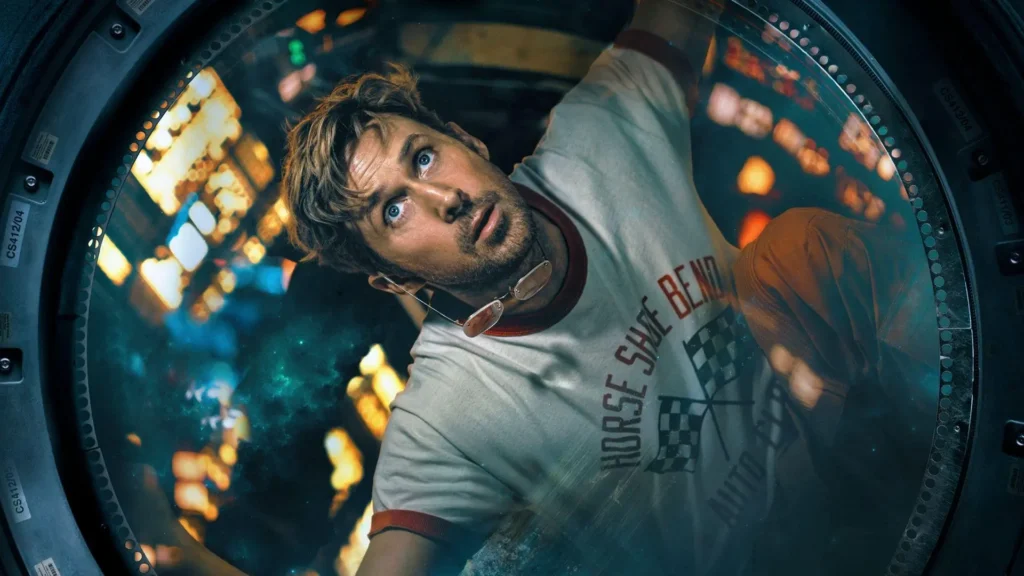
Films are never exactly about stories, but there’s nothing like a film with a refreshingly original one. As paradoxical as it might sound, Phil Lord and Christopher Miller’s Project Hail Mary (based on Andy Weir’s book of the same name) solidified this belief of mine. Its second lead is not even human, and yet I got to witness what we famously call a human story. In a world where uncertainty is the only constant, where technology and greed threaten to upset the balance of society, what we need and deserve is a ray of metaphorical sunshine, and this film, starring Ryan Gosling, provides this in spades, albeit in a very unexpected way.
Project Hail Mary begins on a spacecraft where the protagonist, Ryland Grace, played by Gosling, awakens from a coma to find that everyone else on board is dead. He takes time to even get an inkling of the fact that he is the science officer on an ambitious space expedition named Project Hail Mary.
A schoolteacher with a PhD in molecular biology, Grace is nearly hunted down by a team trying to prevent an early apocalypse. He now has a mammoth task to finish, and he wears no superhero cape while he is at it. What he does get are multiple makes of spacesuits, as he investigates the mysterious Petrova Line between Venus and the Sun, where Astrophage, a microorganism, is beginning to threaten the existence of life on Earth, and possibly on other planets too.
With a synopsis that sounds so intriguing, the film reminds us how book adaptations can be the most exciting kind of cinema, if adapted correctly. They come with coherent storylines. It is hardly about rephrasing a familiar idea differently, but rather about the newness in the material. Project Hail Mary benefits from that, as Grace’s journey is unlike anything one might imagine. Think of an unlikely friendship between him and an alien from a planet named Erid.
The creature, lovingly named Rocky by Grace, does not have a cute, stuffed toy-like appearance. Rocky is, quite literally, made up of what looks like a bunch of rocks. The major appeal of its interactions with Grace lies not in physical performance, but in the way Rocky is written and rendered (voiced by James Ortiz).
Before you realize it, a magical interplanetary bond blooms between the two, and at least momentarily, I forgot the larger cause of saving Earth. For a loner like Grace, with no immediate family or people to care for, there is suddenly someone who matters.
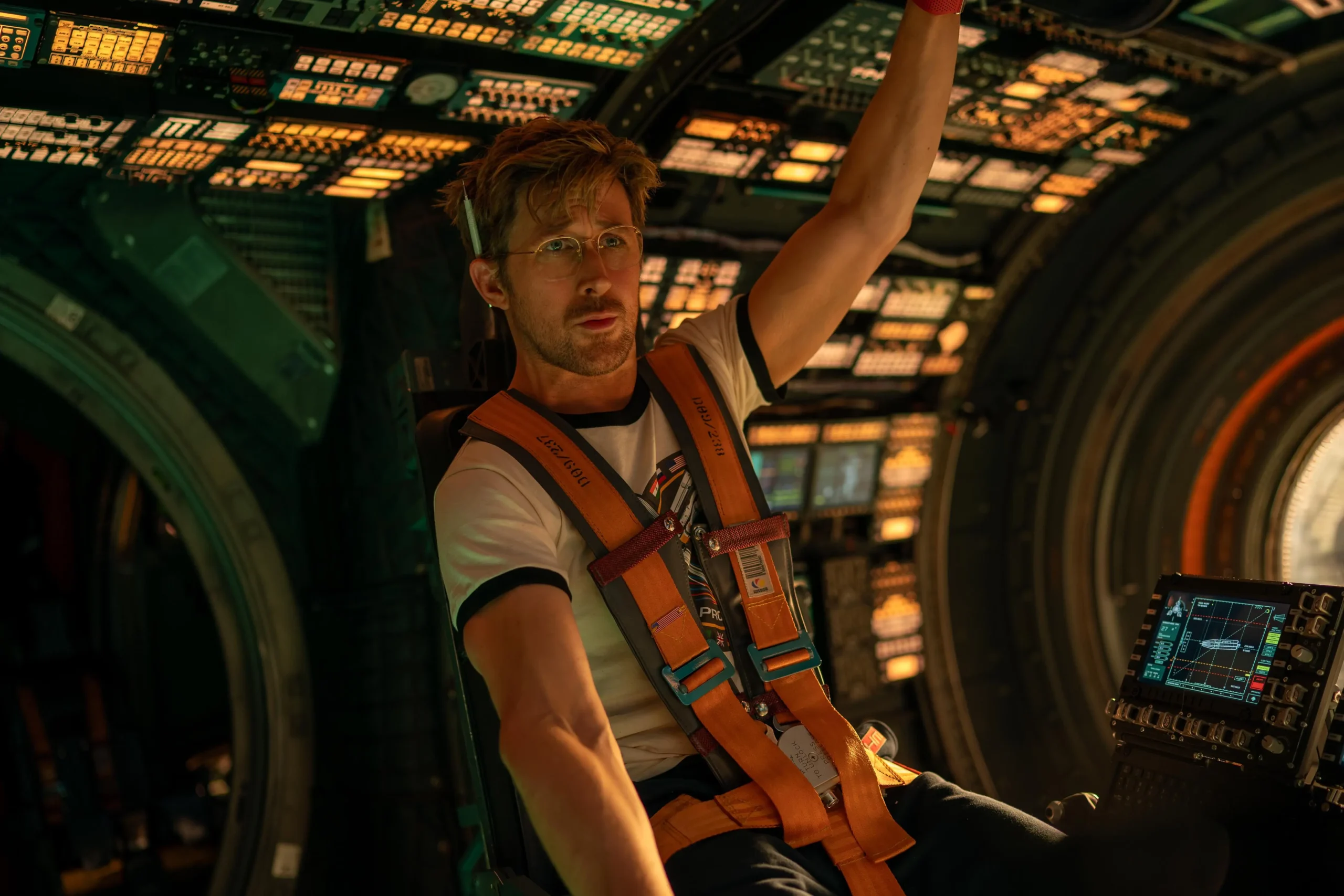
As a science-fiction feature by definition, the science in Project Hail Mary is pretty straightforward and decidedly so. It is in the fiction that Lord and Miller’s film becomes most inventive. For starters, we have this unusual bromance. On the other hand, we get a flashback of his interactions with his task force head, Eva, a quietly authoritative Sandra Hüller. The interlacing of these episodes not only prevents monotony from creeping into what is a solo mission in space but also gives the film a sense of urgency.
The screenplay additionally explores ideas such as sacrifice, not for family, not for society, not for the nation, but for the entire world. The film’s gargantuan task is to make sense of this demand. With writing by Drew Goddard that is so effective, we come to terms with it long before Grace himself does. Instead, the film made me ponder whether we, as inhabitants of this planet, with no resident IDs for living here, would stand by each other, parking our differences in nationality, culture, race, and religion to save Earth, not just each other’s kith and kin. Similarly, the narrative style, which swings between the past and the present, is seldom over-technical. It’s simple and crowd-pleasing by choice.
Project Hail Mary is filled to the brim with the need for stellar VFX. The film manages to stun us with it, but never burdens the narrative with backstories or melodrama around broken relationships and childhood trauma. And still, it manages to be a natural tearjerker. It’s the ultimate example of how, when there’s an emotional center to a film, nothing, not even the most immersive visuals and sound design, can stop you from feeling what you need to feel.
It is also fairly dialogue-heavy, and rightly so, as it humanizes Rocky to a level where the character remains accessible even to a layperson. This is also where the film falters slightly. The ice between Grace and Rocky seems to break a little too quickly, with the communication barrier being bridged in minutes. But, practically speaking, would I have enjoyed a longer “figuring each other out” process in a film of this genre? Maybe not.
ALSO READ: ‘Arrival’ review – A creative, emotionally rich science fiction drama
Towards the last act, Project Hail Mary turns into a full-blown friendship saga, where the science becomes a tad simplistic, and that is okay. We suddenly want Grace and Rocky to be alright. Everything else becomes secondary, including saving the planet. In making these portions relatable, Lord and Miller infuse the narrative with a brilliant soundscape, including Daniel Pemberton’s music and the sound work of Malte Bieler and Erik Aadahl.
I also could not get enough of Ryan Gosling’s marvelous, largely solo performance. In what is a highly physical role, the actor is in his element, playing an everyman superhero who forms an endearing friendship light-years away from Earth. In his interactions with Rocky, who does not have a traditionally appreciable physical form, we see a wildly optimistic yet not entirely impractical worldview emerge. It is an equation where a hug feels like a hug, and an act of selflessness makes us re-analyse our own values.
This way, the larger purpose of Project Hail Mary, rather, is simply to exist in divisive times such as today. The world seems to no longer care about its inevitable collapse. Wars are breaking out, and there is intolerance and economic disparity in all livable corners of the planet. The situation is further exacerbated by climate change and our reliance on technology. All of this, organically, finds a moving reflection in Andy Weir’s story.
The final scene provides hope that the world we want it to be is exactly that, if we choose to have it that way by choosing love instead of our selfish desires. Thus, Project Hail Mary becomes a token of love in an age that is slowly taking away the way we love each other.
VERDICT: ★★★★
Read the reviews of Project Hail Mary by the Film Critics Guild HERE.