We live in strange times. A story set in a Karachi neighbourhood called Lyari is Indian cinema’s biggest hit on this date. It’s neither historical nor bona fide historical fiction. Dhurandhar has rewired how mainstream audiences engage with espionage cinema and South Asian geopolitics. Naturally, Dhurandhar 2 (or Dhurandhar: The Revenge), arriving barely a quarter later, comes with immense pressure to like it. Not the lightweight peer pressure, but something far more societal. Should I dare to contradict this, my nationalistic brethren could scrutinise my integrity. This would also weaken my credibility as a critic.
So, did I like the Aditya Dhar-helmed sequel? Well, yes, Dhurandhar 2 is worth watching, but largely as an action fable, a sporadically thrilling extension of its predecessor. Do I get excused from being called a sociopath? I hope so.
A Runtime Endurance Test
I have a natural aversion to long films. Blame years of film festivals. Anything beyond two hours starts to feel like a test of character. Put me through a bad, long film, and I begin questioning life choices. Dhurandhar worked because I walked in without a clue what it was going to be. This time, expectations walk in before I do.
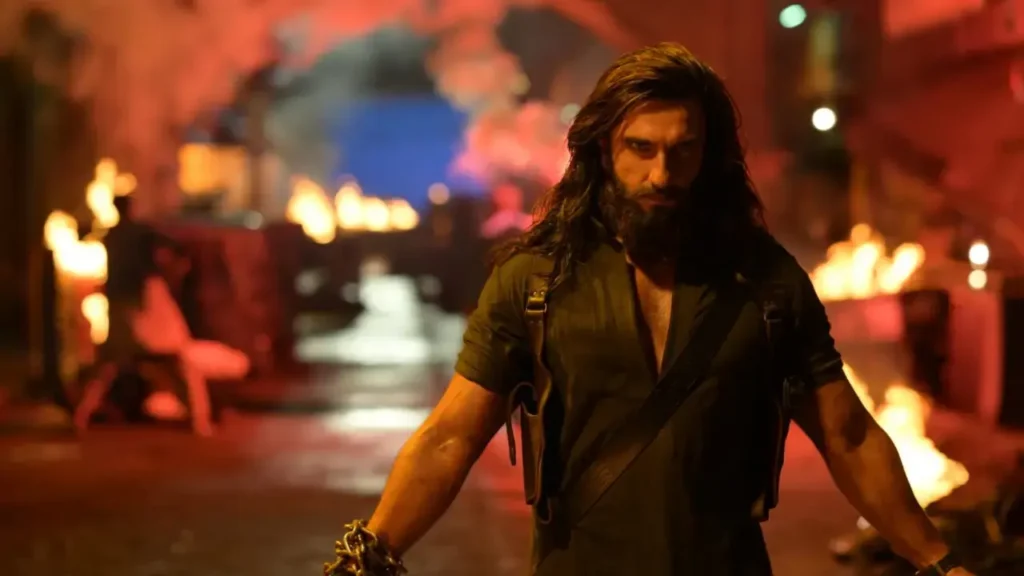
Dhurandhar 2 continues the prequel’s format of dividing its close-to-four-hour runtime into chapters with intertitles, though they are noticeably less smart this time. The world-building is done, anticipation is high, and I am eager to see where Hamza alias Jaskirat (Ranveer Singh) goes after killing his mentor Rehman Baloch (Akshaye Khanna).
Dhurandhar 2 and the Business of Brutality
Dhar’s film opens with a blood-soaked flashback. Jaskirat massacres a corrupt MLA in Punjab’s Pathankot to avenge his family. It is excessively violent, aggressively familiar, and exists mostly to remind us that in this universe, he must choose between a death sentence and a lifetime as a spy.
Back in Lyari, the chessboard rearranges. Uzair steps up, Hamza becomes his right hand, and everyone seems morally flexible, including Sanjay Dutt’s Chaudhary Aslam, who hangs around criminals with the ease of a man choosing snacks at a buffet. There is intrigue here, but also fatigue.
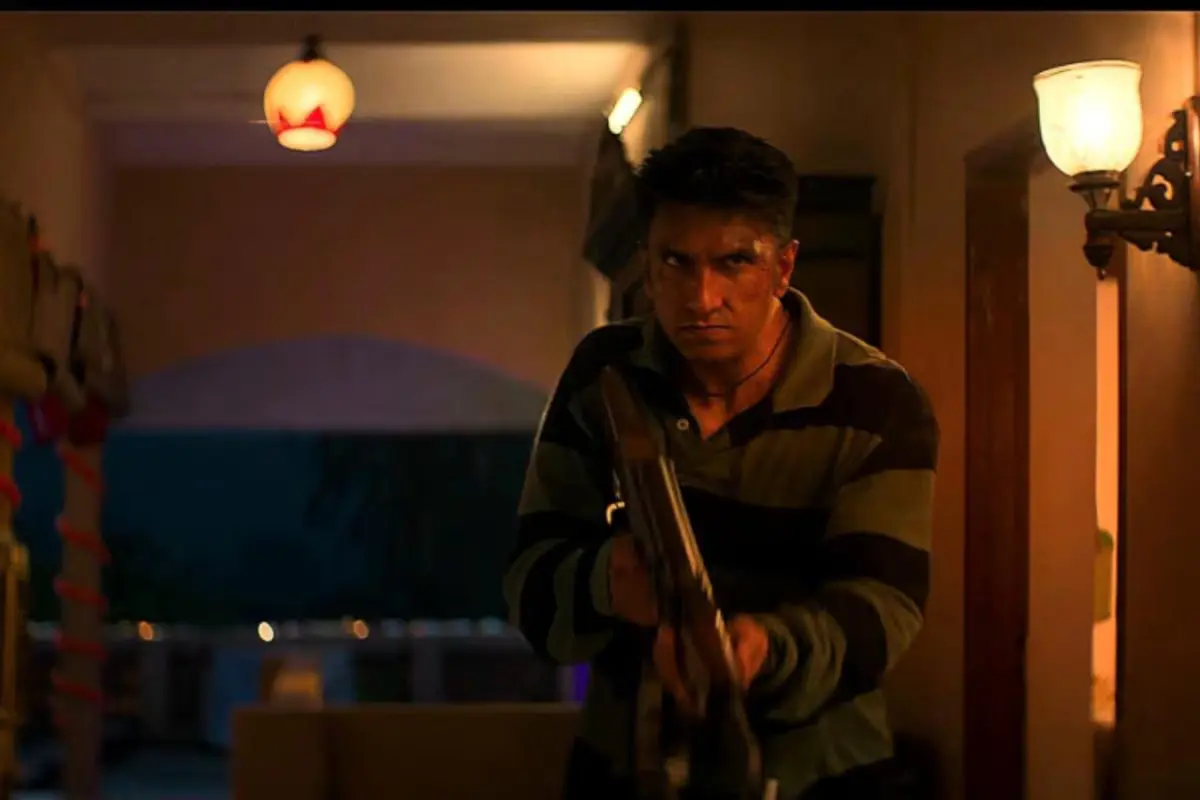
The first half, stretching close to two hours, is sluggish. The plot holds, but rarely excites. The high points are few, though the introduction of Dawood Ibrahim injects some much-needed commercial electricity. The whistles and applause at his introduction made me question our collective moral compass. What heroism were they even celebrating? The interval, however, lands well, and it finally reminds you why you showed up.
Dhurandhar 2 moves from one violent set piece to another, constantly finding newer ways to spill blood and make men shriek. It works best when it embraces this instinct fully. The moment it pauses to underline patriotism, things feel less convincing. Jaskirat’s love for India and Dawood’s allegiance to Pakistan are written loudly, but not always believably. If there is one character who gets this right, it is Arjun Rampal as Major Iqbal.
The Demonetization Set Piece
The second half opens strong with a confrontation that feels genuinely human. Then comes the film’s most debated stretch: its overt engagement with recent Indian politics. From televised moments to an extended demonetization chapter, the film leans heavily into its stance.
Here’s the thing. It is propaganda, but not markedly persuasive propaganda. I doubt audiences will base their voting choices on a four-hour action feature over lived experiences. No matter how many times the film defends demonetization, the paying public will remember the hardships they endured more than any cinematic justification. And yet, this stretch is ironically where the film is the most fun. Watching terrorists drop one after another, complete with names and affiliations flashing on screen, is designed to be satisfying. And it is, at least momentarily.
But Dhurandhar 2 itself acknowledges the futility of this. As Major Iqbal points out, you eliminate one, another will rise. It is one of the film’s rare moments of unfiltered honesty.
Minimizing the Masala
Dhurandhar felt like an 80s potboiler loaded with twists, music, and punchlines, making it incessantly entertaining. The sequel follows the same mechanism but with less finesse. The editing is glaringly dull, especially during the first half. There are not enough creative ways to use the “retro” song selections that carried so much weight in the first film.
At its core, Dhurandhar 2 is a straightforward revenge saga that works best as a hyper-nationalist fantasy, even when it pretends to be more.
The film also actively advocates the Azad Balochistan movement, with ample focus on the atrocities faced by youth from the province at the hands of law enforcement in the mainland.
Who Shows Up, Who Fades Out
Aditya Dhar’s film is one that everyone seems interested in, whether they’re part of it or watching from the outside. As a result, even the extras go the extra mile for visibility. Among the key cogs in the wheel of Dhurandhar 2, Akshaye Khanna’s absence is felt big-time. Saumya Tandon shows up, does exactly what she did in the prequel, lands a slap, and exits. Danish Pandor’s Uzair struggles to stay relevant before being conveniently written out and brought back too late. Sanjay Dutt exits early, perhaps before his ‘tapori’ inflection overstays its welcome. Rakesh Bedi and Gaurav Gera have limited presence this time, but in the brief moments they get, they still manage to shine.
Among the new entrants, Raj Zutshi is excellent, and Salim Siddiqui’s corrupt UP politician act feels authentic. Sara Arjun gets one scene and absolutely nails it. R. Madhavan is dependable as ever, acing a couple of the film’s massiest moments.
Arjun Rampal, as expected, delivers a menacing Major Iqbal. His dynamic with his father adds an interesting layer, exposing the ruthlessness and patriarchy of the world they inhabit.
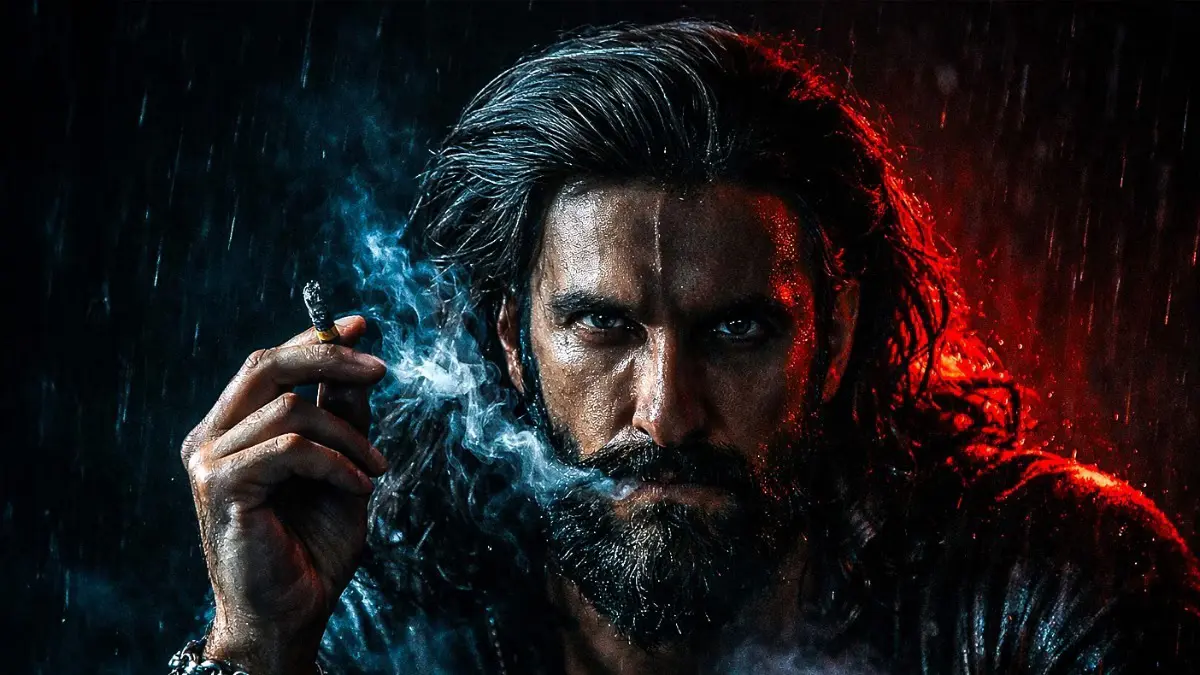
At the epicentre of Dhurandhar 2 is Ranveer Singh, a highly watchable actor who continues his brooding act while making it distinctly mainstream. His internalisation of Hamza and Jaskirat gives them separate identities, making the performance feel physically and emotionally demanding to different degrees. Dhar’s films are easily among his career-best, and Singh does a lot of the heavy-lifting even when the film indulges in its Bollywood action excesses.
The Dhurandhar Playbook
With the film and its prequel, Aditya Dhar seems to be outlining a new template for Indian spy thrillers. He has a great deal to say about recent events, which have been well documented, even if he has a somewhat simplistic view of geopolitics. What he undeniably understands is drama. Then we get some meta references, whether it is a ‘Tamma Tamma’ or ‘Tirchi Topiwale’ in the background, or a nurse named Shazia Bano quietly bumping off a criminal.
ALSO READ: ‘Dhurandhar’ review – A brawny ride through Pakistan’s underworld
It’s also comforting to note that Dhurandhar 2 steers clear of overt animosity toward Indian Muslims, partly because it takes place entirely in Pakistan and concentrates on people and groups that the UN has designated as terrorists. Even the opening stretch concerning Jaskirat’s personal vendetta could have easily been assigned to religion, but Dhar chooses not to. Dhurandhar 2 benefits from that restraint.
Peak Detailing vs Peak Parenting
As I conclude, let me tell you how amused I was by the audience. It was a late-night 11:45 pm show, with a child in attendance, and the film was clearly not meant for him. Even if I ignore the exhibitors’ negligence, this level of passion for a film represents peak millennial parenting in the era of Dhar’s now-famous “peak detailing”. 20 years later, if someone says Dhurandhar 2 was the first movie they saw in a theatre with fondness, if any, we will know how well the film has aged and how far we have come as a society.
VERDICT: ★★★ 1/2 (3.5 out of 5)
Read the reviews of Dhurandhar 2 by the Film Critics Guild HERE.