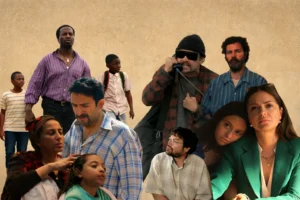
For decades, the idea of Indian cinema was almost automatically equated with Bollywood or Hindi cinema. And why not? The industry produced some of the country’s biggest films in scale and spectacle, and Hindi remains the most widely spoken language in India.
With changing times and the rise of streaming platforms, however, global audiences gained easier access to films made in other Indian languages. The vocabulary to collectively describe them still feels awkward. “Language films”? “Non-Hindi films”? None sounds entirely right. What feels more important, though, is the need to acknowledge and represent cinema beyond Hindi in a meaningful way.
The distribution of strong films across languages is, of course, uneven. An industry like Malayalam often produces far more consistently accomplished cinema than Bollywood in a given year. Telugu cinema, despite its enormous output and budgets, may not always place even a single title in a Top 10. Tamil cinema, in spite of its towering superstars, continues to offer a rich and varied body of work. Meanwhile, Marathi cinema remains the industry’s quiet dark horse, repeatedly delivering remarkable films without the benefit of scale, gloss, or spectacle.
With that context in mind, here is my list of the 20 Best Indian Films of 2025 (Non-Hindi), ranked in reverse order of preference:
20. Sarvam Maya (Malayalam)
Directed by Akhil Sathyan, this supernatural comedy stars Nivin Pauly as an atheist musician forced into his family’s priestly profession who starts seeing a “Gen Z ghost” named Maya (Riya Shibu). The film is a lighthearted family entertainer that explores his quirky friendship with the boundary-respecting spirit while he navigates his own grief and career struggles in Palakkad.
19. Kudumbasthan (Tamil)
Directed by Rajeshwar Kalisamy (of Nakkalites fame), this “zero-balance hero” comedy stars Manikandan as a graphic designer who gets fired for slapping a client just as his wife (Saanve Megghana) announces her pregnancy. The film is a frenetic look at the middle-class hustle, featuring a hilarious rivalry with a condescending brother-in-law and a desperate, slapstick quest to maintain dignity despite mounting debt.
18. Victoria (Malayalam)
Directed by Sivaranjini J, this film follows a day in the life of a young beautician who must care for a sacrificial rooster while navigating personal turmoil in an all-female beauty parlour. The experimental film uses the restricted space of the salon to explore themes of sisterhood, faith, and a woman’s quiet rebellion against patriarchal control.
17. The Girlfriend (Telugu)
16. Tourist Family (Tamil)
If his debut film is a reflection of his worldview, Abishan Jeevinth envisions human relationships through a lens that is idealistic and almost unreal. In his model world, goodness attracts goodness. There are a few bad apples, like the Hindi-speaking cop, who face inevitable consequences. Tourist Family is not exactly a definition of cerebral cinema. But in today’s brutally disconnected world, the film’s feel-good spirit offers the much-needed relief.
15. Thudarum (Malayalam)
Tharun Moorthy’s refusal to conform to a formula remains Thudarum‘s primary brilliance. It doesn’t depend on Mohanlal’s iconic status, nor does it piggyback on a ‘not all cops are bad’ route. The message is direct, and Mohanlal, with his signature brooding persona and the famous Pulimurugan stance, commands a relatable yet larger-than-life presence in Thudarum.
14. Shotyi Bole Shotyi Kichhu Nei (Bengali)
A cynical yet witty exploration of “truth” in modern society, directed by Srijit Mukherji, the film unfolds within the subconscious of a High Court judge (Kaushik Ganguly) as he dreams of twelve acquaintances deliberating a murder trial. The narrative moves through surreal, symbolic locations like a golf course and a theater, using the jury’s heated debate to expose the deep-seated prejudices and “subjective truths” of Bengal’s urban elite. The title translates to “There is nothing called the truth,” hinting at its investigative and philosophical core.
13. Angammal (Tamil)
Directed by Vipin Radhakrishnan, this gritty rural drama follows an elderly woman (Geetha Kailasam) who finds herself in a fierce, escalating battle of wills against her own family over the ownership of their ancestral home. The film is a haunting character study that strips away the romanticism of village life, focusing on the dark undercurrents of greed and the isolating struggle for dignity in one’s twilight years.
12. Kantara: A Legend – Chapter 1 (Kannada)
Set centuries before the first film during the reign of the Kadamba Dynasty, this prequel explores the very first pact between humans and the forest deities, shifting the focus from the Panjurli to the primal ferocity of the Kadambas. Rishab Shetty returns with a “prehistoric” aesthetic, trading the 1990s rural setting for a sprawling epic that anchors the legend in ancient history and high-fantasy visuals.
11. Bison Kalamaadan (Tamil)
Directed by Mari Selvaraj and starring Dhruv Vikram as a rising Kabaddi player, this high-octane sports drama explores the intersection of athletic ambition and social justice within the marginalized communities of Tamil Nadu. The film moves away from Selvaraj’s usual somber tone, instead utilizing the “Bison” persona to symbolize raw power and defiance against systemic oppression on and off the sports field.
10. Dies Irae (Malayalam)
Rahul Sadasivan’s screenplay, which links the concept of Dies irae, the Latin hymn, is clever, and the antagonist who gradually emerges is a fascinating presence. Helped by top-tier production design (Jotish Shankar), editing, and visuals, the pre-climactic showdown is what renders the plot surprisingly humane. Dies Irae closes on a haunting note, hinting that this world still holds secrets untold — and I, for one, would be eager to return if Sadasivan chooses to expand it further.

9. Sthal (Marathi)
Shot entirely with non-professional actors in a single village, Jayant Digambar Somalkar’s debut follows Savita, a student whose life is reduced to a series of “inspections” by prospective grooms and their families. The film is a devastating masterpiece that uses a documentary-like lens to expose how the patriarchal marriage market treats young women as mere commodities to be measured and weighed.
8. Avihitham (Malayalam)
Avihitham is as real as the soil it springs from. The filmmaker extracts every ounce of organic quirk from his setting while presenting a witty, unflinching, and insightful take on relationships and moral hypocrisy. The film ultimately asks if we truly understand women before measuring their busts, reading their lips, and deciding to “protect” or “elevate” them in society. Where moral policing passes off as virtue, Avihitham shows how easily whispers can rewrite a woman’s life. Senna Hegde’s film is a mirror to our collective double standards and compartmentalization of women based on our perceived moralities, forcing us to confront exactly what we choose to overlook.
7. Follower (Marathi/Kannada)
Seamlessly narrated in Marathi, Kannada, and Hindi/Urdu, Follower flows effortlessly between its capable leads, highlighting the impact of deprivation and discord in a developing economy like India. The larger concern is whether there is an escape once one enters such a maze. Raising more questions than it answers, the film does not offer idealistic solutions or take a definitive stance, but it makes one thing clear: radicalism has the power to destroy. The least we can hope for is that voices like Nalawade’s continue to emerge until a revolution reaches those burdened by poverty, unemployment, and misinformation.
6. Mithya (Kannada)
Directed by Sumanth Bhat and produced by Rakshit Shetty, the film follows 11-year-old Mithun, who is uprooted to his ancestral village after his parents’ sudden death and struggles to process a truth the adults are trying to hide from him. It is a profoundly moving study of “unspoken grief,” capturing the boy’s attempts to reconstruct his world through fragmented memories and the bittersweet realization that his childhood has ended.
5. Lokah Chapter 1: Chandra (Malayalam)
A grand-scale fantasy or mythological epic that seeks to build a new cinematic universe. Dominic Arun’s Lokah Chapter 1: Chandra borrows from unique tales that mix history, culture, and religion to create marvellous new ideas. Kalyani Priyadarshan owns the screen in the titular role. Chandra is a lioness who speaks less and acts more. With her gothic appearance and deathly stare, the actor shapeshifts so well that her spunky past roles quietly exit our memory. Crucially, Lokah Chapter 1 isn’t a one-woman show. Naslen, with his charming humour very much in place, is the film’s conscience. Sunny’s innocent repartees and unwavering support for Chandra will have our hearts beaming with joy.
4. Su From So (Kannada)
Directed by debutant Abhimanyu Bhupathi, this film is a whimsical “slice-of-life” comedy-drama that follows the eccentric misadventures of Suhas (Su) from Soladevanahalli (So) as he navigates the bizarre gap between his rural roots and his urban aspirations. The narrative is celebrated for its dry wit and distinctive visual style, capturing the awkward, funny, and deeply relatable struggles of a small-town youth trying to find his “vibe” in a judgmental city.
3. Eko (Malayalam)
For contemporary Indian cinema, Dinjith Ayyathan’s mystery thriller doesn’t miss a beat. Technically accomplished and wildly immersive on paper, Eko keeps you on tenterhooks. By avoiding gimmicks and shortcuts to connect the dots, the film builds a story so universal that it might as well take place in Greeland or Mauritania, if not India. The times we live in are controversial, as animals have their habitats destroyed or, worse, are physically displaced from human settlements. This troubling situation alone makes the film’s unusual but not entirely implausible human-animal relationship worth exploring.
2. Ponman (Malayalam)
Directed by renowned art director Jothish Shankar and starring Basil Joseph, the film follows a middleman in a unique “walking gold” business who provides jewellery for dowries on credit to be repaid by wedding gifts. It is a gripping satirical thriller that descends into a high-stakes confrontation on a remote island after a bride (Lijomol Jose) and her ruthless husband (Sajin Gopu) refuse to return the gold, leaving the agent to fight for both his money and his life.
1. Sabar Bonda (Marathi)
Sabar Bonda, despite its quiet demeanor, is an accurate portrayal of gay life in this part of the world. Sometimes, it’s important to explore cinema through the lenses of culture, class, and caste, some of which Kanawade effectively addresses. I wouldn’t stereotype the film as bold because it doesn’t aim to shock or drop jaws. Instead, it presents a rare blend of softness, hope, and endurance as it breathes life into a story that is partly self-referenced by the filmmaker, and is hence a beautiful labour of love. For all its authenticity, Sabar Bonda will stay with you long after it’s over.

Special Mentions: Puratawn (Bengali), Dragon (Tamil) and Bad Girl (Tamil)
N.B.: Boong (Manipuri) was watched in 2o24, hence didn’t make it to the list.