Patriotism, in its truest form, is an unexplainable emotion. If you are patriotic, you know it is largely a one-sided relationship, almost like one’s belief in God. You either feel it, or you do not. I remember discussing Laal Singh Chaddha with someone, where the titular character saves a slain Pakistani soldier purely out of humanity. The idea that brotherhood should be placed above national pride was something my head understood, not my heart. As I sat down to watch Border 2, I wished it could evoke that unadulterated feeling, which is second only to our love for kith and kin.
Anurag Singh’s film, touted as a spiritual sequel to the 1997 all-time blockbuster Border, arrives in polarising times when this indescribable emotion is being diluted by elements such as religion, race, caste, and more. Set between 1961 and 1971, and primarily around the Indo-Pak war in the latter period, the film has the stars, the scale, and the ingredients, but it misses out on the most crucial element: genuine emotion.

J. P. Dutta’s Border is a special film. You do not have to be a patriot to feel its emotions. The build-up to the inevitable war and loss of life is so emotionally charged that it leaves an ache within you. When the blind mother quietly made the sehra for her son, or repeatedly pleaded for a hug (‘mere kaleje se lag jaa’), you felt the warmth and the stakes. Border 2 wishes to belong to that same landscape, but it simply cannot.
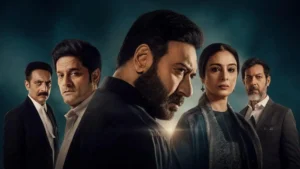
The screenplay (Sumit Arora, Anurag Singh) wants it to be too many things at once. For a long and tiring stretch, it behaves like a bromance melodrama staged in a war training academy where a jovial Nirmal Jit Singh Sekhon (Diljit Dosanjh) tries to befriend a dull Hoshiar Singh Dahiya (Varun Dhawan), with enough support from M. S. Rawat (Ahan Shetty).
The Border 2 buddies represent the Air Force, Army, and Navy. It is one thing to have this diversity, but only at the cost of a screenplay that divides its attention so unevenly that watching them fight their own isolated wars becomes exhausting. After all the build-up, the eventual fates of two officers feel anticlimactic. Nothing truly emerges from the film’s wannabe grand friendship arc. There is, of course, a customary end-credit song which makes one wish they had simply reused LOC: Kargil’s “Ek Saathi Aur Bhi Tha” instead.
We also meet the officers’ wives, a mother, a sister, and a daughter, but none of these characters leaves an impression. Sunny Deol’s Lt. Col. Fateh Singh Kaler is the only one given a complex reality: a distance has grown between him and his wife (Mona Singh) following their son’s death. This is also the only track where the characters’ faith feels organically placed.

Elsewhere, Border 2 seems keen on inserting religious references wherever possible because they sell. There is a forced Goddess Durga angle that threatens to trivialise Rawat’s character. Hoshiyar Singh recites Bhagavad Gita verses, where the poor diction is glaringly noticeable. To create the illusion of diversity, an elderly Muslim man speaks about lighting a lamp at a dargah during a brief chat with a colonel. Instead of asking for meaningful intelligence about the impending war, we are given this token moment.
Then there’s a Sikh soldier who steals oil from the army camp’s kitchen to light another lamp, offering a bizarre explanation that only the cook seems to accept. I only missed Jesus and Mary in this discourse, especially since there was no one to represent Major General J. F. R. Jacob, who played a massive role in the war. In this sense, Border 2 mirrors our times. These elements were planted after the core plot was already written.
Among its few positives, Anurag Singh’s film works like magic whenever the iconic songs from the prequel, composed by Anu Malik with lyrics by Javed Akhtar, appear. Lovingly recreated, they momentarily awaken the film from its brain-dead state. Interestingly, the best scene belongs to two non-leads (Paramvir Cheema and Vansh Bhardwaj), whose friendship is rewarded with a beautiful, tear-jerking moment. What Border 2 needed was more such human stories and interactions.
Technically, the film struggles. There is no real concept of action choreography in it. If Deol is busy making strange escapes from deadly mines, Dosanjh is busy making Sky Force look like a classic during a poorly staged airstrike sequence. The men in military run around as if stuck in a paintball game gone wrong, and the horrifyingly unimpressive VFX does them no favours. Unsurprisingly, the Pakistani officers are written as fools who spend more time curating punchlines than executing strategy. The result is a film that lacks urgency on the war front, with the battlefield resembling a playground.
The leading men try hard to infuse some feeling into Border 2, with Diljit Dosanjh coming across as especially likable. It isn’t a great role by any measure, but we do miss the officer when the film forgets him for long stretches.

Sunny Deol is affecting in restrained moments, but the film keeps turning him into a running, shouting figure, making his fatigue hard to ignore. For an actor of his stature, a supervisory role would have fitted like a glove, where he could project authority without being physically pushed so hard. Varun Dhawan’s performance suggests effort and is passable, but his accent repeatedly breaks character, slipping into a Bandra-Juhu twang whenever the pressure rises.
Ahan Shetty gets the worst-written part, and it also looks suspiciously snipped on the editing table. It is embarrassing to see him operate torpedoes as Hrithik Roshan does with his dad’s computer in Koi Mil Gaya. Among the women, Mona Singh gets a role with some individuality, but is only a middling, modernized extension of Rakhee in Border. Medha Rana performs well as the illiterate, ghoonghat-clad wife of Hoshiyar Singh, but Border 2 misses the spunk and relatability of someone like Pooja Bhatt in the prequel. While Sonam Bajwa gets a line or two, Anya Singh seems to have no idea what she’s doing in the three-minute screen time she gets sans dialogue.
We live in times when identities must constantly be proven. An Indian Muslim must now prove his patriotism, yet Border 2 cannot even offer a Muslim character for meaningful representation. Faith is worn on sleeves, and even colours are attributed to religions today. Singh’s film does not attempt to heal or rethink this narrative. Instead, it blatantly exploits nostalgia from a beloved blockbuster, its historic songs, and a familiar leading man, leaving an audience with little choice but to consume a poorly packaged product.
VERDICT: ★★
Read the reviews of Border 2 by the Film Critics Guild here.