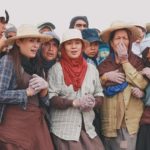
India and Papua New Guinea share a connection bound by history, an unlikely one at that. In director Dr Biju’s Papa Buka, a rare co-production between the two nations, we are drawn into the largely untold stories of war heroes who left British India during World War II and never returned.
The film unfolds through the eyes of historians Anand Kunjiraman (Prakash Bare) from Kerala and Romila (Ritabhari Chakraborty) from West Bengal. Their academic pursuit is intimately personal. If Anand’s Dalit identity allows him to empathize with the marginalized Aboriginal tribes of Papua New Guinea, Romila carries a more direct connection. The woman’s maternal grandfather was one of the soldiers who vanished decades ago.
Despite its promise, Dr Biju’s film begins rather awkwardly. The early stretches occasionally drift into a tourism showcase, overemphasizing Papua New Guinea’s hospitality and safety. A performance in a bar, though charming, feels tangential to Papa Buka‘s overarching theme. Yet the multilingual fabric is engaging, and the leads lend the early narrative its emotional weight through their candid, reflective moments.
The film gains momentum once the title character enters. That’s when it transports viewers into the jungles of the tribal nation, transitioning briefly into documentary-like observation. It’s a shift that proves surprisingly effective. Dr Biju modulates the dramatic intensity throughout, though the screenplay’s central reveal arrives somewhat abruptly, appearing more designed to provide closure for Romila than to emerge organically from the investigation.
ALSO READ: “100-crore films should not evaluate Keralites’ taste in cinema” – Dr. Biju
That said, the level of empathy the film displays towards a culture that has been a significant victim of colonization is heartening. Yedhu Radhakrishnan’s cinematography is particularly striking, with the jungle chapter immensely heightening the film’s appeal. There are many more occasions where the DOP’s attention to detail elevates the drama way beyond its potential. Case in point is a gutting aerial shot of a cemetery of unidentified war soldiers. Ricky Kej’s music is a fascinating blend of varied sounds, giving the film a delectably hybrid personality.
The performances are steady. Where they falter, it is due to the writing. Prakash Bare is compelling, yet Anand’s parallel between his experiences as an Adivasi youngster in Kerala and the lives of Papua New Guinea’s tribal communities feels like a stilted add-on. While it is evident that such conversations resonate deeply with Dr Biju, some connections do not translate organically on screen. Ritabhari Chakraborty benefits from cleaner writing, responding with precision and understated conviction.
The revelation, however, is Sine Boboro as Papa Buka. A non-professional actor, he carries the film with quiet authority, his intimate understanding of the culture and the nation’s turbulent history reflected in every frame. John Sike is also well cast, skillfully interpreting lines in Tok Pisin for the leads and, by extension, the audience.
As Papua New Guinea makes its debut in the Oscar race with Papa Buka, it becomes clear how long the nation has remained outside the global spotlight. The film also urges us to remember the countless individuals who died in a war that gave nothing back to their kin or their countries. It is a call to listen more carefully to the stories that history chose to overlook.
Rating: ★★★ 1/2
Papa Buka premiered at the 56th edition of IFFI Goa.