Vidhu Vinod Chopra’s Kareeb (1998) is a modest love story that thrives on simplicity. Based on a story penned by Chopra’s mother-in-law, Kamna Chandra, the film follows two uncomplicated (almost naive) individuals who navigate life’s small and big tragedies. The film with lilting music was noted in the release years for its beautiful songs and the characteristically different look and feel. Decades later, the film remains a breezy watch as always. Its soothing quality and innocent narrative still contain the potential to make us smile.
It’s simple yet substantial
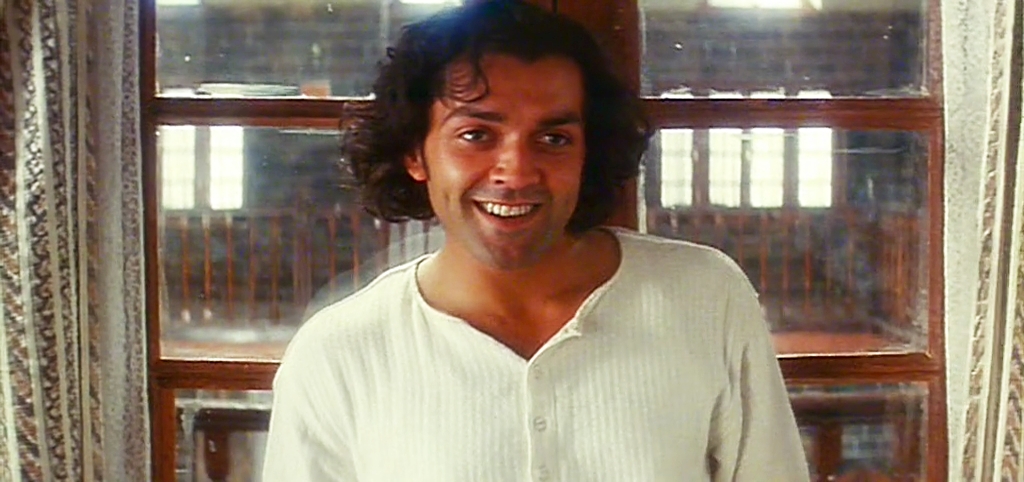
Simplicity defines Kareeb. Its character arcs, central conflicts, props, and production design are low-key from start to end. Bobby Deol plays Birju, a mischievous manchild with a signature sneeze. In his early 20s, he loves comic books and peanuts. A kleptomaniac of sorts, Birju steals to fulfill his needs, but out of habit or as a solution to his problems. In Birju, you won’t see the brooding or an intense lover. The guy’s feelings for Neha (Shabana Raza) are earnest and unfiltered. Birju is often seen speeding around like a teenager and, yes, he cries too.
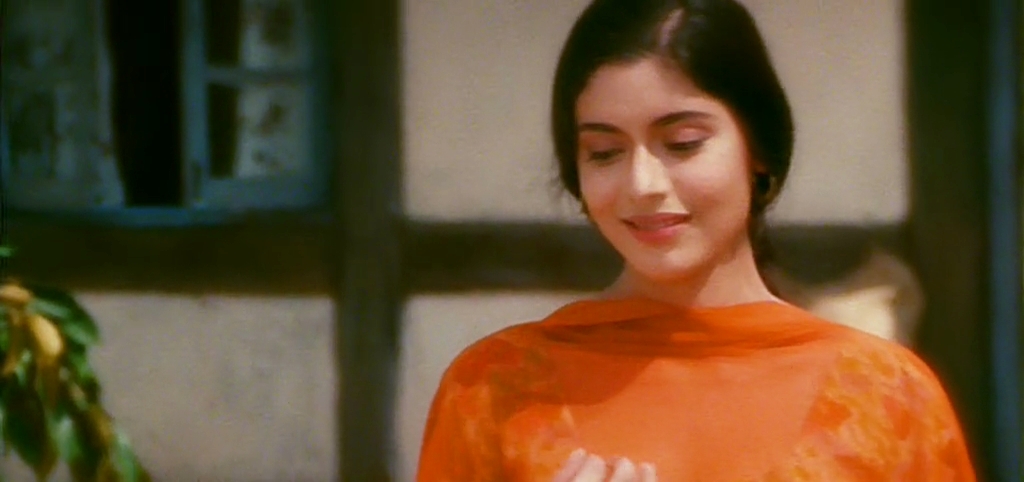
Neha has a soft-spoken and delicate personality. She dresses in simple salwar-kameezes and rarely raises her voice. The girl’s glowing face and a schoolgirl giggle probably draws Birju to her. Their love story in Kareeb begins at a Gurudwara and unfolds through notes, red roses, and stolen glances. Their connection feels like something you would read in a classic Hindi romantic novel – naïve yet told with a lot of conviction.
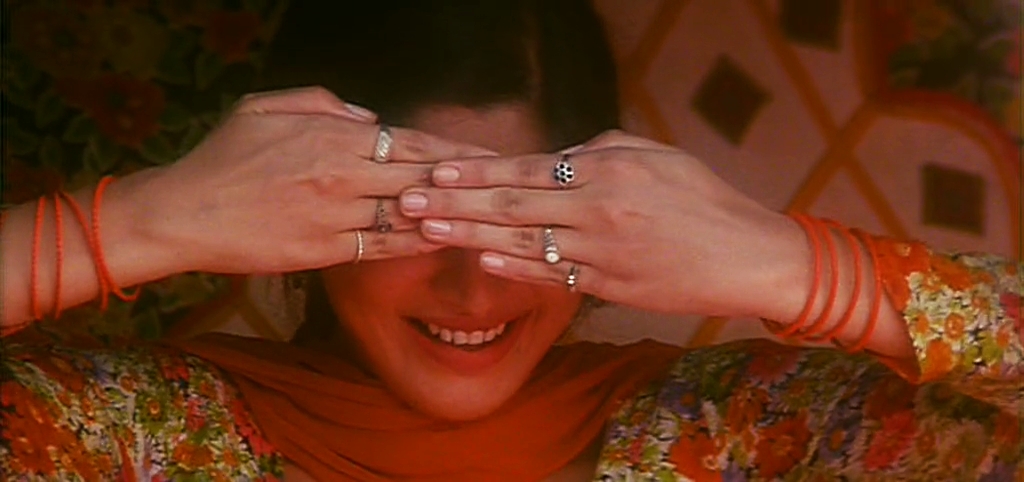
An alternate title? Chori Chori
One motif that runs consistently through the film is chori (theft). While Birju isn’t a hardened criminal, he tends to lie and steal to make life easy. Neha never truly disapproves. In fact, she finds his antics charming until they begin to bear consequences. When she finally draws a line, Birju promises to never steal or lie again. But does he keep that vow? Not quite, and that’s what makes Kareeb so endearing.
A free-flowing first half
Edited brilliantly by Renu Saluja, the film’s first half flows with ease. But when the lovers plan to marry, opposition arises from Birju’s wealthy (yet not villainous) family. Birju steals money from his father to fund the wedding, only to be caught on the big day. The marriage is called off, and Neha’s mother (Moushumi Chatterjee) suffers a heart attack. The lights dim, and Birju holds the screen in silence – his face becomes a map of grief and guilt.
The curse of the second half
The second half of Kareeb oscillates between intense melodrama and unexpected comedy, with Johnny Lever infusing the narrative with in his quintessential way. A subplot introduces a doctor (Abhay Chopra) who develops feelings for Neha. Another thread involves an elderly couple, which although intriguing is slightly out of place. The film eventually moves towards a safe and sweet fairy-tale ending, with Birju’s parents treating Neha like the toy their son always wanted. All through the film, the cinematographer (Binod Pradhan) makes sure to enchant us with the beauty of Himachal Pradesh. One wonders why there are several frames where the actors appear on the edges, and landscapes dominate.
The evergreen melodies
It’s always a pleasure when Anu Malik not only composes the songs but also scores the background music. His sound adds a subtle yet impactful mood to this gentle love story. The instrumentation is spot-on, and the songs (appearing only when essential) never break the narrative flow. Kumar Sanu’s voice complimensts Bobby Deol, while Sanjeevani Bhelande’s pristine vocals enhance Neha’s innocence. There’s also a delicate piano motif that Malik later recycled in Aaghaaz (2000)! And Rahat Indori’s lyrics? They feel so in sync with Nitin Desai’s production design, it’s as if they were penned on set. Take this line for instance, you’ll recognize what I’m saying:
“Masala baant loon… main pyaaz kaat loon
Chhuri kidhar gayi…Uff
Hai nal khula hua
Main keh raha hoon kya… tu sun rahi hai kya
Tu sun rahi hai kya… main keh raha hoon kya
Tera deewanapan hai yeh… O bekhabar kitchen hai yeh
Yeh kyon vahaan utha dhuaan… Kya jaane kya jal gaya…”
Incredible! Churalo naa dil mera, along with the signature track Chori chori jab nazrei,n are two of the most hummed around love songs of the latter half of the 1990s. The latter goes here:
The main riff of this number has been reused from a background piece in Anu Malik’s own song Aa Zara Mere Humnasheen from the 1981 flick Poonam.
To give due credit to Anu Malik and Rahat Indori, each song is a gem and has garnered a great following over the years. Unfortunately, the makers couldn’t use the melancholic Tum juda hokar hamein by Roop Kumar Rathod and Sanjeevani in the film.
Bobby Deol’s rare romantic outing
Bobby Deol delivers what is possibly his finest performance. Shedding all the star vanity, he portrays Birju with sincerity, comic timing, and emotional depth. His chemistry with Neha is magnetic and feels organic. Shabana Raza (credited as Neha), making her debut, is a natural. With her gentle demeanour and expressive eyes, she delivers a performance that’s both tender and confident. One wishes she had made stronger career choices, she had all the makings of a contemporary to Rani Mukerji, Preity Zinta, and Aishwarya Rai.
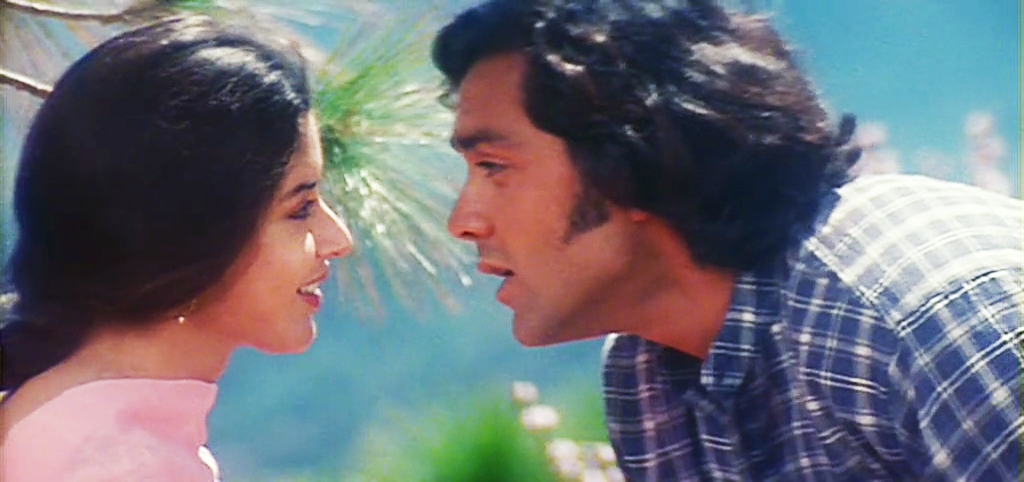
The dove-like Neha and everybody else
Shabana Raza (credited as Neha) makes a winsome debut in Kareeb. Her soft-spoken charm, expressive eyes, and fluid dialogue delivery justify why she was cast. She had a fair share of admirers at the time, and had a briefly active career for a few years. One only wishes she had navigated her career more wisely, she had the potential to join the league of Rani Mukerji, Preity Zinta, and Aishwarya Rai, who also debuted around the same period and went on to become superstars.
Moushumi Chatterjee is delightful as always as she becomes Neha’s mother in the film. Credit to Vidhu Vinod Chopra for including a scene where she breaks into an uninhibited, full-throttle laugh. Saurabh Shukla is natural and grounded as Birju’s father. Amit Phakle, the child actor from Mammo, appears all grown up and fits in well. Johnny Lever brings just the right amount of humour, while Shammi Kapoor and Sushma Seth deliver solid performances in their parts.
The timeless mush quotient
Kamna Chandra’s dialogues are a major strength of the film. The exchanges between Birju and Neha are mushy but still relatable. The film’s final line may border on the cheesy, but it’s irresistibly sweet:
“Hum juda nahi ho sakte… hum to aise bane hai… jaise… seep aur moti… talaab aur pani… baarish aur chatri!”
Vidhu Vinod Chopra successfully weaves together a collection of memorable moments in Birju and Neha’s love story. Remember that yellow dupatta featured on the film’s music inlay cards? That too comes full circle as the film closes with the Chori Chori number.
Are we complaining? Not really.