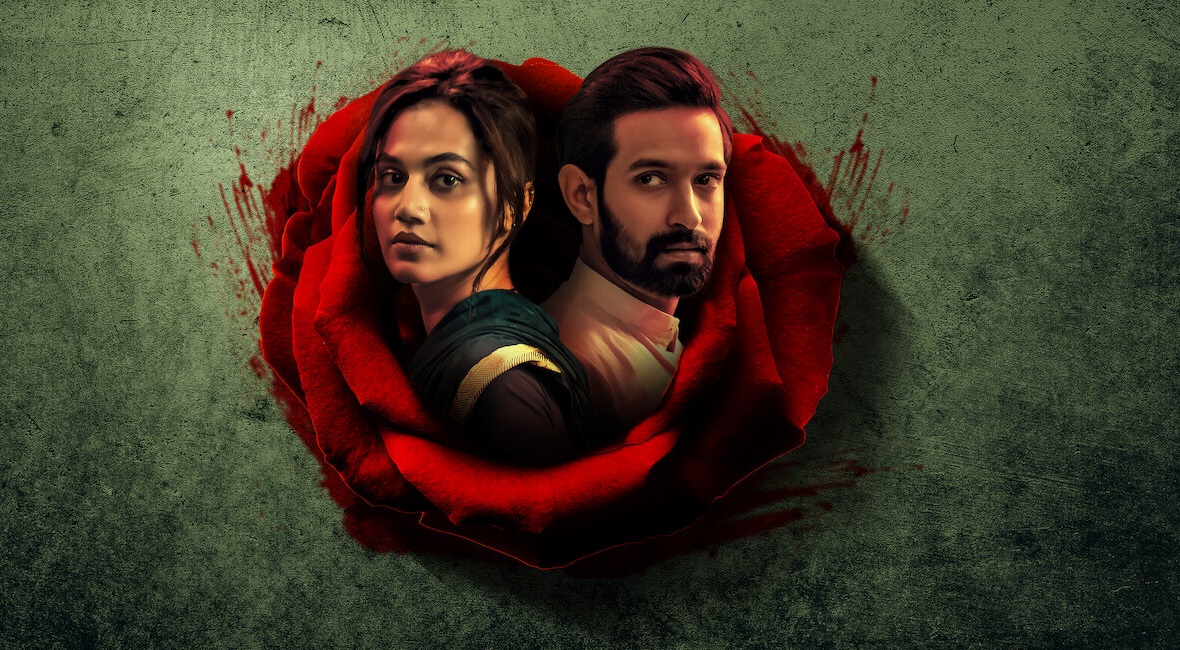
An awkward husband, a seductive wife, and a handsome relative who comes visiting—say hello to the pillars of Haseen Dillruba, helmed by Vinil Mathew, who gave us the charming 2004 rom-com Hasee Toh Phasee. With a premise that has filled love triangle templates in fiction for eons, we await a dash of freshness that Mathew might bring to his film. The makers’ idea, however, is to milk yet another time-tested ploy. It lets the protagonists commit a crime and later link it to the plot of a fictional novel. Oh, we last saw this in Jeethu Joseph’s chilling Malayalam film Drishyam 2. So, how original is that, may I ask?
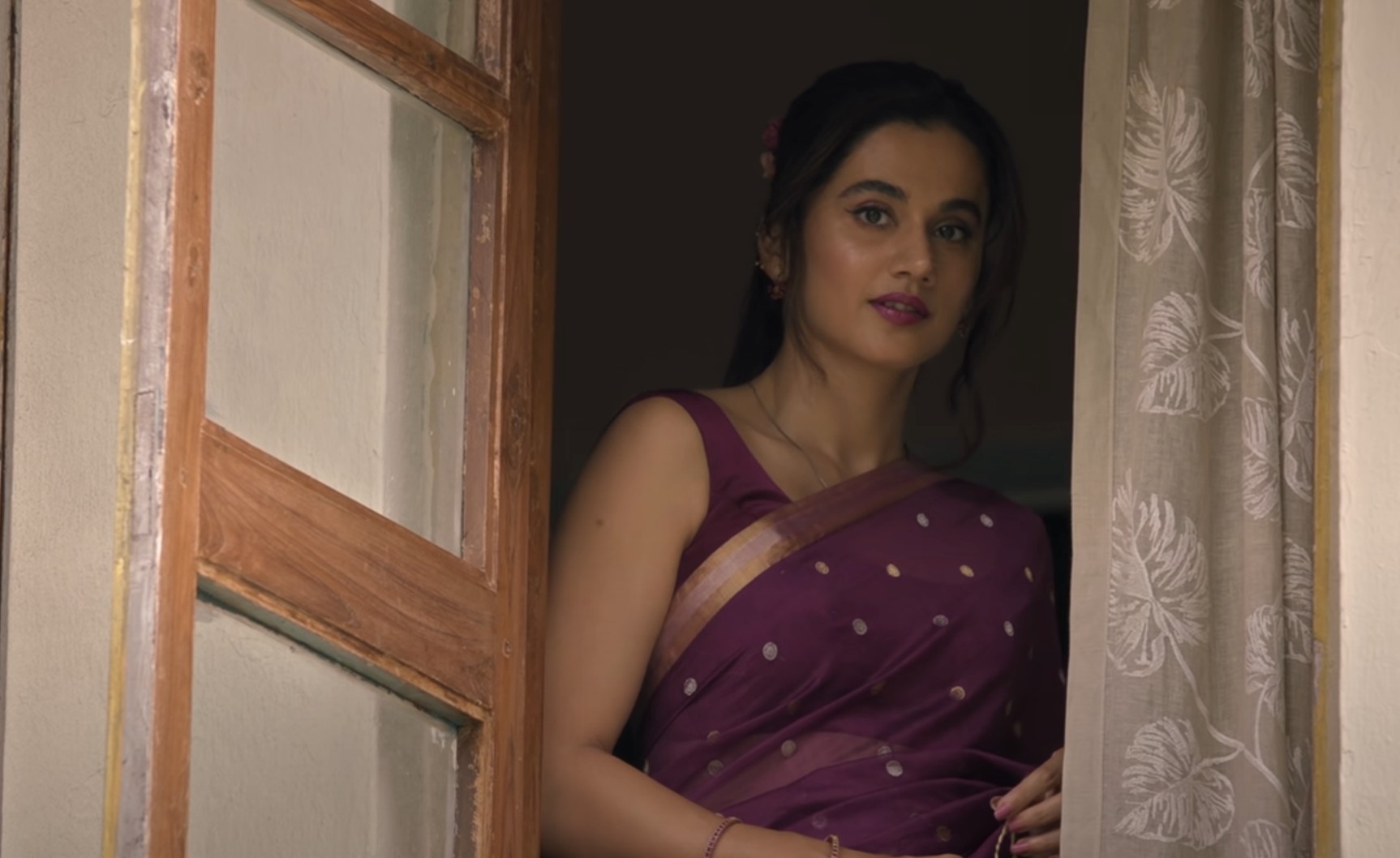
Haseen Dillruba also happens to be a film where Taapsee Pannu locks horns with her husband (yet again). Mammoth déjà vu aside, I must say Pannu is immensely watchable as Rani, but her reflexes are way too familiar to ignore this factor entirely. A die-hard fan of Hindi pulp fiction novelist Dinesh Pandit, Rani expects action in her life until her family decides to marry her off to Rishabh a.k.a. Rishu (Vikrant Massey), a meek engineer who derives pleasure from repairing home appliances. As for Rani, the most fun she has in her marital home is giving her father-in-law (Daya Shankar Pandey) a sharp ‘Sadhana Cut’. The mother-in-law (played by Yamini Das) is perhaps thrice as fun as the film and its sarcastic reviews, but after a point, the writer (Kanika Dhillon) does not want her to steal any more limelight.
Let’s get back to the newlyweds, Rani and Rishu. When the duo fails to get their chemistry right in bed, Haseen Dillruba welcomes us to the kingdom of the great Indian male insecurity. Rishu begins to ignore his wife for what must be the flimsiest excuse of all in the film. Enter Neel (Harshvardhan Rane), Rishu’s cousin, who is a seven-course spread for an attractive woman starved for sex. If Neel addresses her as bhabhi, as is the norm, the film dresses Pannu in see-through chiffon and georgette, making her a living archetype of its adult comic book equivalent. I never looked at Rani as a femme fatale, and there – suddenly – the film pitches her as one. Well, sort of. Haseen Dillruba belongs to that genre of films where it’s all fun and joy until the third wheel in the story (Rishu) decides to avenge the ones who ‘wronged’ him. This is also the exact moment where Mathew’s film begins to nosedive.
Now, Rishu is not the regular hero we see in Bollywood films or read about in Dinesh Pandit’s books. He can barely hold an argument against street Lotharios, let alone beat up a man who broke his trust. Rishu is a stock male lead in cinema, but Massey plays the insecure man with reasonable fervour. Be it with the ‘Rani’ tattoo on his wrist, the homeopathic experiments to ignite his sex drive, or a hopeless urge to take revenge, I ended up liking Rishu’s inconsistent ways.
Haseen Dillruba is inconsistent to the limit that it can’t decide what it wants to be – a pulp caper, a dark comedy, a murder mystery, or a love story. As it switches lanes back and forth, we wonder if they are characters worth rooting for. That way, for a film that kicks off with a blast (literally), Mathew’s film illustrates how a messy screenplay can drain all excitement from a premise full of intrigue.
I usually love the characters that Kanika Dhillon designs in her films. The environments they appear in offer way less fun. The madness that we saw in Judgementall Hai Kya’s Bobby and Keshav can be seen reflected in Rani and Rishu, to an extent. Dhillon’s leads in Haseen Dillruba may not be very eccentric, but they contain enough spice to fuel a decent romantic thriller, which the film, unfortunately, is not.
ALSO READ: ‘Andhadhun’ review – Mystery, music and masterful filmmaking
The last leg in Dhillon’s jumbled plot is that of an investigation led by Inspector Kishore Rawat (a forgettable Aditya Srivastava). He suspects Rani of having committed a homicide, but she is smarter. Equally wasted is Rane as Neel, whose only job is to flex muscles and show up as a piece of cake that Rani would happily savour. While Dhillon tries hard to give newer dimensions to him in the later acts, the character is simply too devoid of meat to make any impact.
Among other things, there’s the compulsory Muslim sidekick because inclusivity is in. There are digs at arranged marriages, a strange vehicle chase, food references, and dollops of sex. Then comes the blatantly violent final sequence, which not only challenges logic but also dissolves the evolving status quo between Rishu and Rani. I almost chuckled when a dramatic voiceover pops up during the finale: “Pagalpan ki hadh se na guzre to woh pyar kaisa, hosh mein to rishte nibhaye jaate hain” (roughly translates to: “What is love if it doesn’t veer into the limits of insanity? Only the meek seek refuge in passionless relationships”). It doesn’t belong to Rishu, Rani, and Neel’s world of lust, lies, and deceit. This way, Haseen Dillruba turns into a film that has no idea why its people are doing what they’re doing. If nothing else, Vinil Mathew’s film is bound to leave you aghast with all the unnecessary bloodshed, which, I’m sure, even Dinesh Pandit’s novels would have narrated less grotesquely.
Rating: ★★ 1/2
Haseen Dillruba is now streaming on Netflix.