
27th July – It’s a special someone’s birthday. Let me begin this on an immensely personal note. Year 1995. The 6-year-old in me happened to overhear a song played on a random stereo player:
“Kannalane Enathu Kannai Netrodu Kaanavillai
En Kangalai Parithukkondu Aeninnum Paesavillai…”
The song that eventually went on to join The Guardian’s list of “1000 Songs Everyone Must Hear” – Kannalane was from Mani Ratnam’s soundtrack for Bombay by AR Rahman. The song created a life-changing impact in my life as I hummed it to every possible place – even as I went to sleep. This was followed by an unusual demand being made at home – that I would like to learn singing. There came a music tutor. Years of trying to sing, then finally managing to sing, later gave up – all of it came with a trigger, an inspiration, a voice. One that was already reigning across South Indian languages while making way to Bollywood.
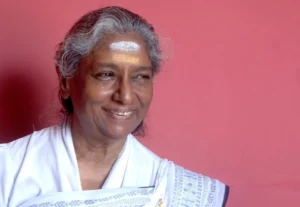
K S Chithra
Someone who is an integral part of every South Indian household that cherishes music, Chithra is an artist for whom it is impossible to pick a single ultimate favourite. What makes her so incredibly special? What is it about her that stands as testimony to a career spanning over three and a half decades, one that continues to thrive even today?
A journey that’s worth admiring…
I make it a point to watch or listen to most of Chithra’s interviews. She often narrates the same humble tale of recording her first song that was never released, before finally making her entry into Malayalam cinema with M. G. Radhakrishnan’s Njan Ekananu. Her portions in a duet with the legendary K. J. Yesudas were recorded amidst nerves, with Yesudas himself encouraging her through the process. Her first solo track, Rajani Parayu, was also from the same film. With a distinct teenybopper tone back then, who could have predicted she would go on to reign supreme in India’s playback singing scene?
Hailing from a family of musicians, Chithra’s elder sister, K. S. Beena, was the first to pursue a career in playback singing. Known to be a private person, Beena soon left the industry for matrimony. Destiny, however, had other plans for the younger sibling. Chithra’s popularity in the Malayalam film industry soared quickly. Her voice became a statewide sensation, particularly with the melancholic Aayiram Kannumayi from Nokketha Doorathu Kannum Nattu. Her rising fame and filmmaker Fazil’s insistence on using her voice for the film’s Tamil remake propelled her to the South Indian big league. The song Chinna Kuyil from Poove Poo Choodava eventually became her nickname. Chinna Kuyil, meaning “The Little Nightingale,” marked the beginning of a career that would leave competition far behind. Her association with Ilaiyaraaja led to her first National Award for the iconic Paadariyen from Sindhu Bhairavi.
Chithra’s interviews are full of delightful anecdotes, many of which she fondly recounts time and again. Stories like the late composer Raveendran recording Varmukile from Mazha at his residence with the help of his sons, or recording a scratch version of Sayanthanam from Kamaladalam in her voice, which eventually made it to the film, always surface. Another lingering memory is of her arriving late for an Ilaiyaraaja recording session and breaking down, only to be comforted by the maestro himself. While fans adore her rendition of Ee Puzhayum from Mayookham, Chithra Chechy herself considers it one of her lesser performances.
In her classic, old-school manner, Chithra treasures audio recordings of composers explaining tunes to her. From A. R. Rahman and Anu Malik to Deva and Johnson Master, one can only hope that Chechy will someday share these gems with the world.
Ever since her debut, Chithra has never looked back. She remained vibrant and relevant in 2016 with hits like Konji Pesida Venaam, a duet with Sriram Parthasarathy.
Quite a livewire on the stage!
I am yet to witness a singer as enigmatic as Chithra on stage. No, she does not pace around with flashy dance moves. She barely moves from where she stands. In recent years, she has begun to smile and interact with the audience a little more. But the real takeaway is her tonal quality. Her renditions are so crystal clear that they often surpass the finesse of her studio recordings. It is not uncommon to see orchestra members struggle to match her brilliance, with Chechy subtly improvising to help them rise to the occasion.
One of the most endearing aspects of her concerts is something few singers dare to do — she takes live audience requests. For someone who has recorded over 18,000 songs across languages, you never know what might come her way. It could be an intricate Carnatic piece filled with sargams and harkats, or a massy Rajinikanth dance number. Chithra is always ready for the challenge. The last time I heard her live, she sang until the audience was completely overjoyed. Requests kept piling up, one after another, and none of us wanted that night to end.
What energy that was!
That virtue called simplicity
It is common knowledge that Chithra is a singer of legendary stature. Her record six National Awards and countless other accolades could easily have given her an air of VIP detachment. But no. Chithra remains deeply rooted in the humble beginnings she rose from. Her upbringing in a musically inclined family, her youth festival stints, the scholarship, training under K. Omanakutty Teacher, and her gradual rise to stardom — each phase has contributed to the simplicity she exudes today.
It is easy to admire this quality in her, but nearly impossible to emulate and retain it. Chithra’s persona isn’t shrouded in mystique, nor does she carry the aura of a diva. Amen to that. On second thought, perhaps it is the absence of professional setbacks and bitter experiences that has allowed her to remain so grounded.

Because music is all she knows!
You would rarely find K. S. Chithra making statements on social issues, politics, or any other hot-button topics. Her social media presence is filled with birthday wishes, tributes to her colleagues, pictures from her concerts, and, of course, her work. I once heard her mention in an interview that her politeness is often misunderstood in an age of yellow journalism. For someone who does not actively follow current affairs, her decision to stay away from making public statements on them makes complete sense. But that brings us to the question — how does she give back to society?
Chithra, as a celebrity, operates on a level far removed from those who merely post condolences on social media. For an industry that gave her life and a career, she has given back in her own meaningful way. She established the ACV Sneha Nandana Trust, an initiative to support ageing and needy musicians from South India. She announced this venture at the event commemorating her 30 years in the music industry.
Indeed, music has given her a lot. The joy of earning millions of admirers across the globe. A healing balm that helped her cope with a devastating personal loss. For her, music is not just a profession. Music is who she is.
Competition? You must be joking…
There has never been a dearth of talented singers in any film industry. However, though Chithra Chechy or her followers might not prefer to put it this way, hers was a one-woman show for nearly two decades. There were times when hiring another female singer was almost out of the question, while male singers would take turns. For duets across the four South Indian languages, Chithra’s name was a constant presence on audio inlay cards — a feat no other singer has managed to replicate.
Even in her comparatively short stint in Bollywood, she ensured she carved a niche for herself. Some of her songs became cult favourites, others were chartbusters, and a few remain timeless. She made the most of every opportunity that came her way. It was no small achievement for a humble, soft-spoken South Indian singer to land songs in big-ticket productions like Main Prem Ki Diwani Hoon, Koi… Mil Gaya, Asoka, Tum Bin, Guru, Virasat, Pardes, Ziddi, Salaakhen, among others.
The goddess of genres
My budding musician friend from the North of India keeps trying cover versions of Chithra’s numbers. I often wonder ‘Why Chithra?’. After all, Bollywood has singers of great repute and a body of work. On second thought, do they even dare compose a purely classical soundtrack like Sindhu Bhairavi for the talented singers? Such attempts are far and few between. Do ordinary love songs boast of near-impossible aalaps like Shivadam Shivanamam has? They don’t. Are there even songs with striking note variations like Amrutha Varshini’s Thunturu and Ee Sundara? It’s a NO yet again. Well, I don’t blame my friend at all.
Give Chithra any genre – I doubt if she would say no to any. Here’s a list of interesting songs I could instantly think of.
Ezhimala Poonchola (Spadikam) – A brazen item featuring the sex goddess (who else?) Silk Smitha. Chithra makes sure to ooze enough oomph with her rendition that the lady’s sex appeal remains unprecedented. This one is just one of the several Chithra – Silk combinations. Yet another brilliantly sensual number (and a personal favourite) is from Anu Malik’s Asoka – Raat Ka Nasha.
Kokkurasumen (No.1 Snehatheeram Bangalore North) – Music director Jerry Amaldev was a practical person. There are multiple female characters and children in this song. He couldn’t have invested in multiple singers for each. He asked Chithra to let go of her inhibitions, and Chithra just made a killing with her voice modulations for each character.
Marugo Marugo (Sathi Leelavathi) – Tamil audience love Kovai Sarala and her peculiar, shrilly voice. Well, this song happened when Ilaiyaraaja asked Chithra to “sound” like the veteran actor. Neat, I say.
Ragga Raaga (Ragga Raaga by Voodoo Rapper) – Remember the 1990s Indipop scene? Chithra jammed with Voodoo Rapper and gifted us this funky fusion album.
Onde Usiranthe (Snehaloka) – A recent discovery – this Kannada track is a breathless one by Chithra and Rajesh Krishnan.
Duniya Jise (Andaz) – A lovely Nida Fazli ghazal composed by Pt. Ramesh Narayanan.
Parumala Cheruvile (Spadikam) – Chithra sings for Urvashi, whose character consumes alcohol by mistake. For each of us who’ve played at least one drunken antakshari in our lifetimes, Chithra’s drunken woman turn is a riot.
Tum Bin Jiya Jaaye (Tum Bin) – CULT. Period.
Kasi Repe (50-50) – Asha Bhosle worked wonders in the Hindi original while Chithra took it to the crescendo of oomph in the Tamil and Telugu versions.
A Lullaby of Hope – Recorded in three languages, this gem of a lullaby proves there can’t be a voice as motherly as hers. Be Anu Malik’s Kyun Baar Baar (Filhaal) or Sejo John’s Maalagha Pole (Mummy & Me) – her lullabies are must-haves in your night playlist.
Aasmani Rang (Sunset Point) – Her voice in this lovely number from Gulzar’s album is akin to a celesta’s tingle.
Ek Lo Ek Muft (Guru) – Chithra’s voice turned husky for this one. Her chemistry with Bappi Lahiri was kickass, and so was the ultimate impact. Yammo yammo yammo le… Gujju from the word go! Another husky number, Choosukovo, from the recently released Telugu historical ‘Rudhramadevi’ is worth a mention.
Vaisakha Pournamiyo (Parinayam) – Essentially a five-minute thesis on crystal clear pronunciation.
Venalinte Chirakileri (Edavapathi)– Notice the minimal orchestral backup. This Mohan Sitara track has Chithra’s honey-tinged voice making all merry.
Uyire (Bombay) – There is a reason why this one is considered way superior to its Hindi counterpart.
Angopangam (Devasuram) – A classical Bharatanatyam performance with fumes of anger. Who else but Chithra could have pulled it off with elan?
Delightfully old-school…
One of the last singers who pay respect to the stage before their performances. One of the last in the league to take blessings from senior fraternity members despite being a legend herself. In one of her interviews, we see her expressing displeasure over youngsters coming unprepared to the recording studio. Some of them even reportedly trash their songs in the studio post-recording.
As for her camaraderie with her seniors, the one that she shares with S. Janaki ought to be the most remarkable. One of her renditions of Janaki’s Malarkodi Pole at an Idea Star Singer episode had the former beam with pride.
As a tribute to Lata Mangeshkar, Chithra released an album titled ‘Nightingale – A Tribute To Lataji’ that consisted of 8 priceless cover tracks. At Mangeshkar’s 75th birthday celebrations, Chithra enthralled the audience with her version of the much-difficult Rasik Balma. Yet, my personal favourite would be the version below of Raina Beeti Jaaye!
Malayalam film ‘Mayamayooram’ had Chithra reprise Mukesh’s Kabhi Kabhie Mere Dil Mein (Kabhi Kabhie). At another event, Chithra shared the stage with Asha Bhosle and jammed on a few of her hit numbers.
For someone who always talks highly about or constantly posts wishes and remembrances on social media, Chithra’s affection and gratitude towards the fraternity are applaud-worthy.
All said and done…
I would proudly and unapologetically reiterate that Chithra is the most versatile, prolific, and matchless playback singer working in the Indian film industry today. From a fidgety teenager crooning alongside stalwarts at Thiruvananthapuram’s Tharangini Studio to a veteran performing at the House of Commons in London — the first Indian singer to achieve this feat — to reprising the yesteryear chartbuster Andam Hindolam with absolute gusto in the recent Telugu hit Supreme, Chithra has only grown better with time. Her enthusiasm and dedication to her craft show no signs of fading. She continues to surprise us, both inside and outside the recording studio.
Wishing the legendary songstress a wonderful birthday and a melodious year ahead!



Good work Man”….Happy Birthday Chithra Chechi,,
Such a great work … just want to add some more gems from Hindi ….
Raat humari toh from parineeta among the best songs for Vidhya balan . Chithra maa sang for all the big actresses of that era starting from revathy mam she sang from kajol juhi chawala maduri dixit off course raveena from new generation too she sang for kareena most Vidhya preeti and list goes onn .
Not to forget her PIYA BASANTI the symbol of pure love and music .
Evenly she sang some songs in hindi but she got national too .. for payallay chunmun . She got various bollywood awards too like screen award for payallay chunmun Mtv award for piya basanti koi mil gaya and list goes onn ….
Not to forgot many big names from the bollywood like Lata ji vishal bhardwaj asha ji Shreya Ghoshal Usha uthup Gulzar sahab list goes onn always considered their favourite.
Well the achievements of MELODY QUEEN are still achieving new position . Always praying best for her .
Thank you for your kind words, Mr. D & Surya 🙂
@Surya
It is indeed a task to pick the best while profiling an illustrious artiste like Chithraji. With gems like Raat Hamari Toh, Piya Basanti and Payalay Chunmun being mentioned in other articles I wrote for Filmy Sasi, I thought of featuring other Chithra hits in this one 🙂
And I agree with all your points. I so wish Chithraji makes a royal comeback to Bollywood singing for the likes of Deepika and Anushka.