The biggest challenge for any cinephile in Mumbai is learning to lower your standards just a bit when deciding whether a movie is actually good or bad. Stepping straight out of a week at the Mumbai Film Festival and into a mainstream Bollywood film is usually a severe reality check. That said, Karan Johar’s Ae Dil Hai Mushkil is nowhere close to bad cinema. It’s a warm, nostalgic trip through the sensibilities of a generation that grew up loving KJo as a brand. His craft may have matured over the years, but deep down, he’s still the same director who gave us so many core film memories. Not many Bollywood filmmakers can sell a movie on their name alone, but does ADHM justify our faith in him? Honestly, yeah. It does.
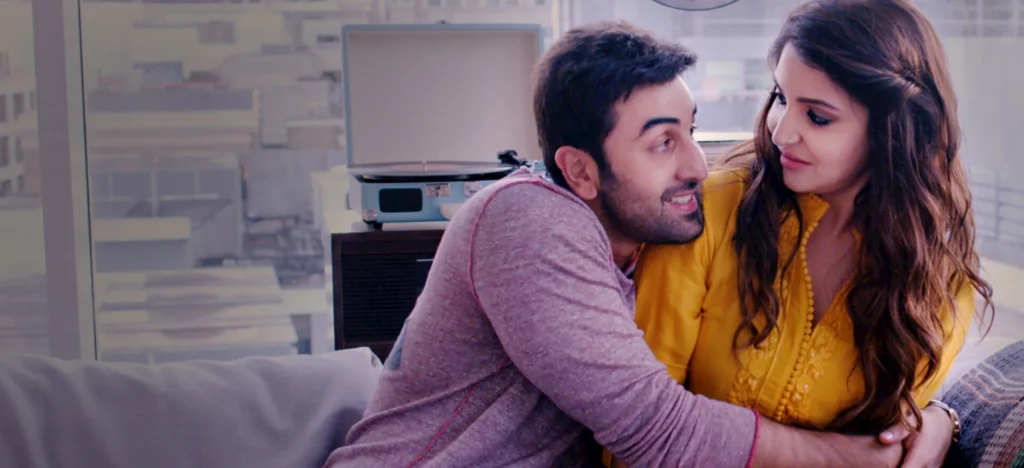
This time around, Johar tackles something almost everyone has stumbled through, or at least wondered about, even if you’re as absurdly attractive as Aishwarya Rai Bachchan: the dreaded friend zone. Ayan (Ranbir Kapoor) is madly in love with Alizeh (Anushka Sharma), but the feeling isn’t mutual. Had this been old-school Karan Johar, he would’ve slapped designer clothes on his hero, sent him to a top London salon for a makeover, and voila… the girl falls in love because pyaar dosti hai.
Instead, he dives into the messy, asymmetric nature of being more than friends to one person and just a buddy to another. Ayan and Alizeh just don’t view their bond through the same lens. For him, physical intimacy is the ultimate expression of love; for her, simply hanging out is more than enough. Johar makes their dynamic feel surprisingly natural, and even the obligatory comedy beats land, something I haven’t been able to say about his work in a long time. The jokes are heavily rooted in old Hindi cinema, and the opening-day crowd (a mix of maniacal and incredibly picky film nerds) caught almost every reference.
The trouble starts when Johar gets a little too carried away with himself. The nostalgia is great, right up until he starts leaning on it like a crutch. By the second half, Ae Dil Hai Mushkil feels less like a warm homage and more like a greatest-hits compilation of movies we’ve already seen. First up is a nod to his best work to date, Kabhi Alvida Naa Kehna (KANK). We get a very familiar dinner-table scene, a few heated confrontations, and a melancholic track. But where KANK gave us that wonderfully tense, awkward pre-climax scene between Rani Mukerji and Preity Zinta, ADHM tries to do the same with Ayan and Ali (Fawad Khan), and the writing just doesn’t pack the same punch. From there, the déjà vu rolls in heavy: Tamasha, Ek Main Aur Ekk Tu, Chandni, Kal Ho Naa Ho, Katti Batti, Rockstar… you name it.
What saves the movie from devolving into a total retread is Johar’s sheer conviction. He knows what he wants to say: don’t settle when it comes to matters of the heart. But the final act feels way too convenient, carrying a strain of melodrama that left me with a bit of a sour aftertaste. These characters spend the whole movie dissecting their feelings out loud, so why does a basic, honest conversation suddenly become impossible at the end? Sure, maybe things wouldn’t have worked out anyway, but the emotional payoff feels a lot less earned than Johar seems to think it is.
The dialogue, on the other hand, is delightfully bougie. Johar and Niranjan Iyengar kick things off with snappy banter between two Londoners before taking a dramatic turn once Saba (Aishwarya Rai Bachchan) walks into the frame. She introduces herself as a shayra, leading a totally oblivious Ayan to reply with a casual, “Hi, Shayra.”
Also, can we talk about how everyone in this movie has a fantasy career? Saba is an Urdu poet living in Vienna—a city that suits her ridiculously well. She’s self-aware enough to know her poetry is mediocre, but she herself remains a walking work of art. With that immaculate makeup and smoldering screen presence, she’s almost too perfect to exist. In Karan’s next movie, I fully expect my favorite, Rani Mukerji, to play an Odissi dance tutor living in Venezuela. Just putting that out into the universe.

And seriously, how do these people fund their lives? KJo’s leads have always been rich, but the invisible benefactor checking the bills here is hilariously obvious. Nobody seems to have a job that could actually pay for any of this. But hey, Ae Dil Hai Mushkil isn’t a movie about loving your parents, is it?
What is surprising is how little Johar makes use of his technical crew. For a director who usually gets stellar work out of his team, this is easily one of his visually weaker efforts. Anil Mehta is a brilliant cinematographer, but the camera seldom strays from tight close-ups. Sure, the actors have great facial expressions to spare, but the world around them barely gets room to breathe. Compare this to KANK, where Mehta’s framing said just as much as the script. When the title track ends here, the camera could have easily lingered on the abandoned microphone and let the image speak for itself. But no! KJo’s characters are already lined up, ready to drop another batch of intense reactions.
The wardrobe and styling look great, but all that polished perfection works against the movie. Everyone looks so immaculate that their actual pain never registers on their faces. It makes an already forced final act even harder to swallow. Would it really have killed the costume department to let Anushka look a little frail? Apparently that’s a bridge too far in a Karan Johar weepie.
Pritam’s soundtrack, though, does heavy lifting. If ‘Tumhi Dekho Naa’ was the emotional anchor of KANK, ‘Channa Mereya’ is the heart of this film. A couple of songs drop in at weirdly awkward times in the first half, but the melodies are strong enough to forgive it. The album feels like a throwback to the great pre-2000s Hindi film scores, and easily stands out as the best commercial album of 2016.
The background score lands well too, with Shilpa Rao turning in a gorgeous, haunting rendition of ‘Aaj Jaane Ki Zid Naa Karo’. The production design and editing do their job, even if Johar could have found a more visual, cinematic way to show what Ayan and Alizeh are actually feeling.
As for the performances, they’re a bit like dining at a high-end South Bombay spot: gorgeous presentation, great flavors, and thoroughly satisfying. Johar knows how to pull the right emotional notes out of his cast, even when the plot threatens to boil over.
Anushka Sharma is tremendous as Alizeh. You actively miss her whenever she walks off-screen, which is saying something in a movie stacked with stars. She brings that signature firebrand energy we’ve seen from her before, but this might just be her finest performance in that space. Ranbir Kapoor matches her step-for-step as Ayan. He is complex, insecure, and constantly his own worst enemy. He doesn’t miss a single beat, especially in the aftermath of ‘Channa Mereya’, which is guaranteed to leave a few lump-in-the-throat moments.
Aishwarya Rai Bachchan is poised, restrained, and delivers her best work since her acting break. Lisa Haydon is a total riot in her bimbette avatar; can someone please cast her in a trippy, all-girls comedy already? Fawad Khan, unfortunately, gets almost nothing to do. All that hype for a role this thin? We might have to wait for the deleted scenes. Meanwhile, Shah Rukh Khan shows up for a brief cameo and completely steals the air in the room. His line, “Hamari kahaani badal gayi, khauff nahi badla,” gives the scene a weight that the rest of the supporting cast desperately needed. (Luck by Chance, anyone?)
At the end of the day, Ae Dil Hai Mushkil works because Karan Johar truly believes in what he’s selling. Getting friend-zoned isn’t a crime, he tells us; not knowing your own mind is the real tragedy. The second half borrows a bit too heavily from the past, and it’s certainly not Johar at his absolute peak. Yet, I couldn’t help but warm up to it.
Beneath the designer coats, moody bars, and glossy European cities is a filmmaker who still fundamentally remembers why we fell in love with his movies in the first place. It’s dramatic, over-the-top, and unapologetically filmy. When Ayan shouts, “Aaj mujhe lag raha hai… main apni film ka hero hoon!”, you can’t help but grin. KJo knows exactly what his audience came for, and he gives us just enough to make the ticket price worth it.
Rating: ★★★☆☆
P.S. Did anyone else spend the whole movie trying to figure out the lead actresses’ exact cultural roots? Was it Lahore or Lucknow? Hopefully, Karan clears that one up for us someday.
Ae Dil Hai Mushkil is now streaming on Amazon Prime Video.