Lootera. A title that might otherwise have belonged to an off-kilter heist comedy from the ’90s is now fondly associated with one of the most cherished love stories of our times. Starring Sonakshi Sinha and Ranveer Singh in the lead roles, Vikramaditya Motwane’s film is a serene reminder that cinema need not chase formula to resonate with a wide audience.
Released during the monsoon of 2013, Lootera was a film of revelations. While Motwane showcased his mastery over an entirely different genre, its principal cast disappeared into characters unlike anything they had played before. Here’s what Lootera meant to me as a viewer, then and now.
Unconventional character arcs
Commercial cinema is often kind to its vulnerable protagonist. Particularly in the absence of an ensemble cast, the narrative usually rewards the underdog with a triumphant rise after a series of setbacks. Lootera offers no such comfort.
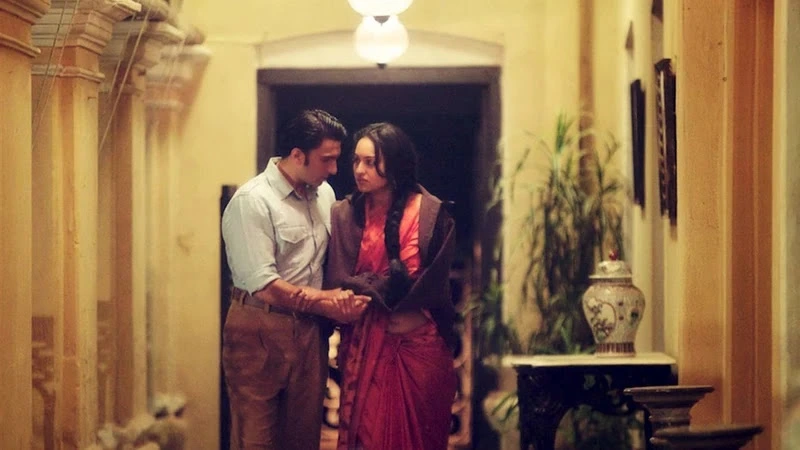
Motwane’s heroine, Pakhi (Sonakshi Sinha), is an asthma patient who is lonely yet quietly confident. Living an uneventful life in her sprawling mansion in the quaint Bengali town of Manikpur in the early 1950s, she remains sheltered from the world’s cruelties. Her encounter with Varun Srivastav (Ranveer Singh) changes everything. One devastating twist after another turns her life upside down, never allowing it to return to what it once was or what she wished it could be.
But isn’t Pakhi the leading lady of a commercial Hindi film? Why does she remain emotionally deprived until the very last frame? Does the film even avenge the injustice done to her father?
The answer is a resounding no.
A heartbroken Pakhi asks Varun:
“Mujhse pyaar karte ho, Varun babu? Mera dil rakhne ke liye toh haan bol dijiye…”
All we get in return is a stone-faced Varun.
Motwane and Bhavani Iyer’s screenplay never hesitates to make its characters painfully human. To hell with the conventional hero’s journey. Nobody gets what they truly want. It is this lingering sense of incompleteness that makes Lootera so profoundly moving. There are no victories, no euphoric crescendos. Life simply moves on.
A celebration of gaze
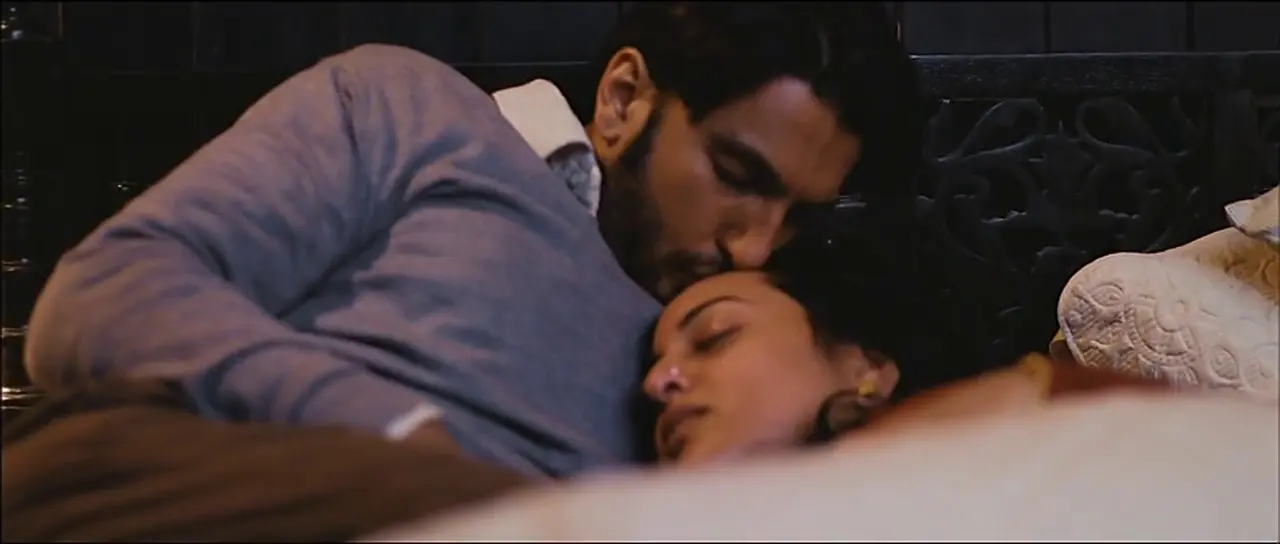
Lootera is no ordinary romance where lovers constantly meet and profess their feelings. Motwane builds intimacy through glances. It begins almost accidentally, with Pakhi instantly falling for Varun.
He often allows his frames to linger a few seconds longer than mainstream cinema usually does. Those silences never feel indulgent. Instead, they deepen the emotional pull. More importantly, he understands exactly where to stop. The gaze remains intimate without ever becoming intrusive.
Telling reaction shots
Lootera is also filled with exquisite reaction shots. At times, a single piece of news is experienced through multiple individual reactions, each revealing something different about the characters.
Even the surroundings become participants in these emotional beats. Motwane doesn’t reserve his landscapes merely for picturesque establishing shots. They frequently become extensions of his characters’ emotions, creating visual metaphors that enrich the storytelling.
Think of the sequence announcing the abolition of the zamindari system.
Or the devastating moment when betrayal comes to light.
Weaving silence into a musical template
Pakhi and Varun are people of few words. They never share the easy companionship that exists without social obligations. A lesser film would have relied heavily on voice-overs. Motwane instead embraces silence.
We watch the reserved Varun gradually open up to Pakhi during lakeside conversations and painting lessons. She asks him questions nobody else ever has. Sitting by the lake, Varun speaks of his dream of visiting Chandrataal near Manali, a place known for its beauty, stillness and silence.
These conversations are rare. For everything left unsaid, Motwane turns to Amit Trivedi’s magnificent soundtrack and Amitabh Bhattacharya’s evocative lyrics.
When Pakhi falls in love:
“Badal rahi hai aaj zindagi ki chaal zara…
Issi bahane kyun na main bhi dil ka haal zara…
Sawaar loon…”
And when Varun is consumed by guilt:
“Mere haathon hua jo qissa shuru,
Use poora toh karna hai mujhe…
Qabr par mere sar utha ke khadi ho zindagi,
Aise marna hai mujhe…”
That sublime artistic quality
Inspired by O. Henry’s The Last Leaf, Lootera is rich in literary references that seamlessly influence its narrative.
Pakhi dreams of becoming a writer, despite her father’s lack of faith in her abilities. During her first proper meeting with Varun, the two recite Baba Nagarjun’s Kai Dinon Ke Baad in the library. Impressed by his literary knowledge, the zamindar welcomes him into their home.
Trying to spend more time with Varun, Pakhi announces that she wishes to learn painting. A completely clueless Varun suddenly becomes her teacher, giving rise to some of the film’s most charmingly understated comic moments.
“Mujhe bas pattiyan banani nahi aati…”
“Pattiyan? Pattiyan toh bahut aasaan hain…”
“Modern art mein toh aisi hi banti hain pattiyan!”
“Ab class chalte rehne ke liye kisiko toh seekhna hoga, aur kisiko sikhana.”
By the second half, Pakhi lives a colourless existence in Dalhousie, struggling to write a novel. Copies of The Illustrated Weekly of India, Dwarkanath Ganguly’s Kobingantha, and Premchand’s Godaan lie scattered around her study as she searches for words.
In one fleeting moment, perhaps real, perhaps imagined, Varun asks about the story she is writing, only to move emotionally closer to her once again.
Later, after being diagnosed with tuberculosis, the doctor advises her to move somewhere warmer.
“What is the incentive?” she asks.
“Maybe you’ll write another book,” the doctor replies.
“The one I’m writing now is already going to take my life.”
The stories within
Lootera opens with Pakhi and her father watching a humorous Ramayana performance. Amidst the laughter, the zamindar dismisses rumours about the impending abolition of the zamindari system. Pakhi enjoys the performance until illness interrupts her joy.
Soon afterwards, her father narrates the tragic folk tale of the Bheel Raja, a story that quietly becomes the emotional soul of Lootera.
Later, Tadbir Se Bigdi Hui Taqdeer from Baazi plays in full as Varun’s associate Devdas (Vikrant Massey) passionately praises Dev Anand. Interestingly, Anand’s morally ambiguous character mirrors Varun himself, a man whose crimes are driven less by greed than emotional desperation.
Betrayal and penultimate redemption
True to its title, Lootera is ultimately a story about betrayal.
The zamindar likens himself to the betrayed Bheel Raja, comparing Pakhi to the king’s beloved parrot. Yet, viewed differently, Pakhi herself becomes the betrayed king, deceived by the man she loved.
During one of their later encounters, she openly blames Varun for her father’s death.
Soon afterwards, she writes:
“Sab kuch peeche chhodkar aayi thi…
Sab bhool jaane…
Pata nahi kyun tum wapas aa gaye.
Pata nahi kyun maine aane diya…”
Like the Bheel Raja’s tale, Pakhi ties her fate to the last leaf clinging to the tree outside her window. She makes no attempt to hide her suffering from Varun. Even while forcing him to confront his guilt, she refuses to betray him. Her revenge remains deeply internal, making his remorse all the more unbearable.
Could Varun undo the damage he had caused? Perhaps not. But he could give her something greater than forgiveness.
He could give her hope.
By sacrificing his own chance to escape, he ensures that the last leaf remains where it belongs. In doing so, he safeguards Pakhi’s life in a way he never could during their time together.
Years later, Lootera continues to gleam like an unfinished painting, forever inviting another brushstroke, another interpretation, another revisit.
Lootera is now streaming on Amazon Prime Video and MX Player.