Bollywood doesn’t do solo Muslim male leads. In fact, it is both an ironic reality and an unspoken convention when the industry forces its pioneering Khan triumvirate to play upper-caste Hindus. Unless, of course, you have them as gangsters (Raees), terrorists (Fanaa), terrorism victims (My Name Is Khan), or a rare Mughal emperor (Jodhaa Akbar). Therefore, getting a superstar of Sunny Deol’s stature to play a compassionate Muslim hero in Batwara 1947 is a mini-revolution like Coolie and Sultan.
Rajkumar Santoshi’s film is surprisingly well-timed in a society that still thrives on religious hatred, the seeds of which were sown decades ago, damaging India’s vibrant social fabric to a state of no repair.
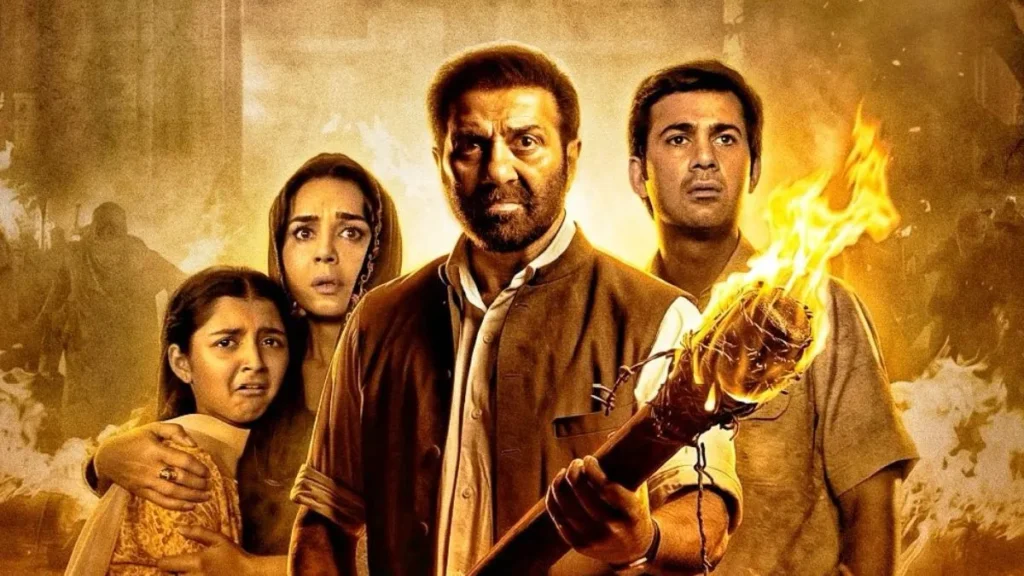
Based on Asghar Wajahat’s 1989 play ‘Jis Lahore Nai Vekhya, O Jamya E Nai’, Batwara 1947 takes us to the dark days of the 1947 Partition. Santoshi wastes little time after a brief Independence prelude, opening in an unusually cordial Hindu-Muslim neighbourhood in Meerut. Tragedy strikes in the form of violent mobs forcing Sikandar Mirza (Deol) and his family, along with many other Muslim families, to flee to Pakistan overnight.
Hardships continue as Mirza’s elder son Javed (Karan Deol) misses boarding the train, followed by the family’s month-long struggle to acquire a residence in Lahore, one of the cities most affected by the riots surrounding the creation of Pakistan. The real trouble begins when the family encounters an elderly Hindu woman (Shabana Azmi) on the upper floor of their newly allotted mansion. She insists on being addressed as ‘Maai’ and is the mother of Ratanlal (Khalid Siddiqui), a jeweller who owned the house.
A law-abiding citizen and a family man, Sikandar is not one who wears his religion on his sleeve. However, through the course of Batwara 1947, we learn how he has interpreted Islam, unlike the opportunistic rioters who would polarize society to gain power in a politically sensitive Pakistan. One such miscreant is Yaqoob Pehelwan (Abhimanyu Singh), who is hell-bent on ousting Maai and seizing the family’s massive wealth.
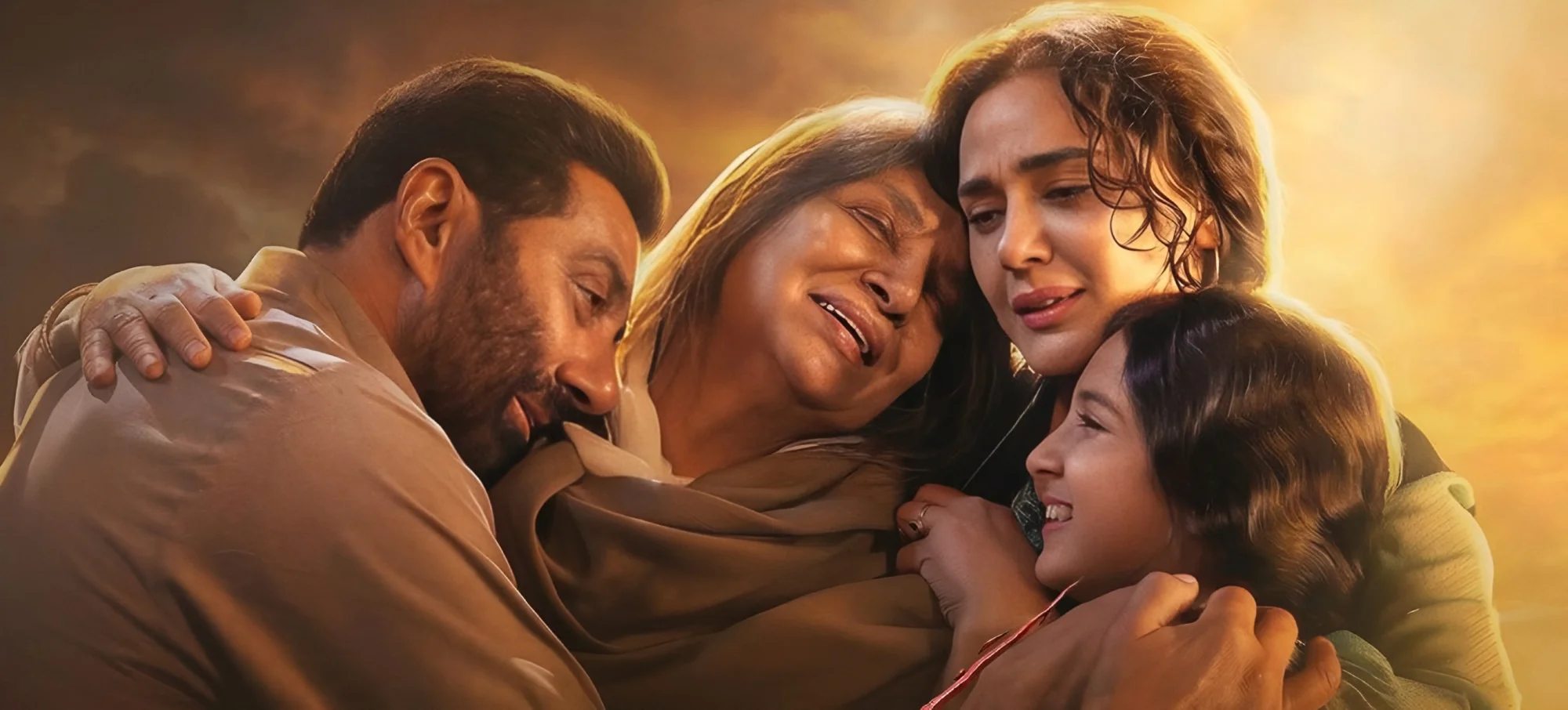
Initially bewildered and defensive, Sikandar is curt with Maai, repeatedly asking her to leave the house. The woman is right in her place because the home belongs to her, legally and otherwise. Soon, Sikandar’s wife Hamida (Preity Zinta) and daughter Tanno (Khushi Hajare) bond with Maai, whose affectionate ways eventually reach Sikandar, who had never experienced a mother’s love before. Batwara 1947, this way, is an exploration of the truest form of love that transcends religious and geographical boundaries.
Santoshi leans into the natural goodness and tolerance of the source material, which is effectively the film’s biggest plus, while actors who know their craft add a lot of soul to their parts. Batwara 1947 gets its core drama and action right, with the filmmaker sticking to his trademark ‘90s style. After a long time, it felt as if Deol’s rage (he’s so good at it) was for a real purpose, something that can incite behavioural change, both in and out of the film.
The director’s refusal to embrace a certain new style of filmmaking is both the film’s boon and bane. It’s a boon because, on a commercial cinema template that intends to cater to the masses, the film’s tendency to underscore its message with thunderous dialogue, black-and-white characterizations and a strong music score works quite well. It’s a bane because Santoshi conveniently misses out on sharpening his own footage. The lack of attention to detail is primarily jarring in its amateurish editing, one of the worst in recent times. Frames slip from regular speed to slow motion without reason, while several sequences abruptly cut into the next, paying no heed to possible tonal disconnects.
The film also suffers from its refusal to adapt the source, a play, to a canvas that’s far more expansive: cinema. A film has the advantage of space that a stage play doesn’t have, a truth that the filmmaker seems oddly oblivious to. It is strange how Santoshi never shows us what lies beyond the plot’s immediate surroundings. The result is a lack of atmosphere or mood, unlike the recently released Partition drama Main Vaapas Aaunga. As a result, Batwara 1947 remains stilted in its theatre-like intimacy.
In a rare outdoor shot, we see the DOP (Santosh Sivan) film the lead couple discussing their hardships at a rather scenic locale. While the setting may not exactly be necessary in the film’s context, the escape from one closed set to another feels like a breath of fresh air.
On the writing front, the film fails to establish Javed’s stakes in the plot. Poor acting aside, the character (Karan Deol) traipses in and out of the story with little impact. Javed even gets a half-baked love story, which we never expected to work, but we wish there was some bond that he shared with his father, mother and younger sister. There’s a moment around the climax that goes all Kabhi Khushi Kabhie Gham on us, making us wonder if the scene only had his father performing.
All said and done, the central message of Batwara 1947 does soften some of its other glaring deficiencies. The film’s peace politics is confident and undiluted, riding in the opposite direction of the current box-office wave. Given that the film comes from producer Aamir Khan, the choice feels particularly significant. One must also hand it to the cast for executing the material with conviction.
Sunny Deol gets a part that fits him like a glove, and he humanizes Sikandar Mirza’s actions. Even when breaking a police station table or smashing a handcart to splinters, he remains Sikandar rather than falling back on his star persona. In an early scene, he comes close to his iconic “tareeq pe tareeq” line and stops right there, an amusing tease by Santoshi in an attempt to re-establish his longstanding association with the actor.
Shabana Azmi as Maai is the heart of Batwara 1947. Honestly, it takes a couple of minutes to get used to this casting because we aren’t used to seeing Azmi in such a persona. In no time, the veteran actress transforms into a Lahore-bred Hindu mother who deeply misses her son and family but happily co-exists with her new, accidental family. Azmi’s performance in the song ‘Kahaan Chale Gaye Ho Ram’ is among the film’s genuine emotional highs.
Preity Zinta, returning after a decade-long hiatus, lights up the screen yet again, and Batwara 1947 is good enough proof that her skills have never quite rusted. Karan Deol is the only member of the cast who manages to single-handedly dull the story’s impact. The actor miserably fails at conveying anger and distress at necessary intervals, while looking constantly confused and bored.
Essaying the chief villain, Abhimanyu Singh gets a religion swap from his part in L2: Empuraan and delivers the much-needed menace. The actors who play his sidekicks, however, are comical and may induce an unintentional laugh if you look at them for over five seconds. Ali Fazal is apt as a loner poet with a halo. His backstory, intended to add context and emotion to the main story, seems butchered on the editing table.
By the end, the social messaging becomes so heavy-handed it basically feels like an extended PSA. Take the moment where Muslim men end up chanting a Hindu slogan in the middle of riot-stricken Lahore: the execution is so clumsy that a scene designed to give you goosebumps ends up doing almost nothing. Personally, as a fan of both displacement dramas and classic Bollywood melodrama, I went in with extra tissues expecting a complete tearjerker. Sadly, I didn’t need a single one during Batwara 1947.
For a story about millions losing their homes, families, and entire means of life, Batwara 1947 ultimately leaves you more hollow than moved, which is a pity because it must be the most well-intentioned Hindi film of the year so far.
VERDICT: ★★★
For more reviews of Batwara 1947, head to the Film Critics Guild.