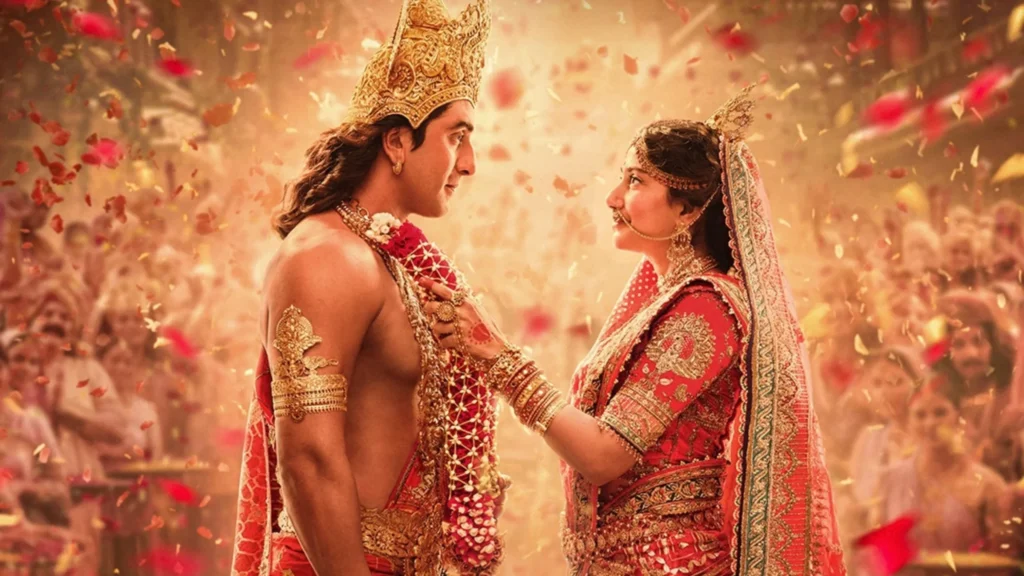
If Indian literature ever had an all-time blockbuster, The Ramayana would sit right at the top. It might not have The Mahabharata’s endless moral tangles, but its characters, conflicts, and internal politics are still wide open to reimagining. The epic no longer belongs to Valmiki alone; it belongs to anyone who brings their own ideas, ethics, and worldview to the table. That feels like the exact spirit behind the disclaimer in Nitesh Tiwari’s Ramayana: Part 1. The filmmakers clearly know the minefield they are walking into. We are living through a hyper-sensitive, creatively cautious moment where the internet outrage engine will latch onto everything, from Ranbir Kapoor’s eating habits and Sai Pallavi’s political stance to A. R. Rahman’s faith. Just getting artists of this caliber to pool their instincts on a project built on a staggering, multi-crore budget feels like an act of defiance in itself.
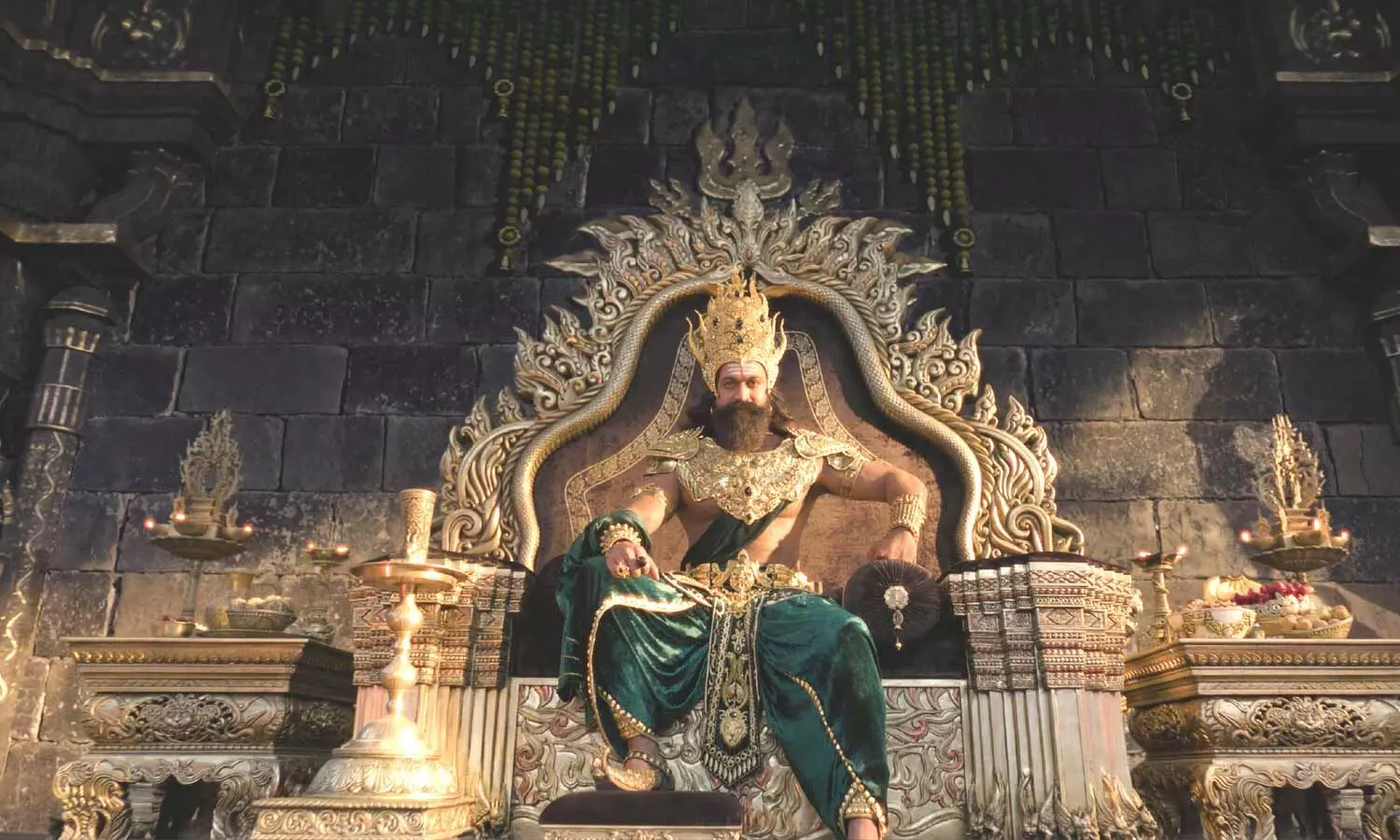
In a landscape where everything gets instantly polarized, Nitesh Tiwari and co-writers Shridhar Raghavan and Shreyas Jain know that refreshing an epic takes more than just modernizing the dialogue. The real trick lies in humanising its characters. 39-odd years ago, when the same epic became a television phenomenon, it would have been difficult to look at a demon like Ravana as a force shaped by unimaginable torment. Ramayana: Part 1 does not romanticise his suffering, but for a story that begins with Ravana’s (Yash) rise, his emotions matter to us. It is an interesting narrative choice, one that gives the familiar tale a different entry point without changing its destination.
Every era must come to an end, and there is a natural order to things. Whether in a world where the divisions between devas and asuras are clearly drawn or one where a certain Donald Trump holds court on Truth Social, no man’s arrogance can be allowed to rule an entire planet. As the story goes, Lord Vishnu must take human form to save mankind from the immortal demon’s reign over the three worlds. Ramayana: Part 1 shows Ravana being cruel to the rulers and caretakers of other kingdoms, but we never get a closer look at his claims of equality for his own people. Were they really so miserable that the gods had to intervene? The film doesn’t tell us.
What we do learn is that Ravana is a man of impossible conviction, someone willing to move heaven and earth, and challenge even the gods, to get what he wants. There is a fascinating contradiction here: a ruler who believes in equality for his people but exercises absolute power over everyone else. Tiwari introduces that contradiction without really examining it. This is one of its few missed opportunities, yet it does not diminish the force of what is on screen.
It takes 40-odd minutes for Ramayana: Part 1 to transport us to Ayodhya, a magnificently gold-lit kingdom in northern India. Ram (Ranbir Kapoor) is the eldest son of King Dashrath (Arun Govil, a wonderfully meta casting choice) and the heir apparent. As we know, it is a happy setup where everyone, from the queens to the commoners, seems content, except for an evil housekeeper, Manthara (a brilliant Sheeba Chaddha).
Following an early encounter with the demons Tadaka and Subahu, the noble prince lifts Lord Shiva’s mighty bow to win Sita’s (Sai Pallavi) hand in marriage. It is all things beautiful as Ram, along with his brothers Lakshman, Bharat and Shatrughan, marries the women they love, and Dashrath prepares to pass on his crown. But Queen Kaikeyi has other plans. Ram is sent into forest exile, with Sita and his dutiful brother Lakshman (Ravi Dubey) choosing to accompany him.
Unlike the Ravana chapter, these are familiar turns of events that offer little room for improvisation. The bigger responsibility for Tiwari is to live up to everyone’s collective imagination, and that is no small task. DNEG’s visual effects have a steep hill to climb, blending photorealism with mythological scale without feeling synthetic. Meanwhile, the writing must give these mythological figures individual traits without stripping away the emotional core that generations have grown up with.
The casting choices must withstand scrutiny over beauty standards and regional biases. Are the costumes and period detailing appropriate to the era? Can Bollywood’s eternal manchild, Ranbir Kapoor, become the poster boy of decency, the Maryada Purushottam Ram? The answers to these questions weigh as heavily as the expectations you bring into the theatre. The visuals are frequently overwhelming in the best sense. The scale and casting are the film’s biggest USPs; they rarely strip the story of its intimacy for long.
Kapoor is extra cautious about keeping his screen image in check. The strain is visible, and I can see why. Sai Pallavi’s Sita works twice as hard to get the neutral Hindi accent right, and the effort pays off. Dubey’s Lakshman brings a touch of 21st-century sass whenever he isn’t busy worshipping his divine brother. Dialogue writer Shreyas Jain bravely moves between chaste Hindi and Bollywood Urdu, offering an interesting tension in these choices. The characters must retain the dignity and familiarity associated with an epic, but their conversations cannot make an average viewer reach for their phone. This way, Tiwari’s film knows its audience.
Ramayana: Part 1 also understands India’s natural appetite for colour. Shot by Pankaj Kumar and Mahesh Limaye, the frames are a visual feast, setting Ayodhya’s warm, balanced symmetry against Lanka’s jagged, intimidating scale. Rimple and Harpreet Narula’s detailed costumes and a rich colour palette add to the grandeur, but Tiwari knows the difference between making a film look big and making its feelings hit home.
The camera occasionally rushes past close-ups when a moment demands a pause, but when the film lets its scenes breathe, the payoff is real. In the confrontation between Dashrath, Ram, and Lara Dutta’s Kaikeyi, the elaborate backdrop recedes to let the personal tragedy take center stage. The Bharat Milap carries the real weight of sacrifice, even if it doesn’t quite push you to tears, and the exchanges between Sita and Ram spring a certain tenderness amid the spectacle.
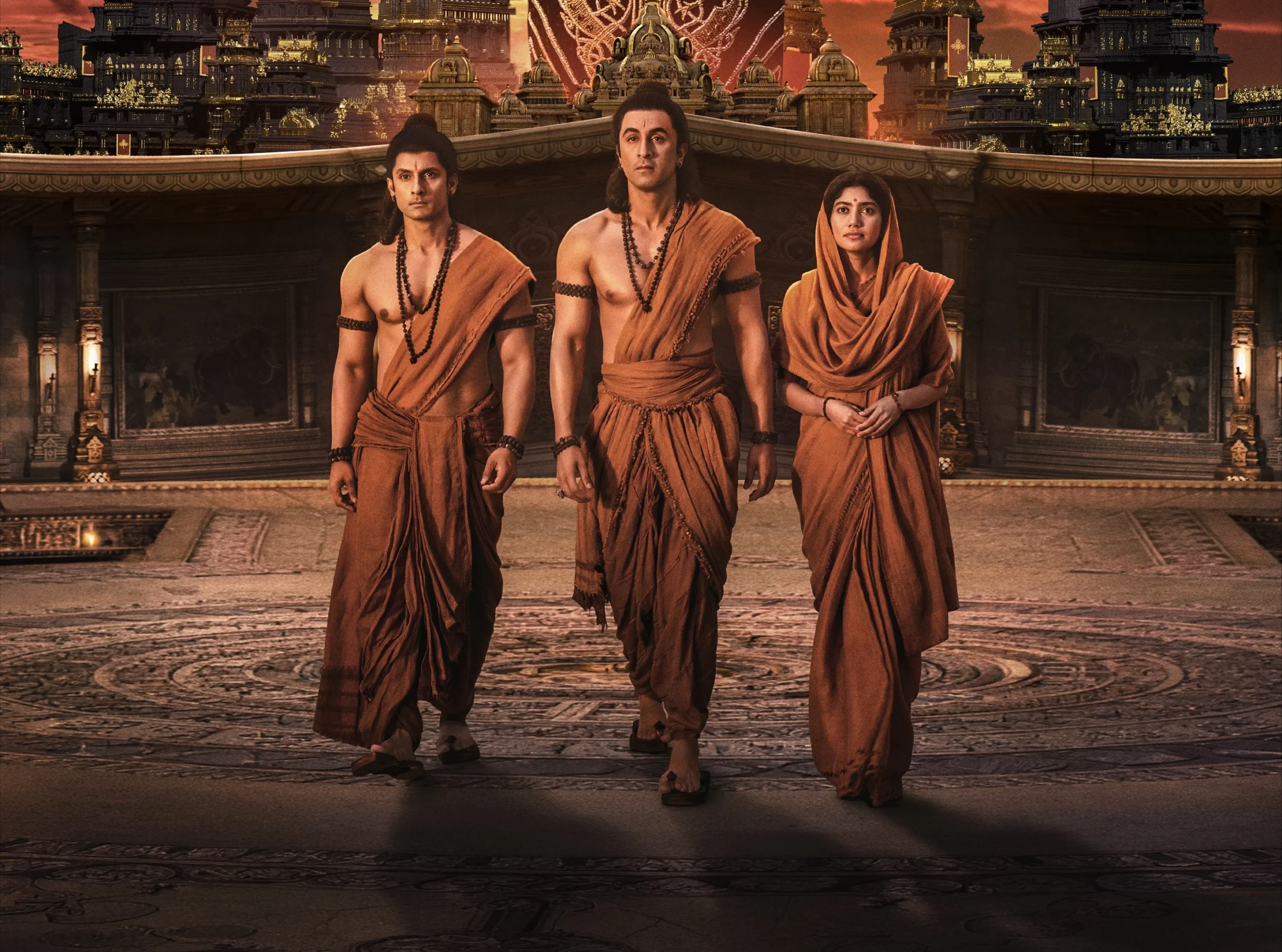
Tiwari also weaves contemporary values into his film without breaking the epic’s spine. When Lakshman cuts off Surpanakha’s nose, we hear an acknowledgement that no woman deserves such treatment. In another interesting move, this version of Sita is among the most warrior-like interpretations of the character, with the goddess actively taking on demons, much like Ram and Lakshman.
While several other demons populate the film, Surpanakha is a particularly beautiful presence. Her frightening appearance, if it ever existed, is never revealed to us. In an early interaction, Sita even predicts the demoness’s attraction towards her oblivious husband, because women just know these things. These choices challenge the idea that divinity must necessarily mean passivity or that flawed characters cannot command our empathy.
Ram understands that there is a larger meaning behind everything that transpires, but Ramayana: Part 1 also acknowledges a more immediate reality: actions have consequences. Lakshman’s attack on Surpanakha invites Ravana’s retaliation, while Sita crossing the Lakshman Rekha becomes the turning point that leads to her abduction. The epic’s chain of events remains intact, even as its characters acquire a little more human complexity.
Yet, this thematic ambition does stumble once in a while under the sheer weight of its 195-minute runtime. Ramayana: Part 1 gets indulgent at intervals. The post-interval passage involving Ravana and Vidyutjihva sets the context for later developments, but not without slackening the pace. It doesn’t help that Vivek Oberoi, saddled with an unconvincing dubbing voice, lacks the voltage to stand up to Yash’s Ravana, whose natural abs alone could hold the frame, let alone his eyes and magnetic persona. It is quite a contrast when one of the film’s most physically imposing characters is also its most compelling screen presence.
ALSO READ: ‘The Odyssey’ review: Christopher Nolan turns Homer’s epic into his own
For the most part, the length shouldn’t bother you unless you have little patience for the slow motion that has become synonymous with live-action fantasy dramas. And that is precisely the genre Ramayana: Part 1 embraces. While the Ravana and demon portions feel like a desi supervillain saga, a good chunk of Ram’s sequences scream an Indianised Disney template, in the best possible way. There is considerable joy in taking in the demons’ despicable appearances and subsequently watching our heroes and heroine beat them to a pulp. The film’s tonal shifts may not always be seamless, but they give its two worlds distinct identities.
Tying these two spheres together is an unexpected meeting of minds: A. R. Rahman and Hans Zimmer. The score acts as the film’s anchor, knowing when to stay simple with delicate, sacred melodies and when to turn up the volume for Lanka. Rahman’s signature touch gives Ayodhya its serene, spiritual gravity, while Zimmer’s classic percussion gives Ravana’s kingdom an ominous weight. The way traditional devotional chants blend into sprawling orchestral arrangements works surprisingly well. The soundtrack might lack an instant, hummable chartbuster, but in hindsight, stopping for a full-fledged song sequence would have only dragged out an already long film.
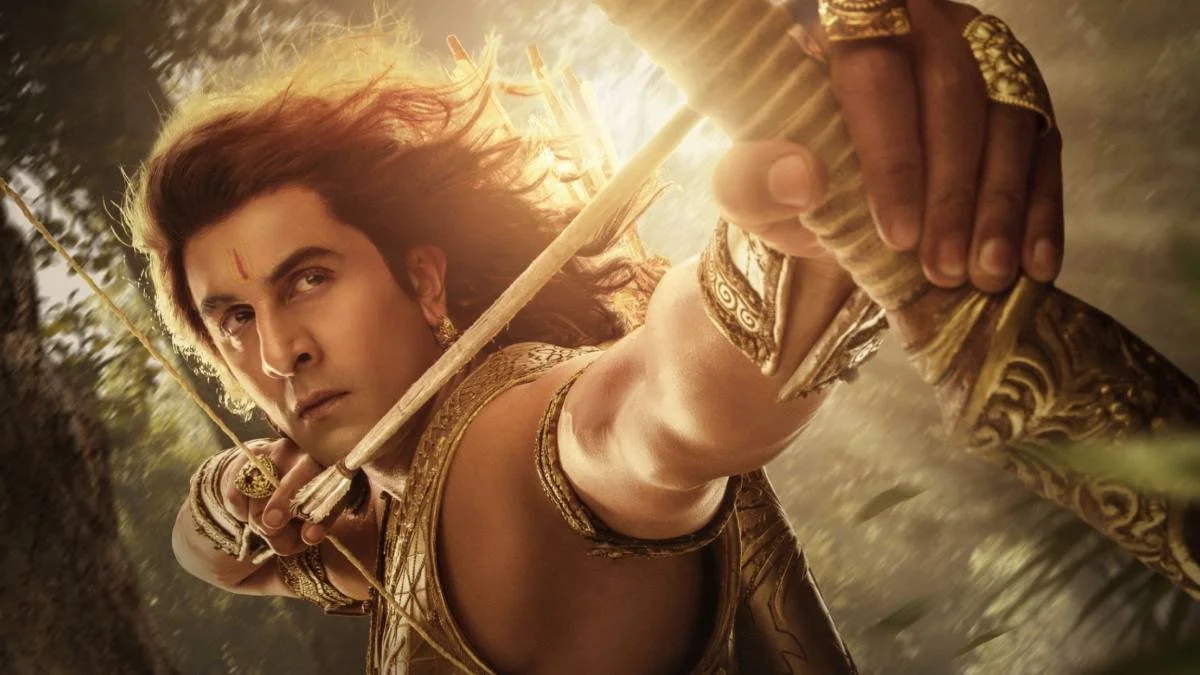
Coming to Ramayana: Part 1’s biggest gamble, the words I’d use to describe Ranbir Kapoor as Ram are measured and cautious. The actor is highly watchable even when he underplays more than required. His cautious approach is apparent, but his earnestness in attempting to do justice to the character outweighs whatever might initially seem like a deterrent. There is a visible effort to keep the star in check and allow the ideal to take precedence. Whether Kapoor can fully grow into the role remains a question for the next instalment, but he makes a persuasive beginning.
Sai Pallavi is dignity personified, bringing Sita’s courage and simplicity wonderfully alive. The film doesn’t give her many standout moments, with those seemingly reserved for the second part. Yet, the actor makes every dialogue resonate and every glance worthy of reverence.
Ravi Dubey is perhaps the most contemporary character on paper, and the actor has a field day playing Lakshman with a sense of mischief. In smaller but significant roles, Lara Dutta, Rakul Preet Singh and Saurabh Sachdeva shine, while Shobana’s otherwise towering performance is let down by a poor dubbing voice.
To nobody’s surprise, the actor who stirs the strongest emotions is Yash as Ravana, a role he sinks his teeth into. Opening the film with Ravana’s rise is a brilliant decision by Tiwari, lending Ramayana: Part 1 an energy that it sustains throughout. One of the most watchable actors on Indian screens today, Yash perfectly calibrates sheer intensity with the theatrics of commercial cinema without missing a beat. He understands the sheer scale of the character without allowing the performance to become a succession of exaggerated gestures. Yash’s Ravana is imposing, magnetic and, most importantly, impossible to ignore. In a story that wishes to balance spectacle with intimacy, Yash delivers both.
Nitesh Tiwari ends Ramayana: Part 1 by setting the stage for an even more ambitious second instalment. With the film operating on two distinct registers, Ram’s calm and Ravana’s vigour, it remains to be seen how their contrasting energies translate into their eventual confrontations. The prospect of more layered characters and a darker canvas for the production design to explore leaves plenty of room for bigger things. And, to top it all, the much-anticipated introduction of Sunny Deol as Lord Hanuman does the trick during the end credits. This multi-crore extravaganza, packaged as Bollywood’s sole Diwali offering, has enough spectacle, conviction and star power to make the occasion feel special. It is as delectable as festival prasad and as resplendent as the lights and lanterns that accompany the celebrations. The epic may belong to everyone now, but Tiwari has made a rather grand claim on it.
VERDICT: ★★★★
Read the reviews of Ramayana: Part 1 by the Film Critics Guild HERE.