There are children’s films. There are child-friendly films. And then there are films like Dhurandhar – The Revenge that irresponsible parents take their kids to watch anyway. Little Thomas belongs to the first kind.
Kaushal Oza’s feature debut, set in mid-90s Panaji, joins a growing list of Indian films made for younger audiences, including Baththa, Ohh My Dog, The Great Grand Superhero, Village Rockstars 2 and Boong. The idea, as with these films, is to tell children a story without talking down to them. The trouble is that children today have enough entertainment at their fingertips to know when they are being bored. Little Thomas has a lovely setting, a promising premise and an adorable young lead. What it lacks is the writing to make the most of them.
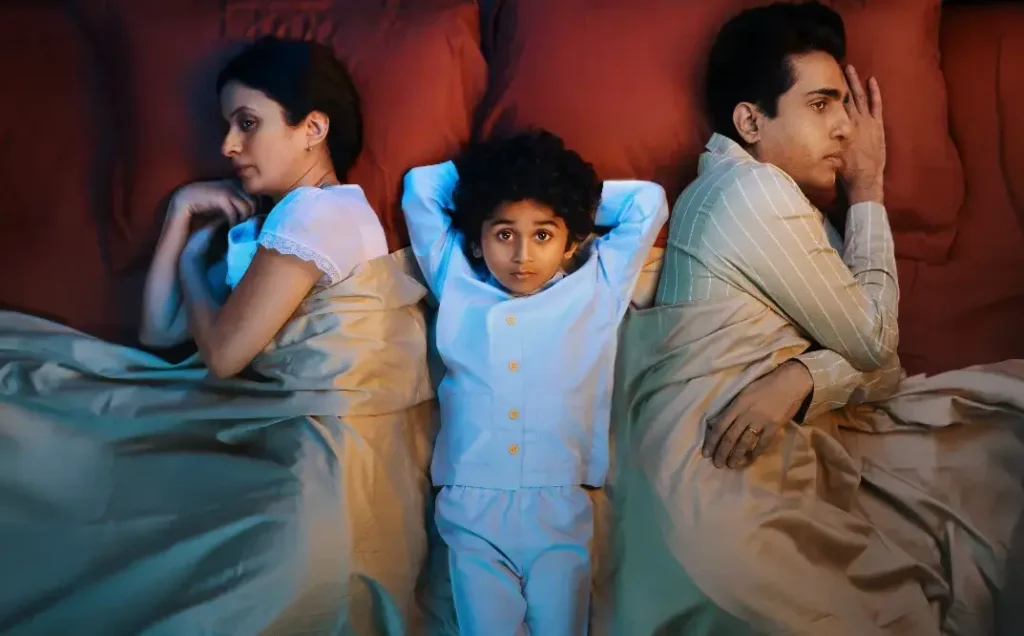
Seven-year-old Thomas Miranda (Hridansh Parekh) wants a cuddly younger brother, but his parents’ troubled marriage and struggling family bakery are getting in the way. Jessie (Rasika Dugal) and Desmond (Gulshan Devaiah) barely make ends meet. Desmond’s wedding cakes are village gossip. A falling cake is considered inauspicious, and the ones he makes are practically asking to collapse. Jessie, a piano teacher with no students, has sold her instrument and taken up sewing to supplement the family income. They begin as affecting details, and the production design captures Panaji’s Fontainhas neighbourhood without laying on the nostalgia.
The trouble begins with the parents. Their fights are established early, but Little Thomas keeps returning to the same arguments without giving them much room to develop. In a late sequence, Thomas watches their silhouettes fighting behind a curtain. It is a nice visual, but by then we have seen enough of their squabbles to know how miserable the household is. Devaiah and Dugal get the mannerisms of a struggling couple right, but there is little else for them to work with. Pai and Mai are reduced to arguing in the background while Thomas gets on with his mission.
The boy’s determination to get himself a baby brother should give the film its mischief and momentum. Instead, the children are saddled with material that feels too adult for them to carry off. Not adult in the Tarantino sense, as in someone who has watched every weird film that played in Los Angeles in the 1970s, but adult in the way South Asian parents tend to assume they know what goes on in their children’s minds. Hridansh has a natural, likeable presence, but Little Thomas makes him behave in ways that feel unnatural.
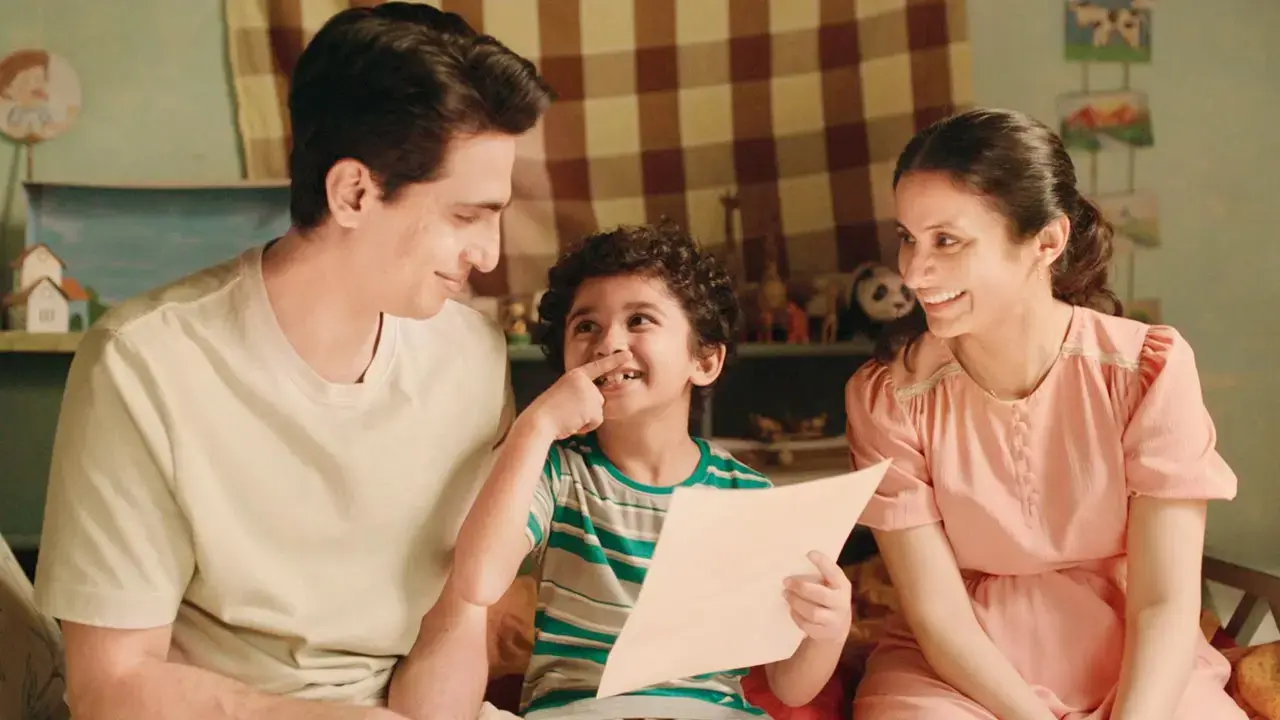
Take the children’s attempt to distract a baby monkey with cartoons, which comes with a rather strange ulterior motive. You can imagine kids hatching a plan this silly and going through with it as if it were the most normal thing in the world. That is usually where the comedy is. Here the scene just sits there. Nothing quite sparks, and what should have been funny ends up feeling effortful. For a film built around children getting up to things, Little Thomas has surprisingly little fun with them.
There are glimpses of the film this could have been. The children’s nicknames, from Fatty Bambola and Yokozuna to Einstein and Frankenstein, have a charm of their own. So do the little details of life in Fontainhas and the way the kids turn ordinary objects into tools for their schemes. These bits work because they do not try so hard. The kids are being themselves, and that is when Little Thomas feels most like itself.
The writing also resorts to some tired tricks. When a teacher asks the children to write a 20-line essay on family, Thomas struggles to finish his because he doesn’t have a brother. It feels like a contrived way to make us feel sorry for him. Even Thomas seems unsure of what to make of it. Oza could have let the situation speak for itself instead of trying so hard to tug at our heartstrings.
That said, there is genuine affection behind Little Thomas. The frames scream of a certain curated beauty which does not threaten the screenplay in any way. The dialogue has a convincing Goan mix of languages and local turns of phrase, whereas the leads look believable as a family. But these qualities cannot make up for a story that is stretched and has negligible surprises. What should have been a playful account of a child trying to make sense of his parents’ marriage becomes an oddly laboured exercise in sentiment.
Desmond’s wedding cakes keep collapsing under the weight of their bride-and-groom figurines. Little Thomas has a similar problem. It piles on the sweetness, hoping that good intentions will hold everything together. They don’t. The cake looks lovely until it is time to cut it.
VERDICT: ★★ 1/2
Read the reviews of Little Thomas by the Film Critics Guild HERE.