The journey back home means something in every era. Whether it’s a war hero undertaking an obstacle-ridden voyage of over ten years or his wife refusing to concede that her husband will never return, the passage of time means something to everyone. That’s exactly why Homer’s Greek epic The Odyssey is such a good fit for Christopher Nolan, because he has a whole filmography around fractured timelines, memory, identity, homecoming, closures, and so on. Rather than bending the poem to suit his filmmaking, he discovers that its DNA has always mirrored his own. The result is perhaps the most naturally auteurist film of his career.
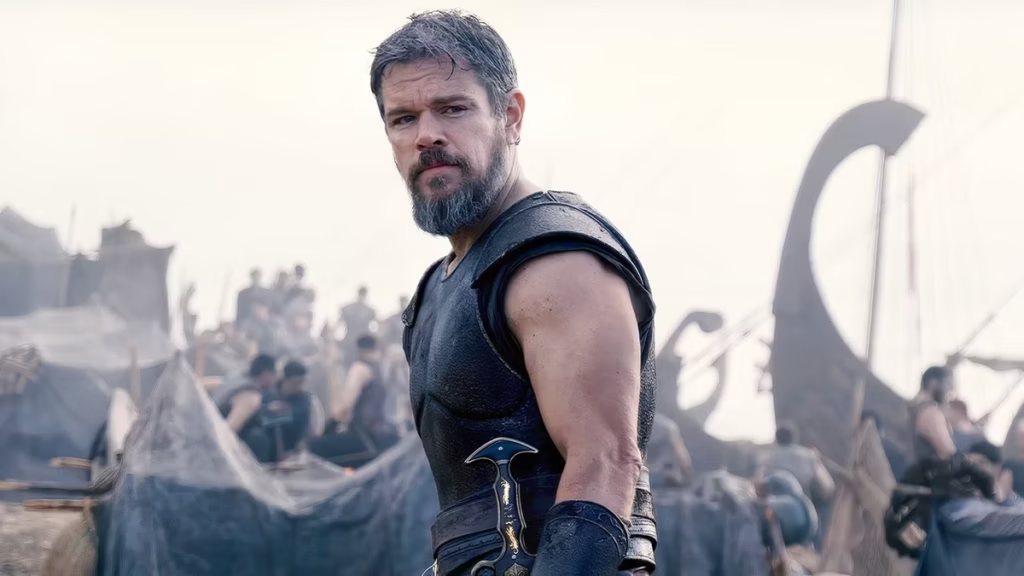
The Odyssey, unsurprisingly, follows parallel timelines. One follows Odysseus (Matt Damon), the King of Ithaca, trying to get his battle-scarred soldiers home after the Trojan War. Soon, the journey is waylaid by a vicious combination of monsters, curses, and angry seas. In the present, however, he is stuck on the island of Ogygia, keeping his past at bay by feeding on lotus flowers provided by a besotted nymph.
Meanwhile, his wife Penelope (Anne Hathaway) deals with his absence while adhering to Zeus’s Law of honouring guests – even if they happen to be a dishonourable bunch of suitors gathering round the palace, hoping to marry her and claim the throne. Their son Telemachus, the rightful heir, agrees with his mother that Odysseus is not dead.
Based on Homer’s epic of the same name, The Odyssey is one of the most familiar and most complex stories in Western culture. Its people, relationships, and political dynamics are so intricately human that they resonate with a modern eye. Many of its characters are bound by the hunger for power, the obligation to shield each other, the yearning for closure, and the importance of keeping one’s word — themes that continue to resonate across centuries.
Structurally, The Odyssey is a story built around fragmented chronologies, memory, family, and stories within stories. We also get a hero whose greatest battle is against time itself. Therefore, Nolan doesn’t reinvent Homer as much as he recognizes how naturally it all comes together in his signature storytelling style.
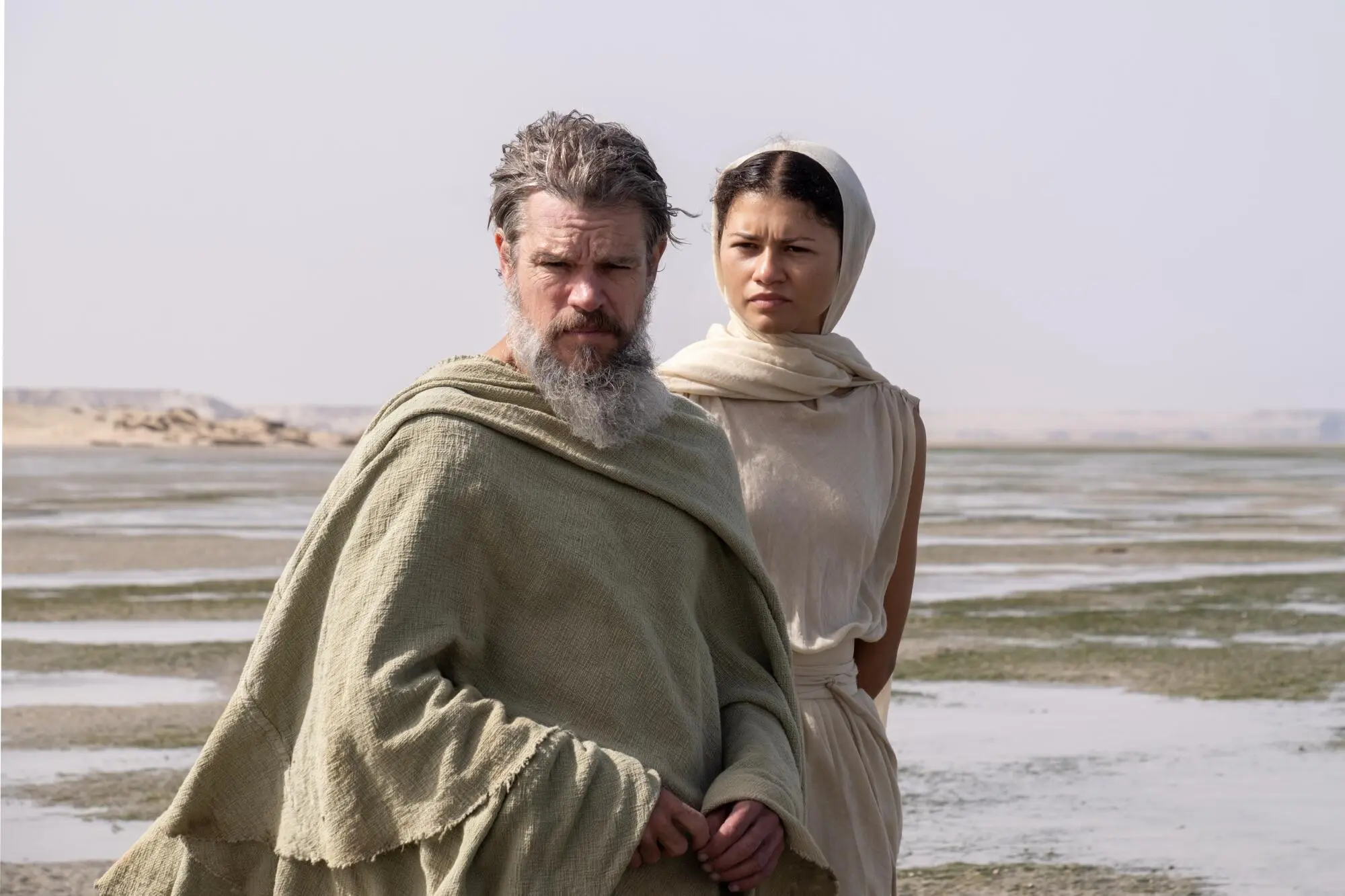
This time, Nolan and his crew faced a dual challenge: how to scale up and how to make an ancient epic resonate with a modern audience. Scale is a given with Nolan at the helm, but modern resonance goes beyond the cast of many. Lupita Nyong’o, Elliot Page and Himesh Patel, for instance, fit their parts perfectly. The argument of racial authenticity is misplaced considering that Matt Damon and Tom Holland do not look much like ancient Ionians themselves, but their casting is rarely questioned. More importantly, Nolan’s true innovation is his ability to bring suspense and high drama to the story without losing its classical essence.
Victorious in the Trojan War, the weary soldiers wander from island to island, and some of The Odyssey‘s most powerful moments are in these journeys. One stop has them face to face with the Cyclops Polyphemus, another with the witch Circe. Episodes like these can be so creepy that they would give the best horror movies a run for their money. The difference is Nolan’s not creating these thrills. All of them are embedded in Homer’s original story, and his gargantuan cinematic vision only magnifies their impact.
This way, The Odyssey is a spectacle in all its theatrical aspects. The ensemble cast has big stars, most of them in small yet key roles. Their familiarity anchors an epic that can otherwise seem distant. Shot entirely for IMAX, the visuals are less overwhelming than they are immersive, inviting the audience into every storm, battle, and mythical encounter. That immersion raises the technical craftsmanship across the departments, from the superb sound design, especially in the scenes on the ships, to the meticulous production design, punctuated by a stunning, realistic Trojan Horse.
One predictable hurdle, or perhaps a mental block shaped by years of watching foreign-language cinema, is the use of American accents. Why would ancient Greeks sound like this? That thought certainly crossed my mind. Yet I appreciated Nolan’s decision to strip away the additional barrier of subtitles. A fabricated Greek accent, or any exaggerated attempt at regional authenticity, would likely have been far more distracting.
The script takes some wild, incredibly modern liberties. Telemachus refers to Odysseus as “Dad,” characters curse, and Penelope mentions her suitors “partying.” These deliberate, massive anachronisms might make a historian wince, but they definitely keep this ancient epic from ever feeling too stuffy. But Nolan is not doing linguistic archaeology. He wants the emotional and dramatic immediacy of the story to connect with present-day audiences, and surprisingly, these liberties work. At least, they did for me.
It’s a really interesting line-up of talent, with Matt Damon and Anne Hathaway leading the way. They play a couple separated by decades of time and constant peril, yet their absolute loyalty to one another makes them the easiest part of the movie to cheer for. Their relationship feels genuine and touching, especially in an era of fragile relationships.
ALSO READ: ‘Oppenheimer’ review – Nolan’s physicist biopic is his wordiest yet
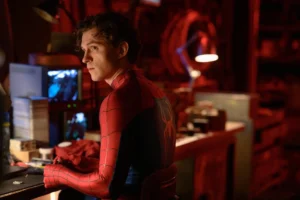
Tom Holland’s performance requires a bit of patience. Our collective fondness for his usual roles initially gets in the way of the performance. But he wins you over, steadily shedding that naive prince persona to become a truly confident leader. He’s matched beautifully by Robert Pattinson, who infuses the wicked Antinous with a menacing, dark magnetism. Honestly, just one piercing look from Pattinson is enough to make you hate the character and actively root for his demise. Samantha Morton is phenomenal as Circe, bringing equal measures of fury, vulnerability, and mystery to a character whose “all men are pigs” outrage becomes one of the film’s most memorable moments.
The bigger question is whether Nolan successfully captures the trickier, deeper ideas of the original myth. Thankfully, the movie does not deviate much, but it is also pure, unfiltered Nolan, especially in its unmistakable anti-war stance. We observe that he respects the source material, but wraps it entirely in everything we love about his filmmaking.
If The Odyssey exposes any familiar flaw in Nolan’s filmmaking, it’s his constant instinct to intellectualize emotion. Even with a narrative built on longing, loss, and reunion, he seems less interested in the intimacy of the destination than the mechanics of getting there.
That said, what ultimately works best is the film’s clear moral conflict between good and evil. The sheer cruelty of Antinous and his gang of suitors is so infuriating that every single act of pushback feels incredibly satisfying. So when a seemingly helpless beggar suddenly turns into the ancient Greek equivalent of John Wick, the payoff is absolute gold. Sequences like this push the film to heights that feel quintessentially Nolan, yet somehow remain completely loyal to Homer’s original vision.
Ultimately, this adaptation strikes a rare, beautiful sweet spot. It is welcoming enough to sweep newcomers right into the myth, yet rewarding enough for anyone who knows the source material inside out. But its real triumph is proving just how timeless this story is. Thousands of years after a poet first imagined a desperate king fighting to get back to his family, Nolan shows us exactly why that struggle still hits so hard. The monsters and the medium have changed, but that bone-deep longing for home hasn’t aged a day. By locking into that simple, human truth, The Odyssey stands as Nolan’s most raw and satisfying film in years.
VERDICT: ★★★★
Read the reviews of The Odyssey by the Film Critics Guild HERE.