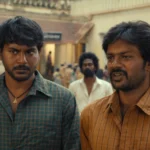
What if you eventually become what you feared most? The bullied becomes the bully. The abused becomes the abuser. The hunted becomes the hunter.
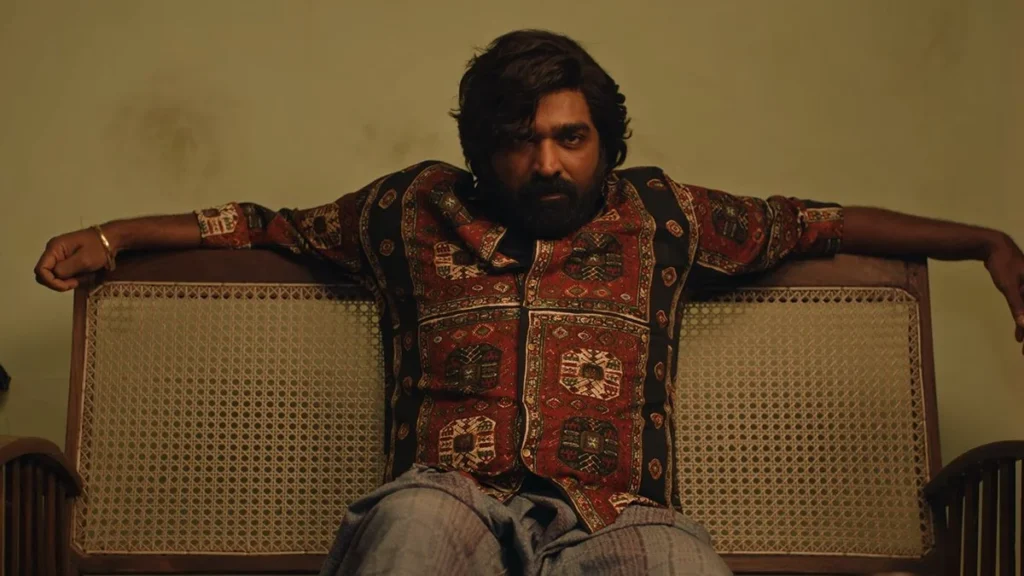
In Balaji Tharaneetharan’s Tamil drama Baththa, a feared gangster (Vijay Sethupathi in the titular role) is locked inside a school restroom and shouts from inside, “I’ll kill you when I come out.” Terrified by his words, the one who accidentally locked him in, third-grader Sabari (Master Sai Prithviraj), refuses to open the door. He flees the scene, leaving the village to look for him while the school remains shut for summer vacation.
Sabari is far from a delinquent. There’s a beach scene early on with his factory-worker father (Hari Krishnan) and his homemaker mother (Santhy Balachandran). He wants a toy that costs three rupees. In 1986, that isn’t nothing for them, but they buy it for him anyway. When the teacher takes it away during exams, the boy sneaks back into the empty school. He finds the pile of confiscated things and takes only his own. The moment is small and exact.
It tells you why he flees Baththa’s threats through the door, and why he still returns later to slide crushed rusk underneath so the man doesn’t starve.
There is palpable tension, and we have no idea where Tharaneetharan’s film is headed. Baththa pleads with him to open the door, but Sabari wants nothing to do with him. The boy also doesn’t want him dead. The interval jolt arrives when Sabari finally opens the door, only to get the shock of his life. The rest of Baththa explores how the incident changes perspectives and transforms lives. Its impact extends beyond the two people at its centre, Baththa and Sabari, to the wider community, including the gangster’s foes and his affectionate wife, Kannima (Lijomol Jose), and daughter, Thenmozhi (Baby Sahasra Shree).
The bigger question, of course, is this: what was a gangster doing inside a locked school building?
As Tharaneetharan approaches the final act and prepares to reveal the big secret, there is a nagging fear that the film might lose the momentum it has built so far. But Baththa pulls itself back from the brink, emerging victorious with heartwarming humour and some of the year’s most satisfying feel-good writing from Tharaneetharan himself.
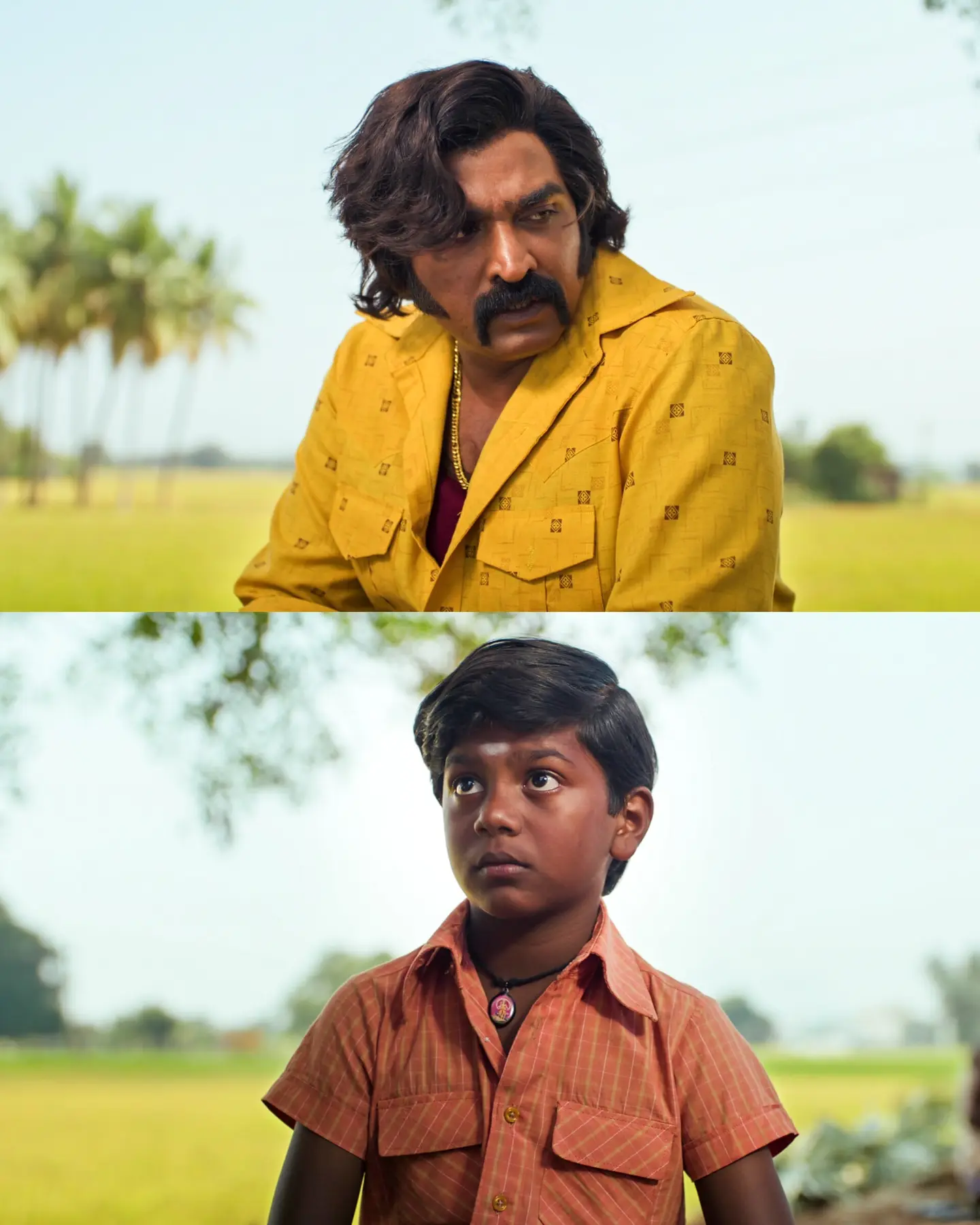
Minutes before that, we get a scene gorgeously staged against the backdrop of a paddy field, featuring what is easily the most astonishing acting performance by any actor in an Indian film this year. No, it isn’t Sethupathi, who does a fine job as a sounding board, but young Sai Prithviraj, whose emotive prowess might force many adult actors to question their career choice.
An antithesis of the standard gangster film, Baththa has all the ingredients of one on the surface: an intimidating, toxic hero, rival gangs and a frightening setup. Yet, it beautifully mellows in the second hour. We stop being afraid of Baththa and start being afraid for him. It’s a newfound joy to watch the family discover his new ways, and the man find belonging in things he once rejected. In one such moment, he devours his wife’s tomato chutney, which he had thrown on the floor just a week earlier for being tasteless. These aren’t revelations. They’re ordinary acts that now matter because we’ve already seen the man who could discard them.
The film doesn’t stage the change as a decision or a speech. It just keeps showing Baththa in spaces where the old threats no longer settle anything. What follows is a transformative moment, an unlikely coming-of-age, that is as silly as it is cathartic, and Vijay Sethupathi pours his heart into it.
Tharaneetharan’s film is also a musical delight, with composer Sai Abhyankkar delivering some of the year’s best songs and score pieces. The period work is equally assured. Muthuraj’s sets and Shruthi Manjari’s costumes do not scream 1986 from the rooftops. The events and the frames simply belong where they are. A drive to Kumaran Silks in a vintage car looks like a real outing rather than a demonstration. Cinematographer Selvakumar S. K. and editor R. Kalaivanan preserve the nail-biting tension and emotional gravity of moments that could otherwise have turned comical. The result is a film that knows exactly when to hold back and when to let its emotions land.
ALSO READ: ‘Dorothy’ review: When toxic honour meets an unthinkable truth
The ensemble cast is an absolute knockout, with everyone from Lijomol and Santhy to Ajay Ghosh and Vishnu Govindhan being utterly perfect in their respective roles. But the film’s biggest victory is its screenplay, which gives each character texture and a distinct arc. You particularly find yourself rooting for Lijomol, whose nuanced portrayal as a wife makes you wish nothing but happiness for her. Even in fleeting moments, such as the scene inside a restaurant, pay attention to the micro-expressions that flicker across her eyes.
Baththa gives Sethupathi one of his finest character arcs. His transformation might be predictable, but the film’s attempt to spread goodness without resorting to preachiness is most welcome. Tharaneetharan’s films speak of closure, belonging, and the need for peace and unity in society, even as they occasionally unfold as tense, suspenseful affairs. Here, he takes a man who has built his life around making others fear him and finds a way to make us care about what happens when that fear begins to fade.
Beneath the tough gangster skin it seemed to wear, I didn’t expect Baththa to leave me teary-eyed, but that’s exactly what happened. It’s heartening to see a superstar of Sethupathi’s stature invest himself in a film that delivers such genuine emotion, especially when the very same setup could have given him every opportunity to embrace hypermasculinity, smoking away to glory as blood spilled in every direction. Baththa is not that film, and that’s not even the reason it ranks among the year’s best Indian films. You’ll understand when you watch it.
VERDICT: ★★★★ 1/2
For more reviews of Baththa, head to the Film Critics Guild.