When will this travesty end? I ask that of almost every Bollywood remake and forced franchise, particularly those anchored by Ajay Devgn. Drishyam: The Conclusion was a rare exception that actually made me curious. Once a line-by-line remake and now an independent continuation, Abhishek Pathak’s film finally steps away from Jeethu Joseph’s Malayalam blueprint. After the second Hindi instalment, that fresh canvas looked like a chance for Devgn’s Drishyam to come into its own.
The story picks up six months after Drishyam 2. A distraught Meera Deshmukh (Tabu) is all set to kill herself, and for a moment it looks like the Malayalam film again. Thankfully for us, she aborts her plans soon enough, opens her wardrobe, grabs the make-up box, and returns as the wounded cop and grieving mother the Hindi franchise knows how to deploy.
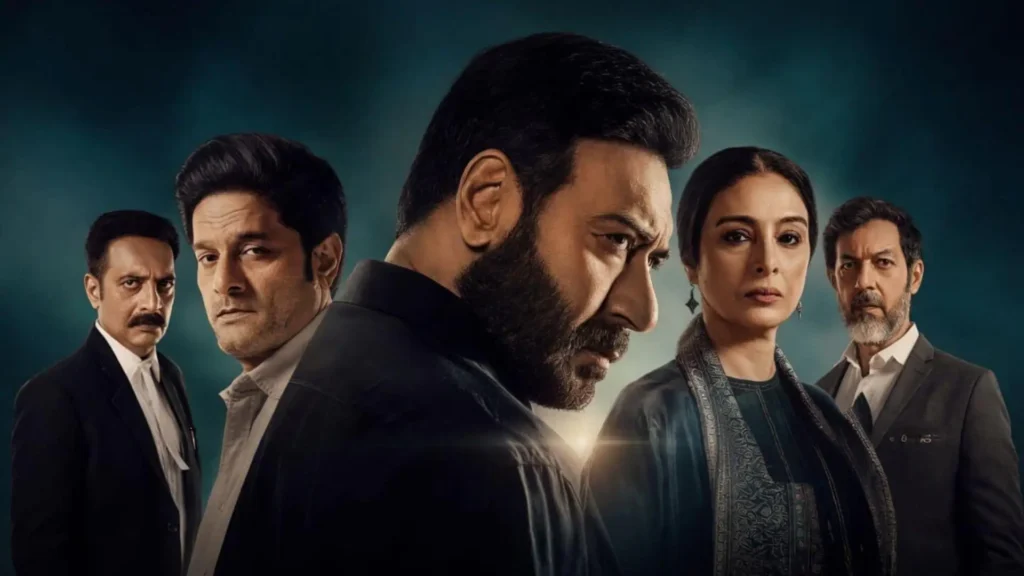
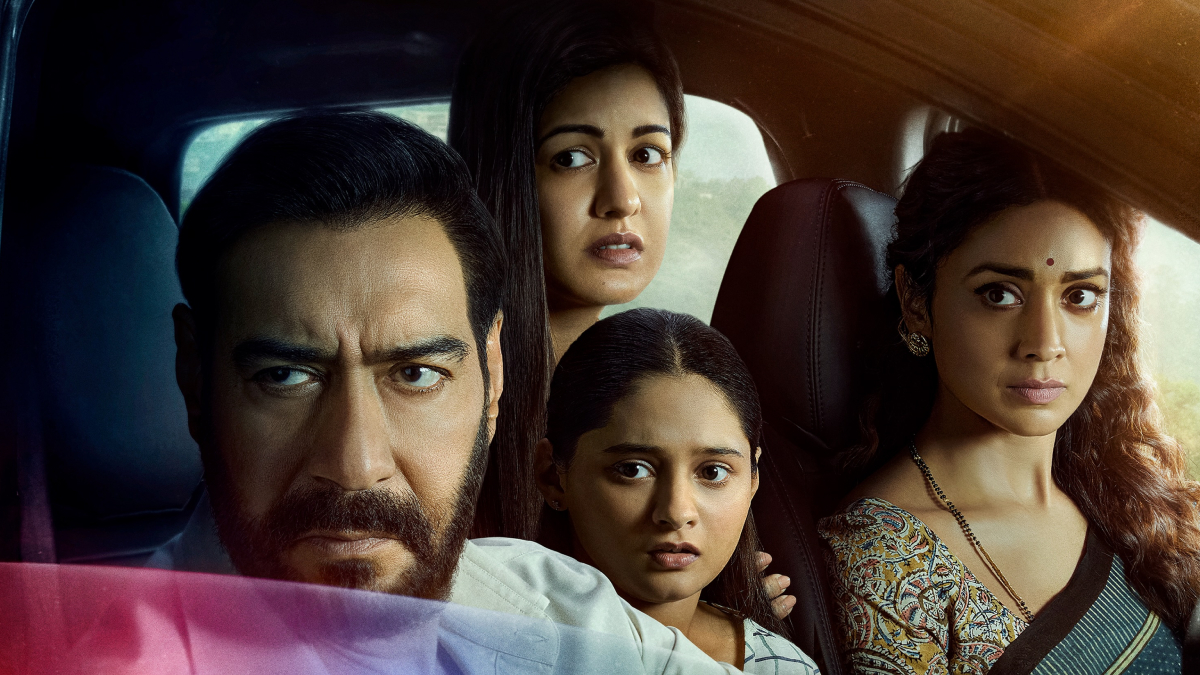
SP Rajveer Singh Tomar (Jaideep Ahlawat), chain-smoking and permanently brooding, reopens the case at Meera’s husband, Mahesh Deshmukh’s (Rajat Kapoor) insistence. The writers (Pathak, Aamil Keeyan Khan and Parveez Shaikh) dig up the details that have become franchise lore: Swami Chinmayanand’s retreat on October 2, Sameer’s skeleton, the movie production, Nandini’s (Shriya Saran) mistake, Vijay Salgaonkar’s (Devgn) foresight.
Vijay’s deadpan face stays very much in place as he constructs a fresh contingency plan. The family, as usual, gets less room than in the Malayalam films. The elder daughter, who ought to sit at the centre of the damage, is sidelined fully. Free from source material, the original writing in Drishyam: The Conclusion offers little structural improvement over the Malayalam version. Where Jeethu Joseph milked Kerala’s conservative social fabric to build a complicated third instalment, Pathak’s screenplay relies on dug-up graves, convenient voice recordings and retrofitted plot devices that logically should have surfaced a film ago.
Fortunately, the franchise’s best supporting character, the corrupt and gleefully ruthless Gaitonde (Kamlesh Sawant), comfortably surpasses Malayalam’s Sahadevan by simply not going off-track. The rest of the returning cast members barely register, though new additions like Tomar and top defence lawyer Indrajith Shetty (Prakash Raj) inject some adrenaline, a feat owed largely to the actors’ screen presence rather than the text on paper.
Dialogue writer Aamil Keeyan Khan’s fondness for complicated prose is all over Drishyam: The Conclusion. Characters narrate parables and draw elaborate parallels, Tomar most of all; his speeches are so knotted that even Salgaonkar might break character and yawn. The careless protesters outside the church and the solemn declarations about how the world has two kinds of people belong to an unserious Bunty Aur Babli, not here.
What makes this frustrating is that Pathak’s characters are intellects only within closed chambers. The courtroom stretch before it works better, because Drishyam: The Conclusion finally settles into the syntax of a mainstream Bollywood thriller and knows how to build momentum. It does not know what to do with that momentum once the magician’s trick is exposed.
Pathak’s direction remains functional rather than distinctive. Editor Sandeep Francis cuts the second half the way the earlier films were cut, so it keeps moving even after you have guessed where it is headed. Sudhir K. Chaudhary’s cinematography loves the aerial possibilities of Goan landscapes, tightening only when the film needs the room to feel smaller. The scene at the Salgaonkar residence, with Tomar and Gaitonde walking in uninvited, is the one passage Pathak actually seems to have staged.
Devgn’s control is reassuring, but primarily as an idea. We already know Vijay will outsmart everybody else, so the underplaying no longer surprises. Tabu has little to do beyond good clothes and to look at a clever man with disbelief for leaving the machinery scrambling once again. Shriya Saran gets more to say, and some of it sits oddly in her mouth. The attempt to give Nandini a life beyond fear is welcome, but the actor’s delivery leaves you missing the warmth and vulnerability of Meena, her Malayalam counterpart.
ALSO READ: ‘Drishyam 3’ review – Georgekutty plans less, suffers more
Ishita Dutta and Mrunal Jadhav remain accessories in a story that is no longer about them. The Hindi franchise has always treated the family as pawns on Vijay’s board rather than people with emotional stakes. Drishyam: The Conclusion does not correct that. It is Vijay against everyone else, including the audience. If the plan has holes large enough to drive a sequel through, the film would rather keep them for later.
Ultimately, Drishyam: The Conclusion does get out from under the Malayalam films and tell its own story. That is not the same as calling it a good improvement over it because originality alone does not guarantee great cinema. The film offers sporadic thrills, passable suspense, and a crowd-pleasing courtroom act. Yet in an era dominated by leaner crime thrillers on streaming, this feels like another excuse to keep the franchise engine running.
On that note, I must add the most comforting thing about Drishyam: The Conclusion is its title. Unless someone decides to stretch a plot already looser than a decade-old piece of elastic, this story needs to end right here.
Sameer Deshmukh’s ghost needs to rest. And so, frankly, does Vijay Salgaonkar.
VERDICT: ★★★
Read more reviews of Drishyam: The Conclusion by the Film Critics Guild HERE.