On August 9, 1996, an auteur announced his arrival on Indian screens: Sanjay Leela Bhansali. It is almost amusing, in hindsight, that the filmmaker who would become synonymous with opulence, elaborate sets and visual grandeur chose to begin with one of his most intimate films. Khamoshi: The Musical wasn’t spectacular in the way we now understand a Bhansali film to be spectacular. Its spectacle came from somewhere else: its emotions.
There are no palaces here. No sprawling courtyards filled with hundreds of dancers. No elaborate costumes demanding to be admired. No visual frame that screams for attention. The grandeur of Khamoshi comes from elsewhere. It comes from a father’s grief, a daughter’s dilemma, a mother’s memory and a song being interpreted in sign language.
In what arguably remains the filmmaker’s best work yet, Bhansali introduced us to a world that united silence with music, creating a symphony we never knew existed. By bringing us into the unusual world of the Braganza family, deaf-mute parents and their musically gifted daughter, he wove a brand-new language of love that was impossible not to fall for.
A story of family, love, music, kindness and coexistence, Khamoshi: The Musical has aged beautifully over 30 years.
The silent beginning of Bhansali’s symphony
Sanjay Leela Bhansali is, by now, one of India’s most opulent filmmakers. He gets the budgets, or rather, he can afford them himself, after proving his commercial and artistic worth over the years. Looking back, it is astonishing to realise that Khamoshi: The Musical is one of the least ostentatious films of its time, let alone in Bhansali’s filmography.
Set in Goa, the film takes us into the world of a deaf-mute couple, Joseph (Nana Patekar) and Flavy Braganza (Seema Biswas), whose daughter Annie (Manisha Koirala) is the centre of their existence. In a world surrounded by silence, the young girl inherits her late mother Maria’s (Helen) penchant for music. A music career is only a step away, one that could see her mesmerise the world with her magical voice, a voice her parents could never hear.
A world where everyone’s trying to be heard
Khamoshi: The Musical addresses the obvious challenges of living with hearing and speech impairments, but the film is also about the isolation Joseph and Flavy have chosen for themselves. They aren’t a social family. They rarely have visitors, and there’s a reason for that.
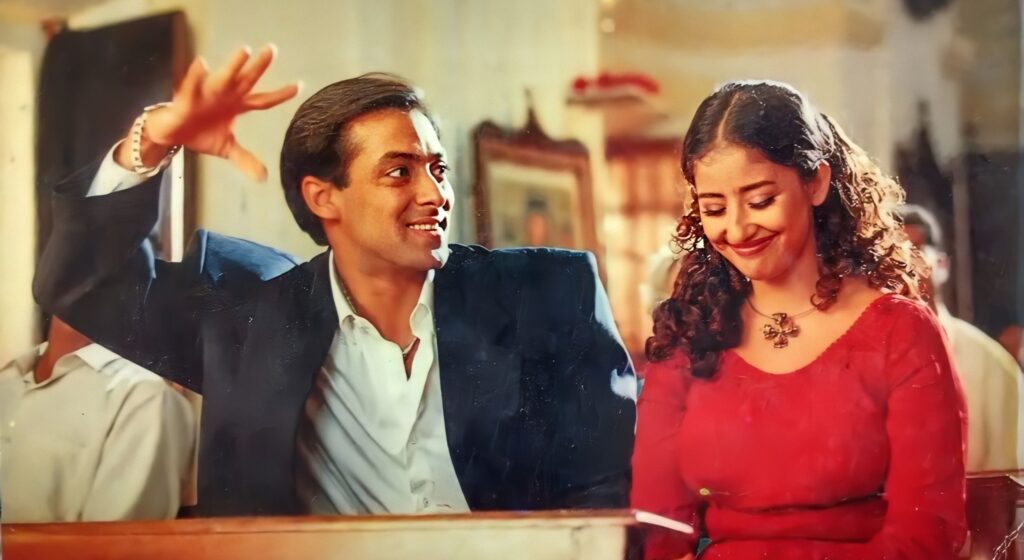
The parents protect Annie to such an extent that they are clueless about how to open up to the world outside when the time comes for their daughter to spreada her wings. When Annie falls in love with Raj (Salman Khan), Joseph refuses to communicate with him. Anyone outside their trusted circle, except their neighbour Willie (Raghubir Yadav), is essentially an intruder in their space. Raj isn’t a safe presence for Joseph, let alone someone he would willingly allow into his 20-something daughter’s life.
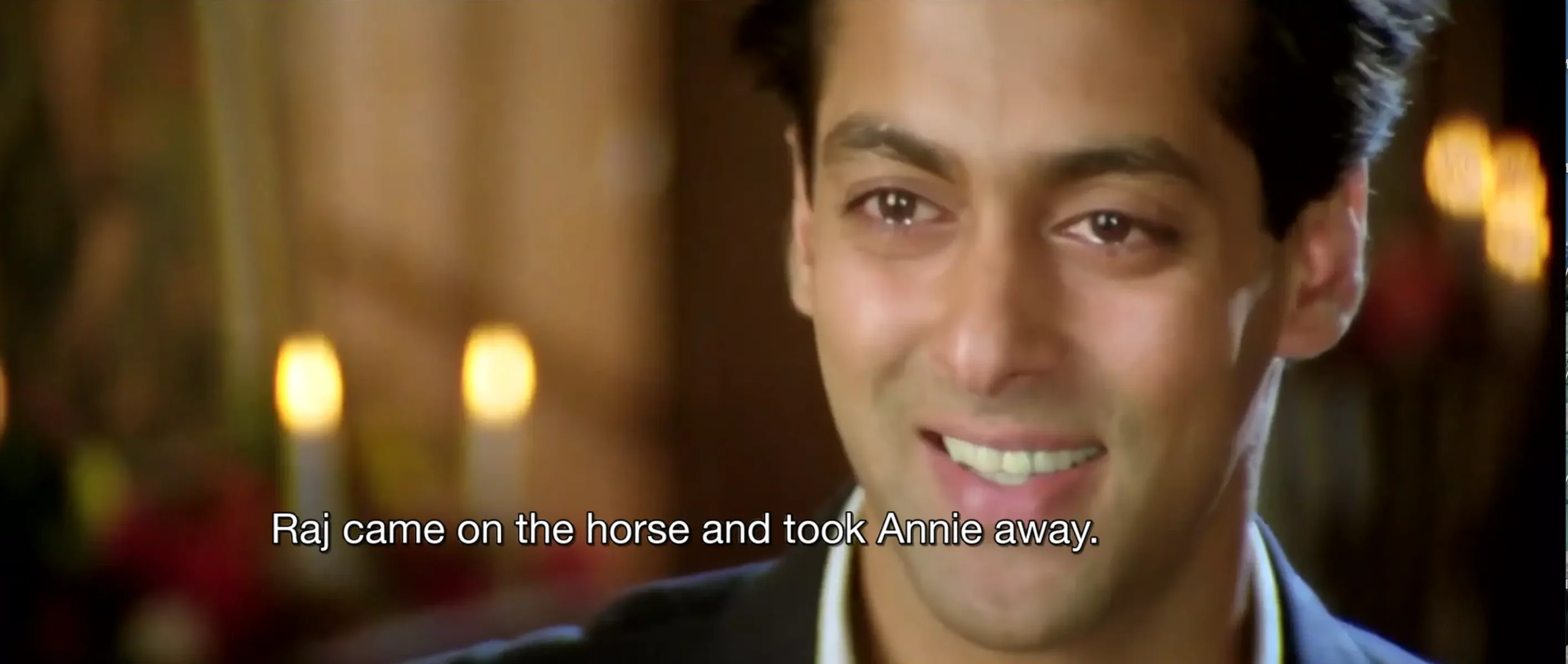
How Raj eventually finds a way to communicate with Joseph becomes one of the strongest arcs in Khamoshi: The Musical.
When music becomes a language
In what must be representative of its oxymoronic title, Khamoshi: The Musical is bound by its characters’ love for music. Mariamma, who passes away early in the film, cannot bear to part with the family’s beloved piano. It is as if her life is inseparable from the instrument. In a grand dance number that Helen does full justice to in her quintessential style, ‘Gaate The Pehle Akele’ becomes her swansong.
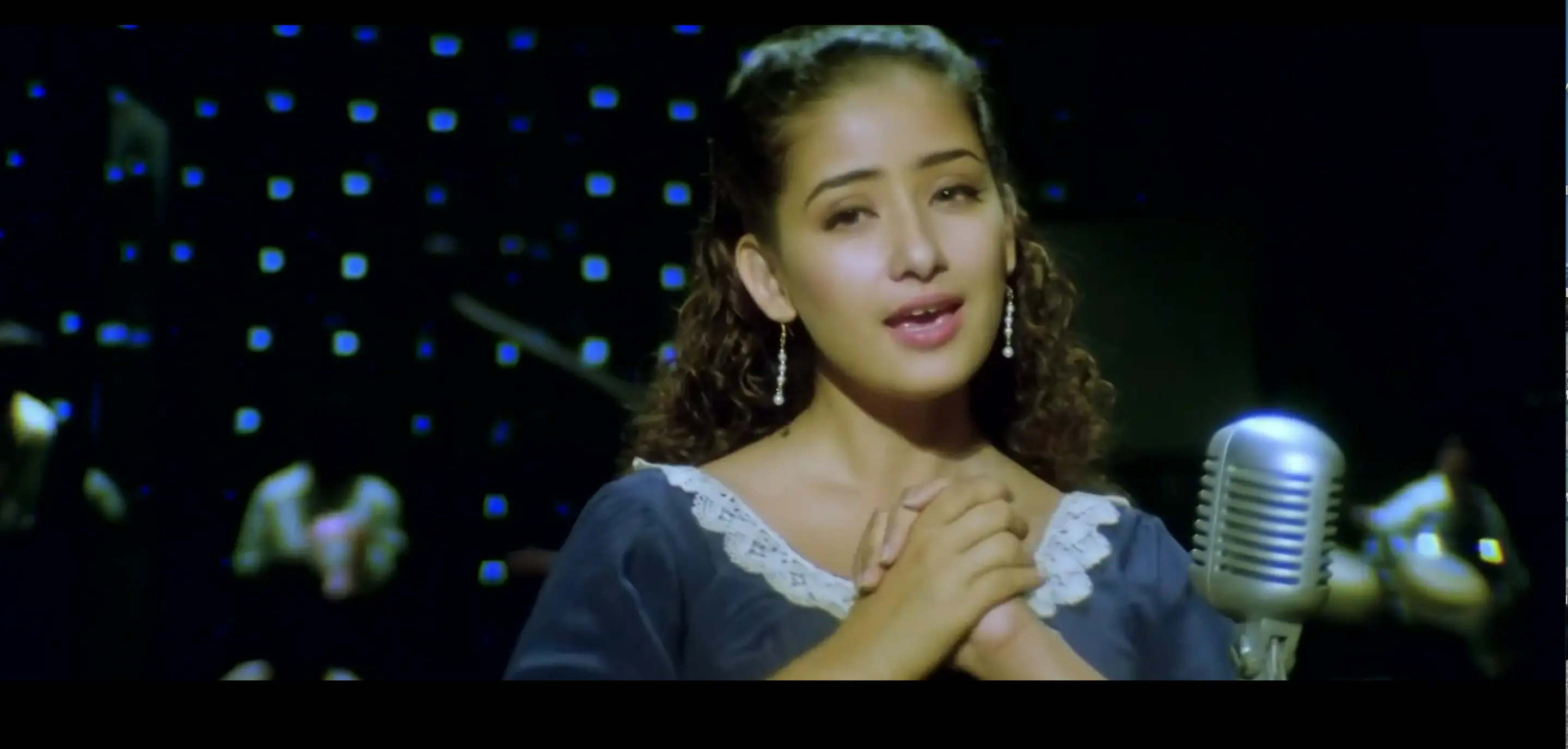
When Annie’s sonorous voice is discovered by aspiring musician Raj, the film confidently establishes music as the bridge between the daughter and her parents. In one of the most moving stretches of Khamoshi: The Musical, Annie records her debut song, ‘Yeh Dil Sun Raha Hai’, while interpreting its lyrics for Joseph and Flavy in sign language. It is a beautiful moment where composer duo Jatin-Lalit and lyricist Majrooh Sultanpuri strike emotional gold.
The girl caught between love and duty
Seen entirely through Annie’s perspective, Khamoshi: The Musical addresses a difficult question: “Who am I allowed to become when my identity takes me somewhere my family cannot follow?”
Even if we put her parents’ impairments aside for a moment, the film’s larger truth is about parents, particularly her father, refusing to accept that Annie is an individual in her own right. It is a familiar South Asian tendency to be overprotective of children, but the family’s circumstances only aggravate the situation.
Joseph has never lived a conventional life that would allow him to understand the ways of the world. Annie often becomes his interpreter, sometimes shielding him from the crude words and behaviour of the people around him. She has always seen it as her duty to protect her vulnerable parents. But when the time comes, she must also embrace a love that could become her own personal world.
How does she balance both worlds?
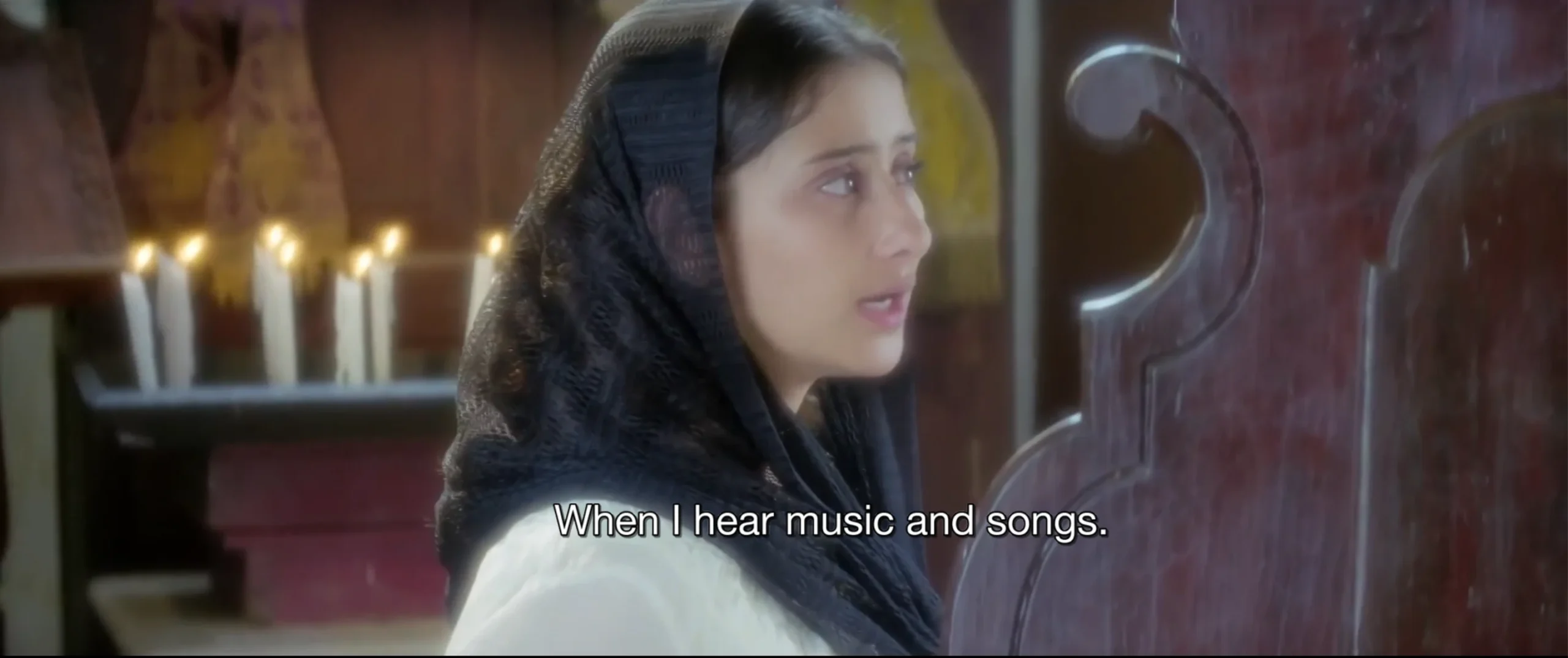
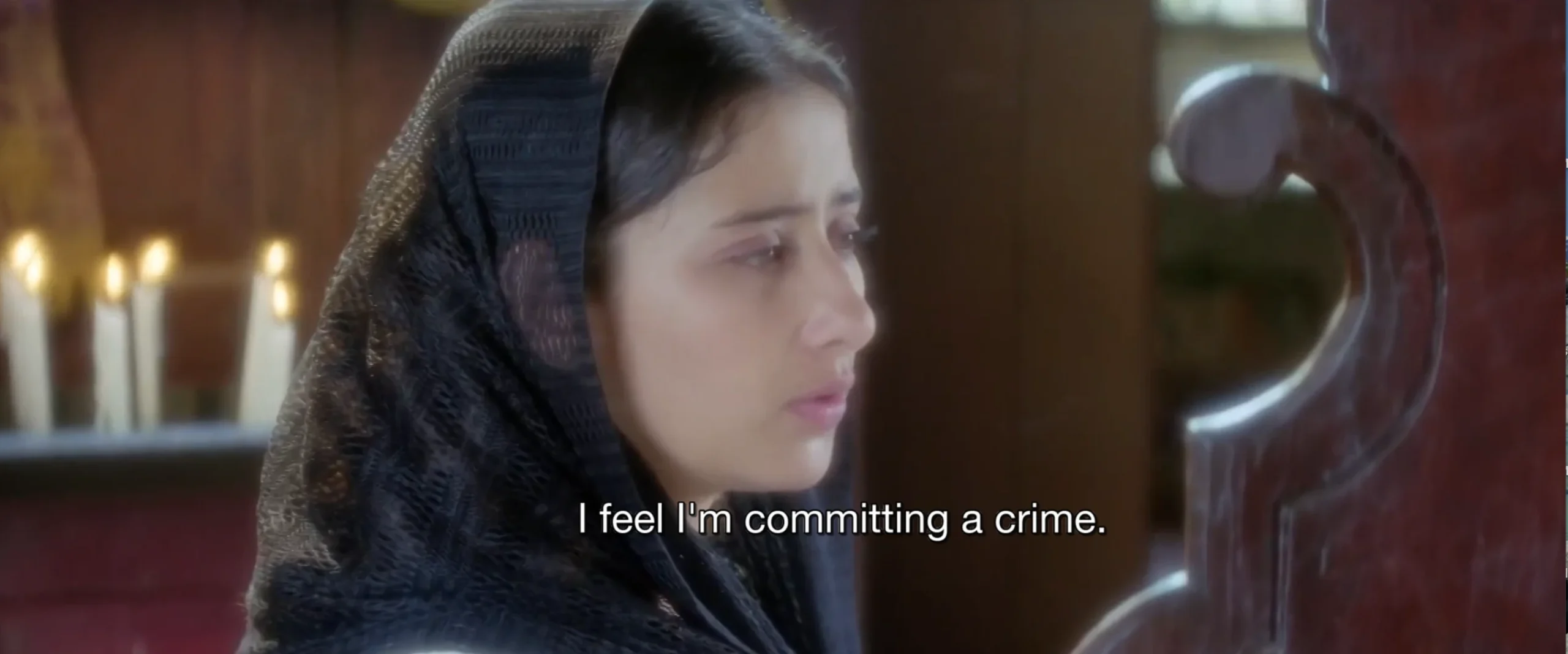
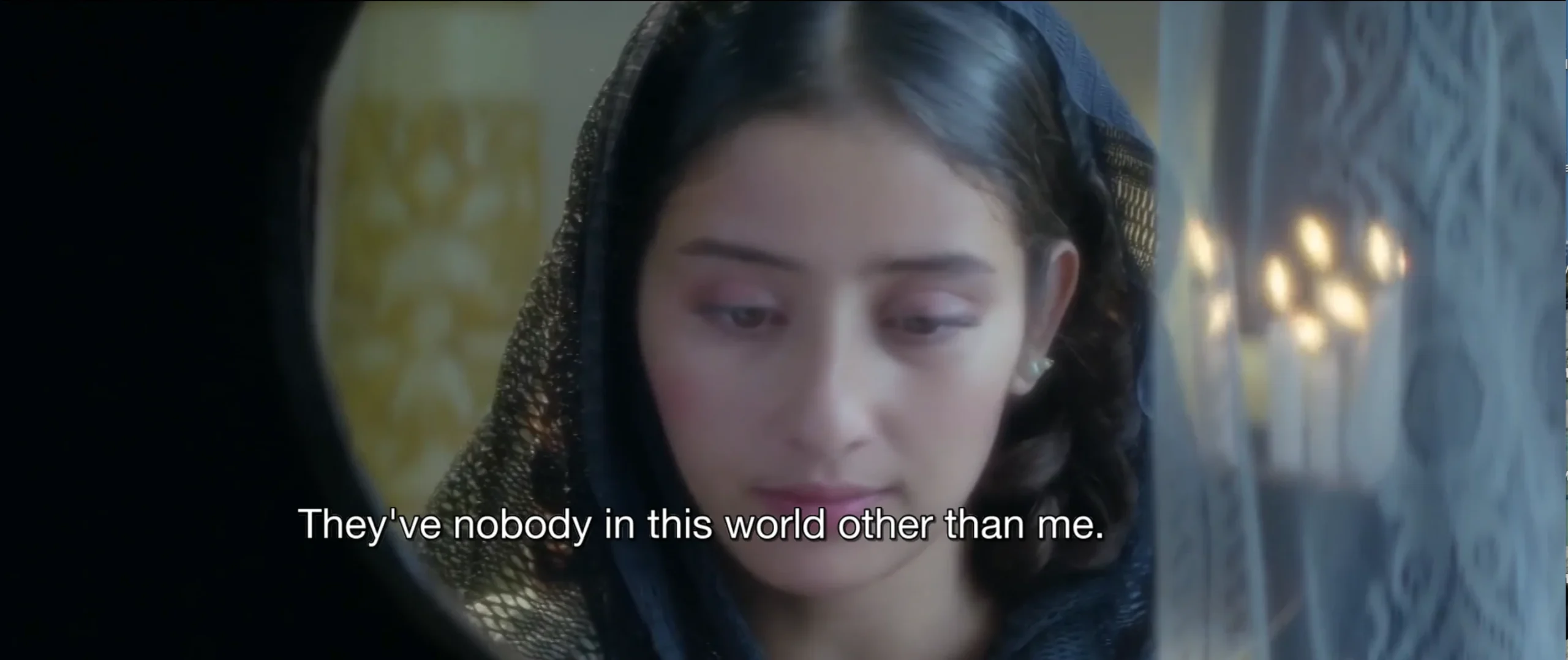
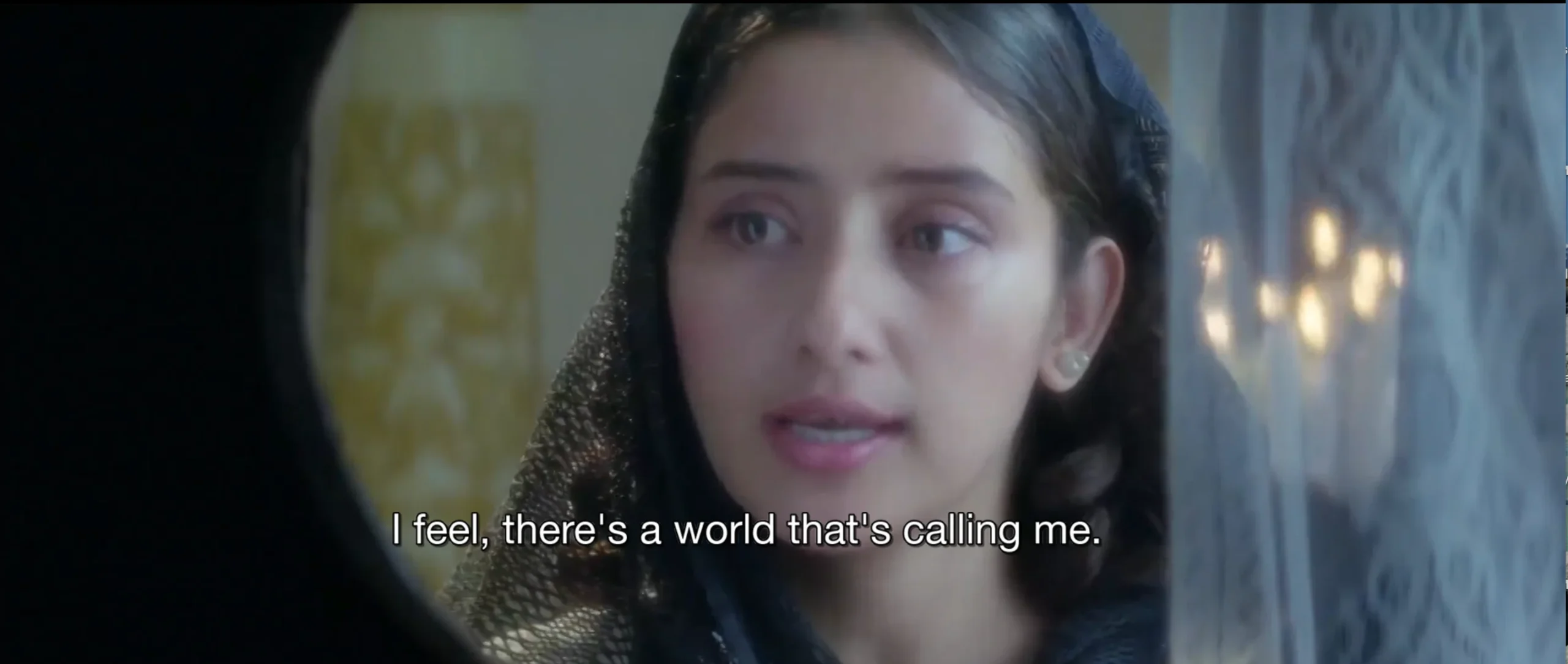
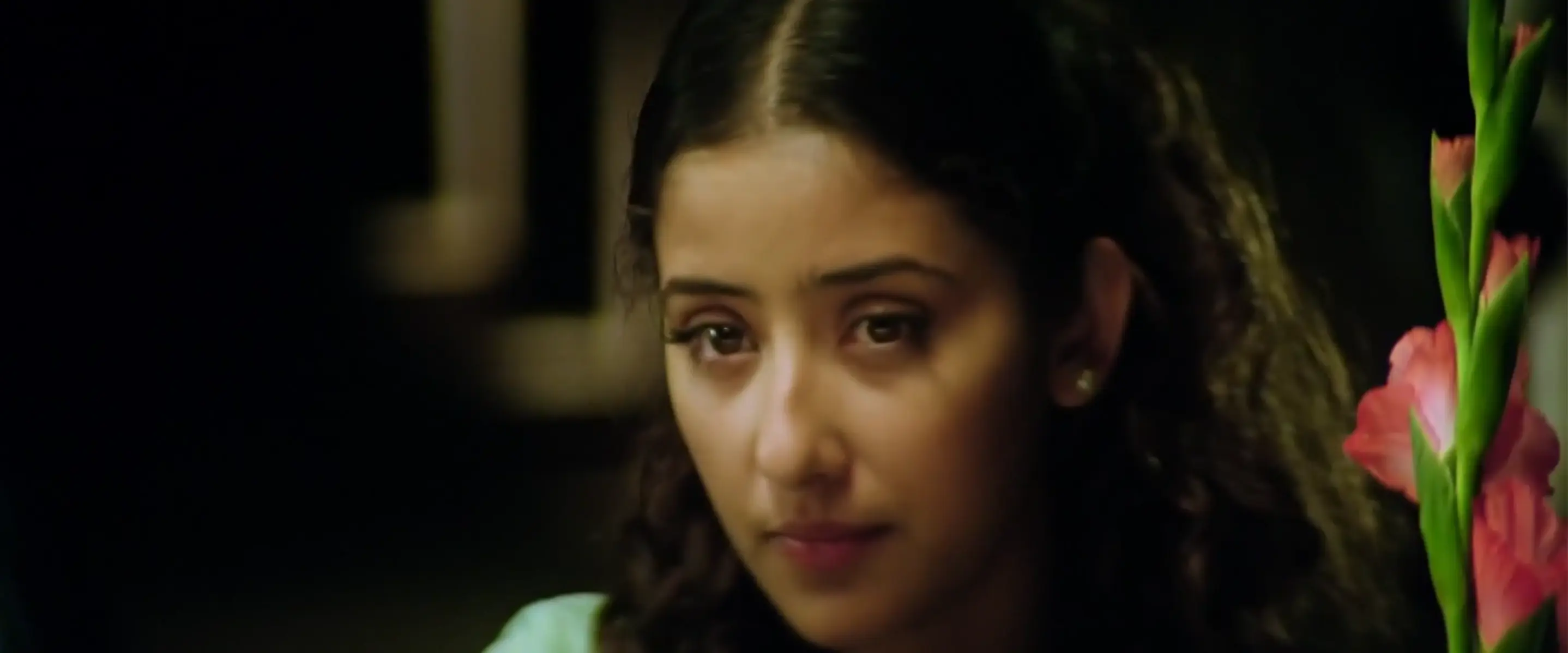
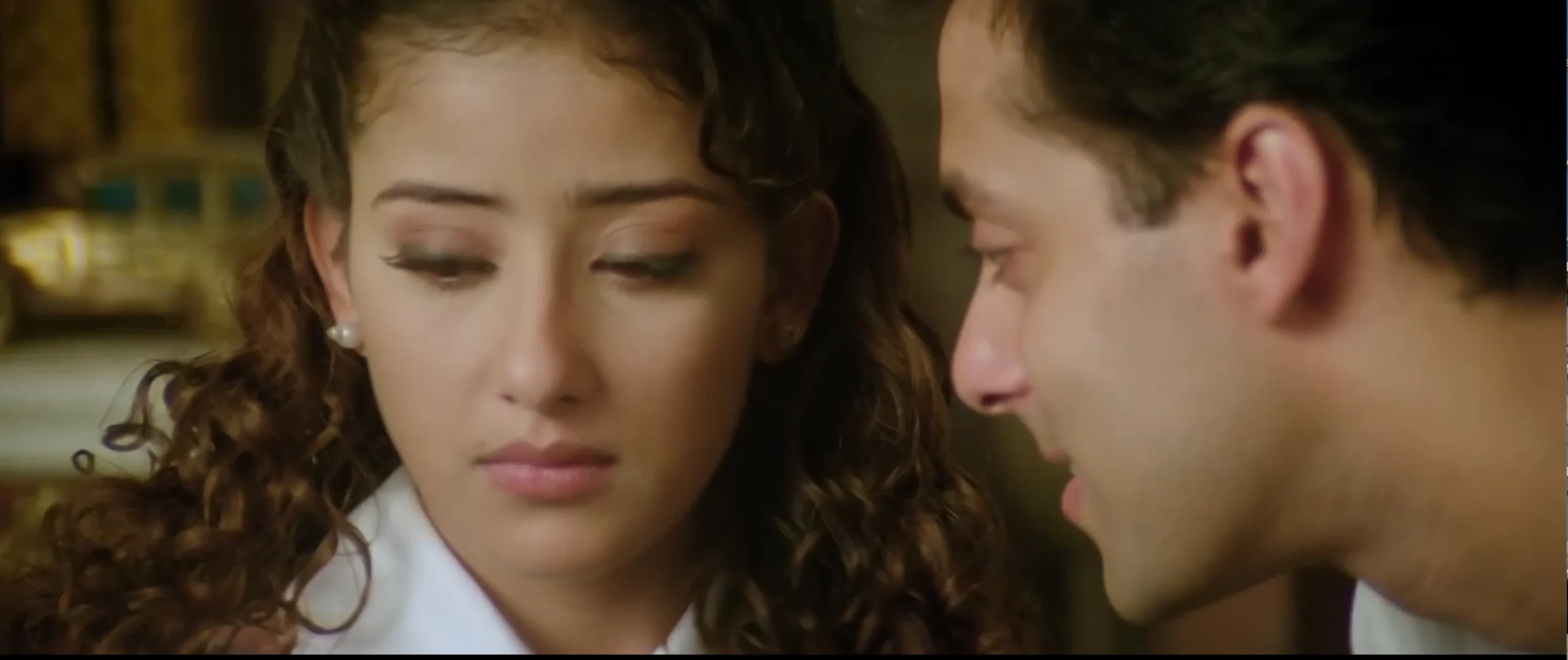
Manisha Koirala’s face said what words couldn’t
Throughout Khamoshi: The Musical, Annie communicates in sign language. She does speak the words aloud so that we, the audience, understand what is being said. If we observe closely, there are also moments when she speaks with Raj in both spoken and sign language. Bhansali wants us to understand that this is a habit for Annie, and never an act she puts on.
Having said that, if there is anything that communicates even better, it is Manisha Koirala’s vulnerable face. The eloquence of her expressions raises the standard of so many moments in Khamoshi: The Musical. Some of the best moments in Bhansali’s films are still frames where the camera simply pauses to capture Annie’s silences. Koirala doesn’t need to say a word, because her face says enough.
When silence becomes a performance
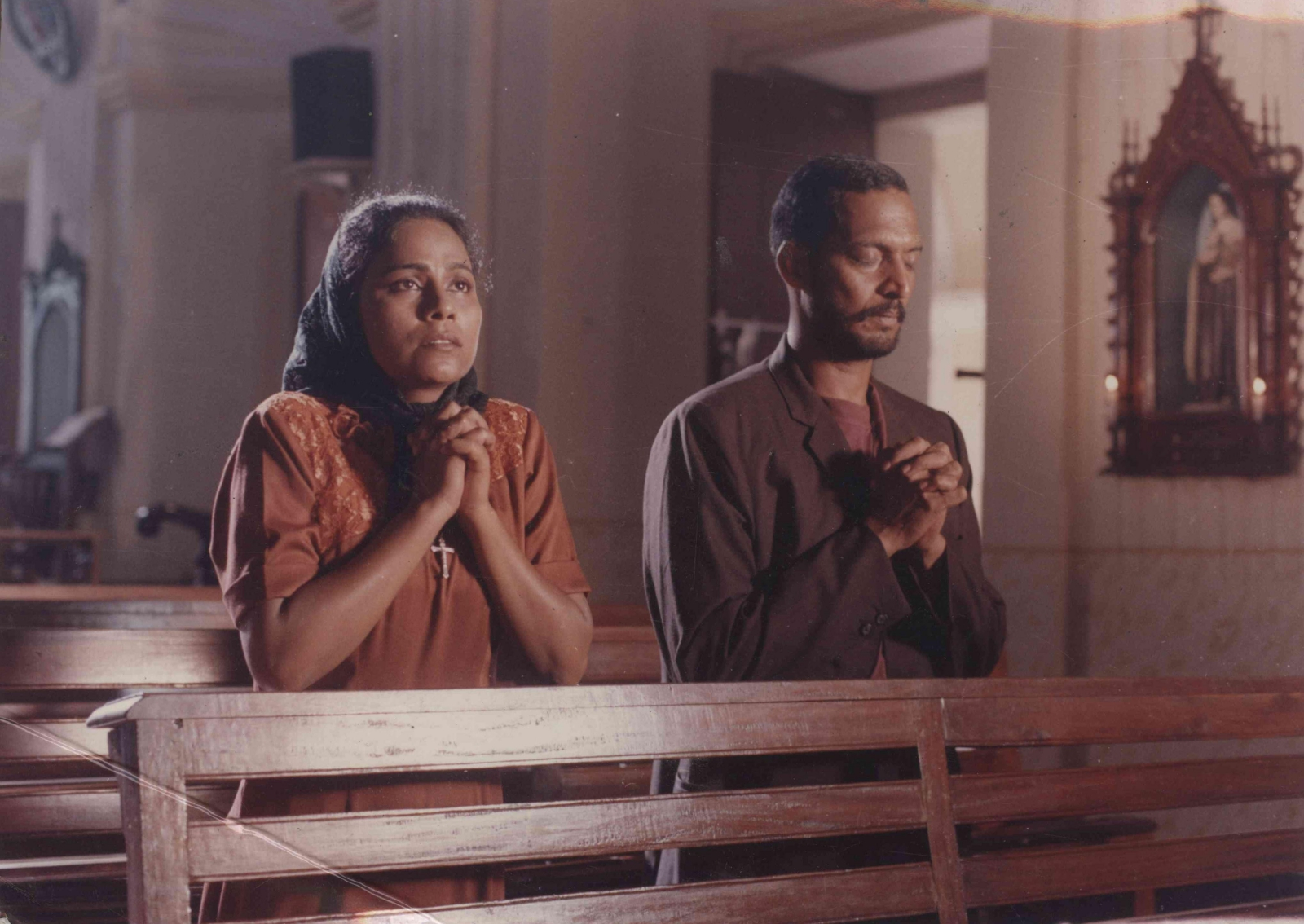
By the mid-90s, Nana Patekar and Seema Biswas were already forces to reckon with. Their performances in Parinda and Bandit Queen, especially, had a lot to do with their dialogues. So, the immediate question is whether these two would have the same impact without their voices.
Khamoshi: The Musical gave them an almost impossible challenge, and the duo passed it with flying colours. In physically demanding performances where their body language and expressions do all the talking, Patekar and Biswas are two forces of nature. They are very different from each other, yet perfectly matched as a couple. So much so that you never see the actors in them. You only see Joseph and Flavy Braganza.
Where faith, family and desire collide
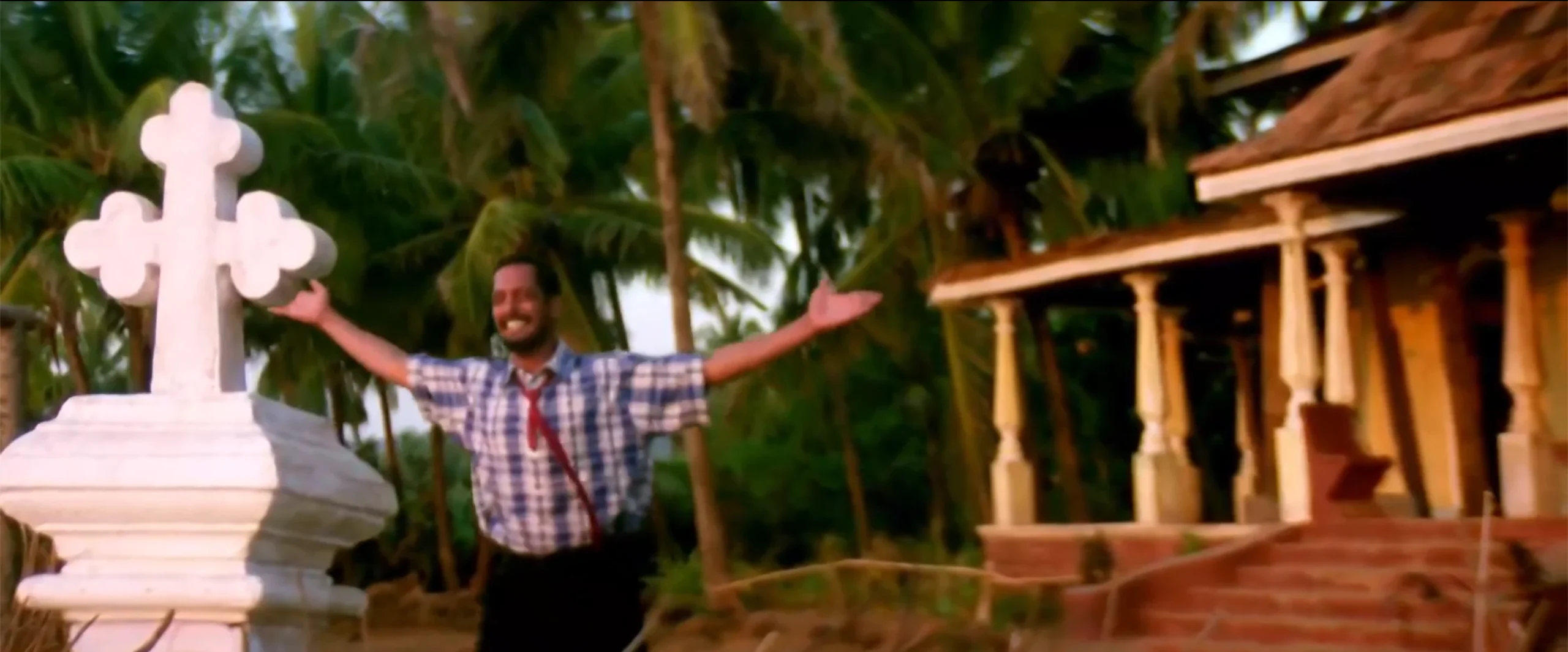
When the couple loses their son Sam in a freak accident at a church, Joseph is quick to denounce his faith in God. If God existed, such a tragedy wouldn’t have happened, he must have thought.
Khamoshi: The Musical is also Joseph’s journey towards finding his faith again, but it isn’t simply about returning to belief. Joseph has to find a way to reconcile his faith with a tragedy he cannot understand or accept. In a tearjerking climactic speech at the church, he finally comes to terms with his relationship with God. Later, in the final scene, he runs to hug the cross standing outside his house. He is happy, relieved and grateful.
Bhansali’s closing message is ultimately about the power of faith to survive even the moments that make us question it.

The outsider who had to learn their language
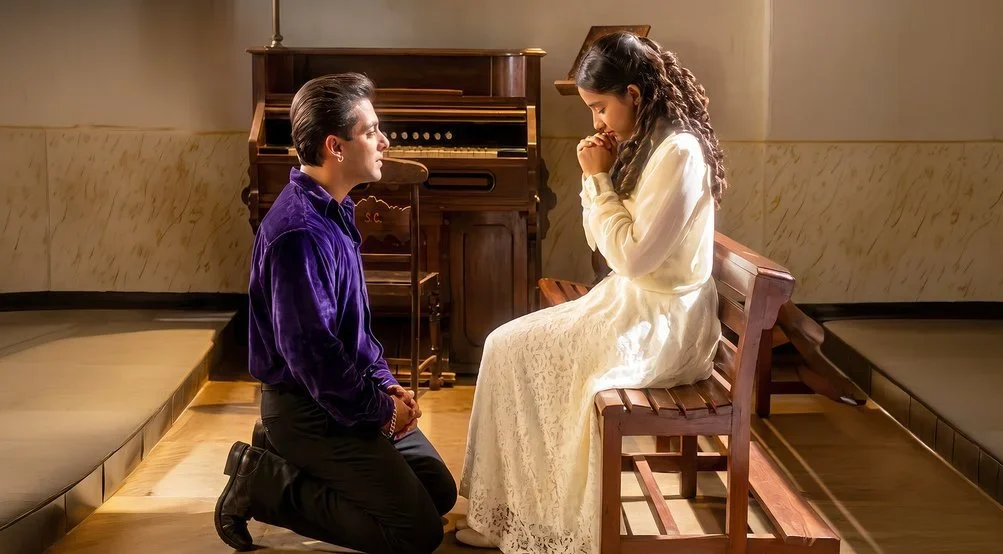
Raj’s dilemma is not simply about winning Annie’s love. He is stepping into a family whose rules he doesn’t fully understand, where love is expressed differently and where Joseph sees his arrival as a threat to everything he has built around his daughter.
Raj has to find a way into a world where spoken words cannot always do the job. His refusal to walk away, even when Joseph shuts him out, becomes less about persistence in romance and more about learning to communicate on Joseph’s terms. In a strange way, Raj has to prove that he isn’t here to take Annie away from her parents, but to become a part of the world she is trying to build for herself.
Everything Bhansali would become was already here
One may think of Khamoshi: The Musical as an intimate film that had little to do with what Sanjay Leela Bhansali would eventually become. That isn’t true. If anything, the crux of Bhansali’s cinema has always been emotional conflict. He knows how to take those conflicts to a crescendo, when to bring them down, and how to build them back up, so that the final result stays with you.
Khamoshi: The Musical displays the same emotional maturity. The drama is already there in the premise, which Bhansali then uses his tight screenplay to shape, giving the story its necessary highs and lows. By the end, everything falls into place, and the film delivers exactly the emotions the filmmaker set out to evoke in the first place.
The difference is that Bhansali would later learn to express these emotions through scale. The palaces, colours, costumes, elaborate sets and enormous musical sequences would arrive later. In Khamoshi, he didn’t need any of them. The emotions were already grand enough.
The sea, the lighthouse and the sounds of memory
Set against the pristine Goan beaches, the film is rich with elements and visual motifs that would recur throughout. The silent roar of the sea becomes a symphony that underscores some of the key moments in Khamoshi: The Musical. The way Joseph and Flavy run along these familiar stretches in moments of happiness and distress brings us closer to their unique existence. In one interesting scene, Joseph, Flavy and Annie are running on the beach when Joseph finally agrees to meet Raj’s parents. It’s almost as if the sea has to become a mediator in this crucial family decision.
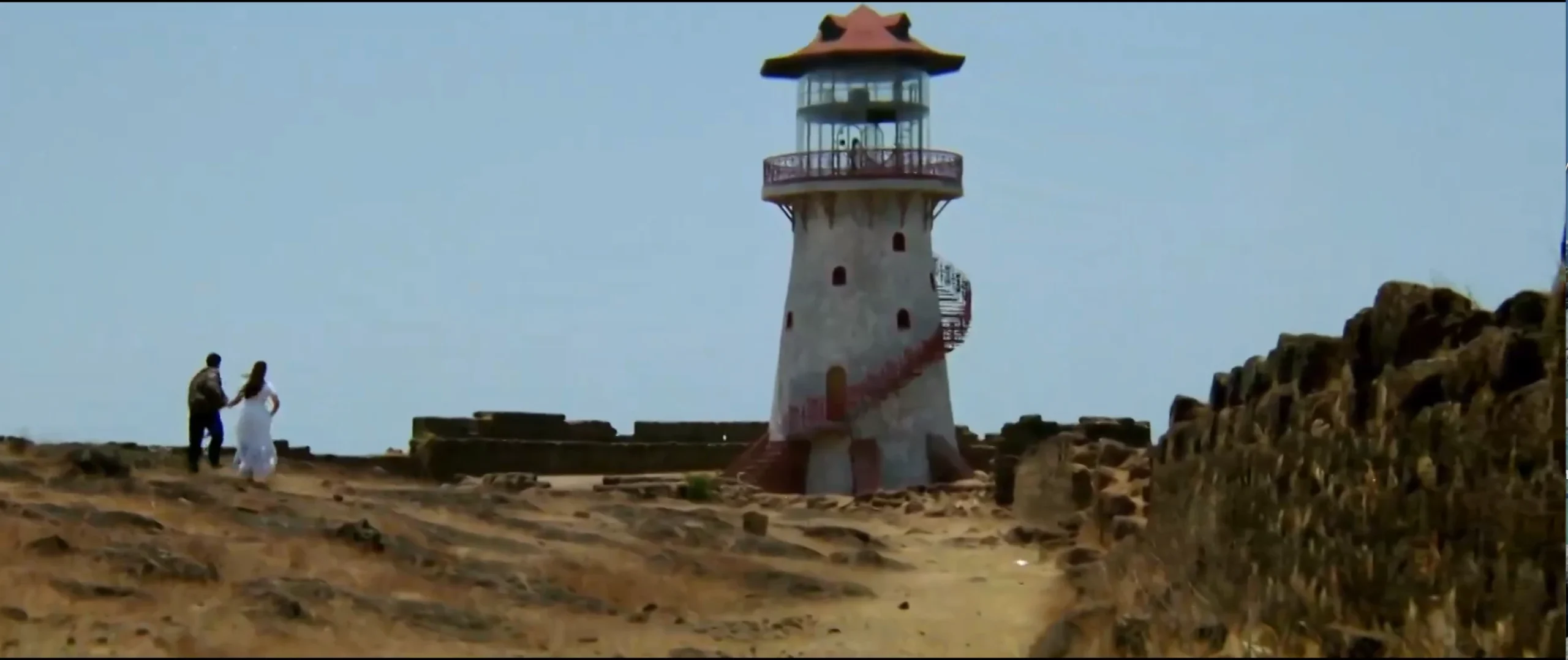
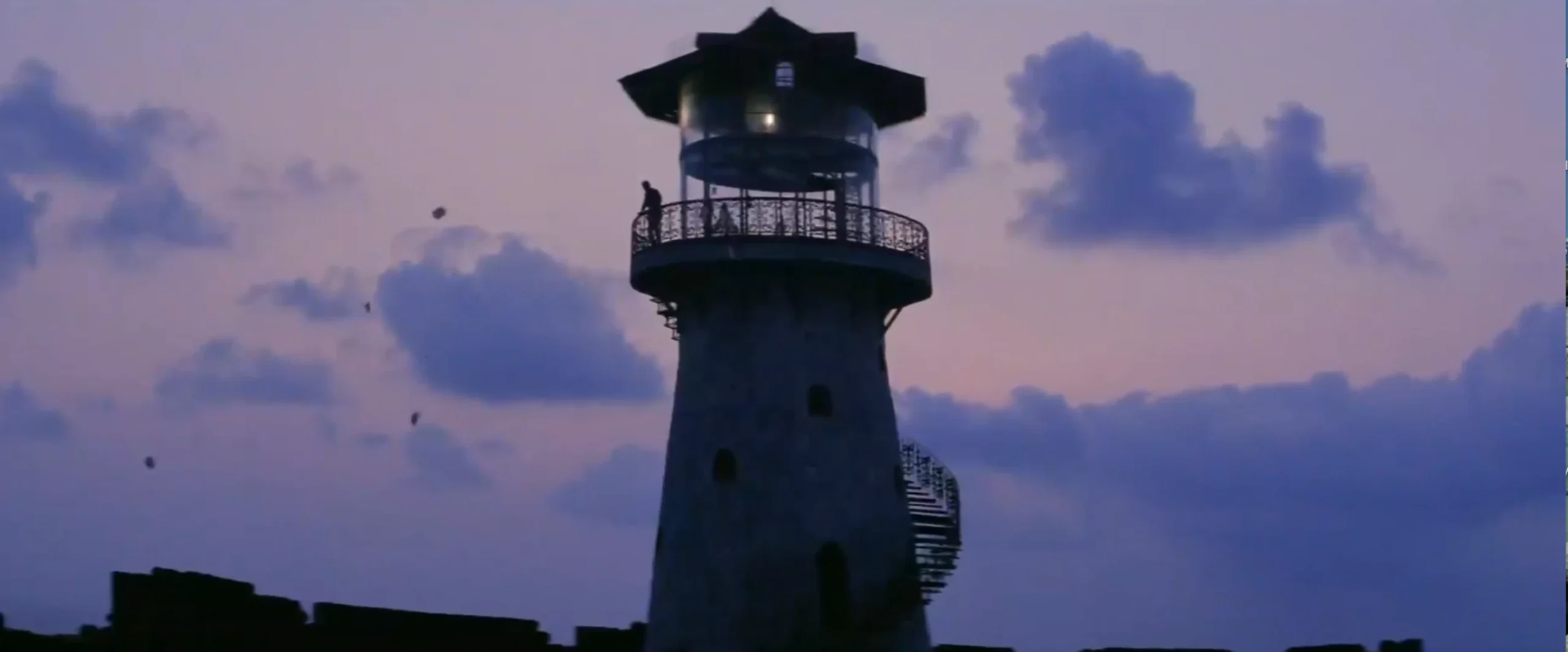
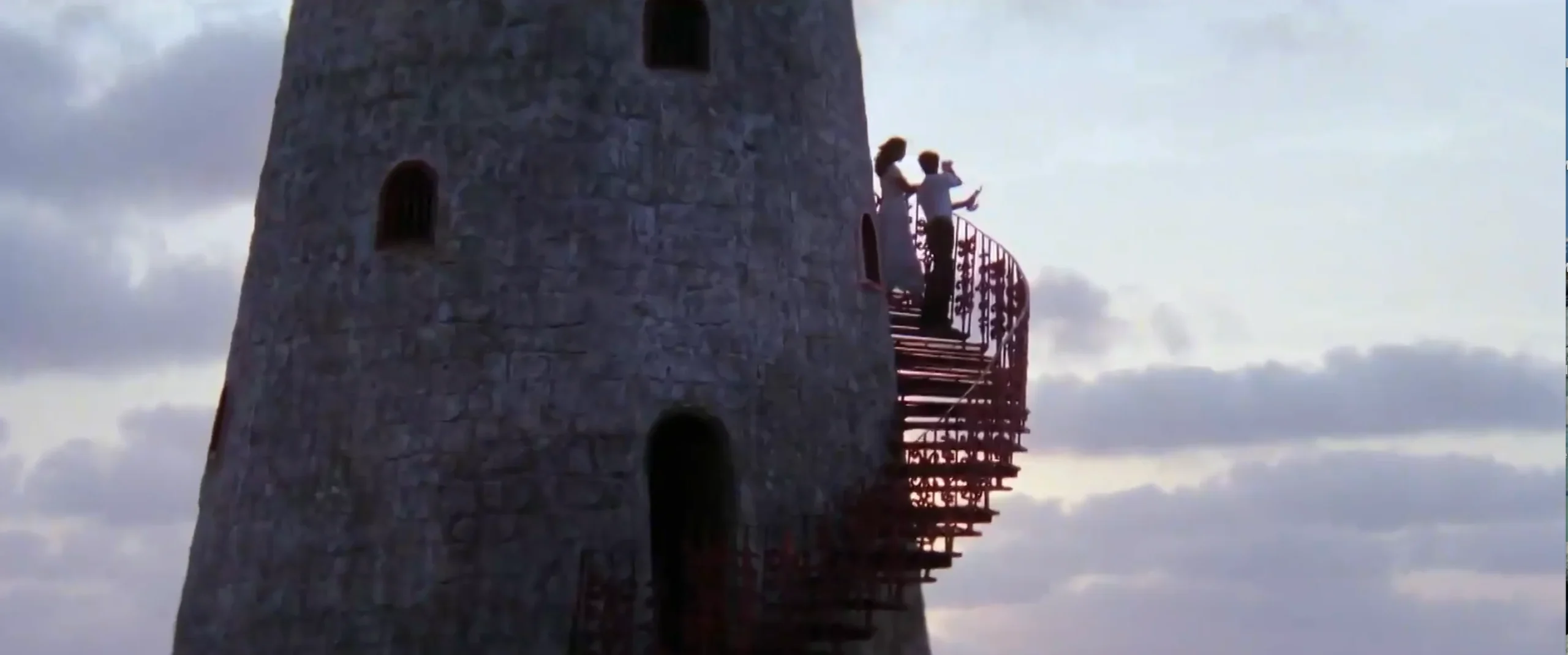
Raj’s romance with Annie has its own charm. His go-to line for her is, “When you smile, you look very…”, which she completes with, “very ugly.” Their meet-cutes often take place at the top of a lighthouse, far away from her parents’ reach, with the sky as a witness to the promises they make.
The old vinyl player that sits in the Braganza family’s living room is another prop that highlights what sound means in a household like theirs. When the player is brought back into the house, Flavy quickly rejects it because it reminds her of Sam. She retreats inside and begins using the sewing machine, whose drawer holds the mask Sam used to wear.
Three decades later, its silence still sings
In 2026, as I rewatch it, the beauty of Khamoshi: The Musical is still intact. Thirty years later, the film hasn’t lost its ability to move, largely because its emotions never feel manufactured. The music still stays with you, the performances still speak volumes without words, and Bhansali’s storytelling still finds a way into the heart.
Perhaps what strikes me most after three decades is how much Bhansali managed to say before he had all the visual tools he would later command. He would go on to fill screens with palaces, colours, costumes and spectacle. Here, he needed little more than a piano, a beach, a lighthouse, a few unforgettable performances and a family struggling to communicate.
Before Bhansali learned to fill a frame with spectacle, he understood how to fill silence with emotion. Thirty years later, that may be the most beautiful thing about Khamoshi: The Musical.