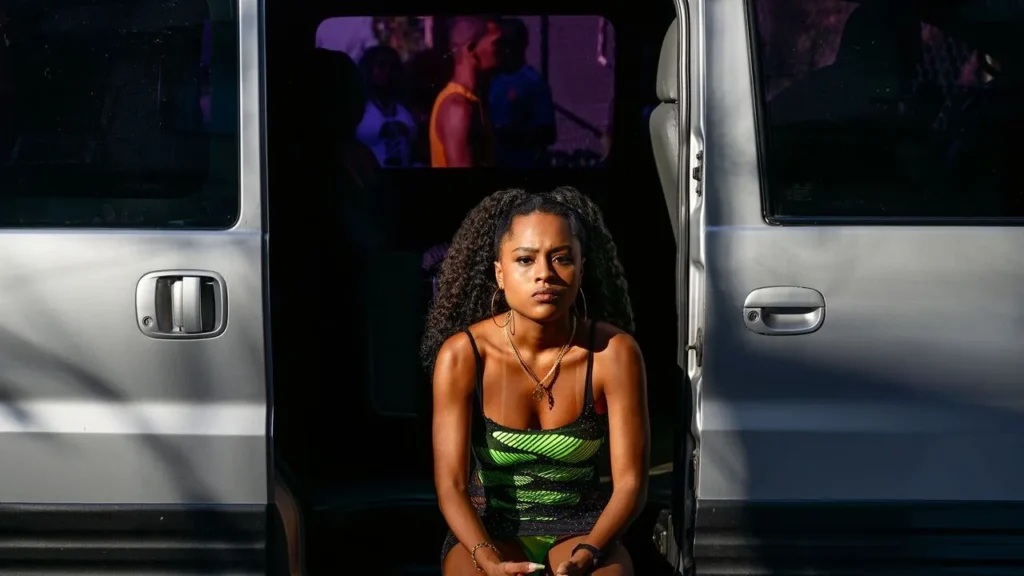
Does art born far away from society’s crème de la crème ever receive the appreciation it deserves? Art that is crude yet powerful, carrying the scent of sweat, struggle, and repression. Aly Muritiba’s Tribeca-bound Funk is a fiction feature, but it operates like one that educates us on a movement surrounding a musical genre called Brazilian funk or puteria. While the music is bold and liberating to some, it might sound crass to purists. Brazil may not share the sexual conservatism common to many developing nations, yet the genre’s origins within its Black communities perhaps keep it distanced from mainstream acceptance.
The USP of Funk lies in its sheer shock value. You haven’t seen or heard anything quite like this, unless you are familiar with life inside Rio de Janeiro’s unstable favelas, a world global audiences previously witnessed in City of God. It is within these very streets of poverty and ambition that Sabrina (Duda Santos) decides to walk away from a humiliating waitressing job to pursue her passion and become the queen of “kinky funk.”
It is risqué, considering the astonishing amount of coarse imagination it takes to create even a single track. The songs provoke shock, and so does the sight of them being performed before a completely hypnotized audience. Yet, we remain fully invested in Sabrina’s journey toward becoming exactly who she wants to be. She moves ahead through sheer willpower, talent, and the support of the few people who truly matter to her.
Speaking of the people in her life, her mother Priscila ranks among Sabrina’s least favorites. Played by MC Nem, a real-life funk legend, she provides a complex mirror of Sabrina’s ambitions. As easy as it is to label the duo as “like mother, like daughter”, Sabrina would want nothing to do with that comparison for all the mommy issues she harbors. Priscila once pursued the same dream of making it big through funk. Today, she has neither her daughter’s love nor a life beyond her small shanty in the favela. Whether intentional or not, the mother becomes less of an inspiration and more of a cautionary sign, standing like a ghost of a path Sabrina is desperately trying to outrun.
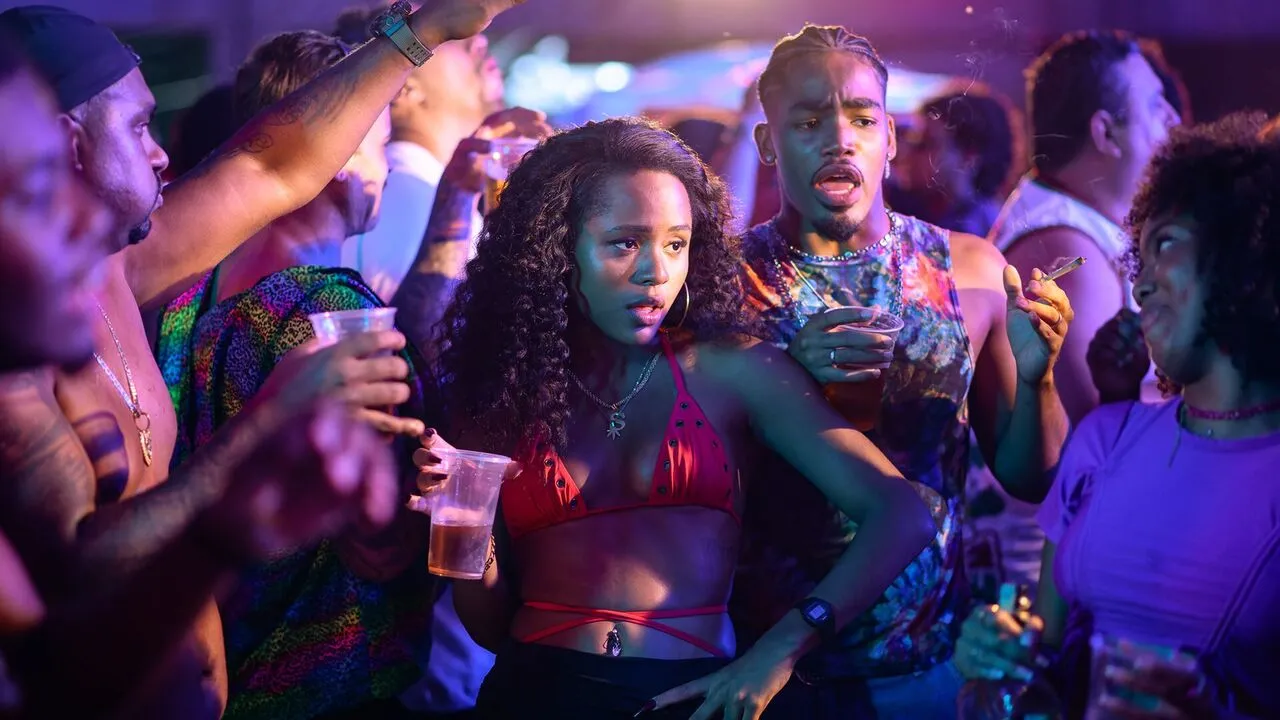
I didn’t quite mind Funk following a familiar underdog-cinema template because Muritiba’s unpretentious storytelling avoids overwhelming us with excessive theatrics or elaborate set pieces. He focuses instead on the gritty mechanics of survival. Then comes the music itself. Whether you appreciate it or not, it is a genre custom-built for its environment and has long entertained its people with all the sass and unapologetic attitude it carries, something mainstream pop can never replicate.
Persistently lit in dark and neon hues, the camerawork by DOP Inti Briones possesses an almost hypnotic quality. The cramped living spaces reflect economic and social disparity while echoing the frustration of a younger generation desperate to move past inherited limitations. This makes the film consistently tense and angry, with the narrative itself carrying enough urgency to keep you on edge. Its particularly fearless approach toward sex, sexuality, and what constitutes a righteous way of living is bound to shock the average Western viewer, and even more so conservative audiences from Asia.
Funk, beneath its provocative exterior, is ultimately a deeply human story. You witness the struggles of somebody trying to carve an identity in the age of social media without a network, financial backing, or any kind of Plan B. Non-professional actors Lellê, Kibba, and Taylan seem completely aware of the space they inhabit and deliver notable performances despite limited screen time. It is genuinely difficult to believe MC Nem has no prior acting experience, because she displays the confidence and mastery of a veteran in a role that is significantly layered and nearly impossible to like.
ALSO READ: ‘Deepfake’ chronicles the vibrant alleys of modern loneliness | TRIBECA REVIEW
Duda Santos, a television sensation making her film debut, slips under Sabrina’s skin with a complete lack of inhibition that easily makes this one of the bravest performances I have seen from any actor in a Tribeca film this year. Santos understands Sabrina as a woman worn down by circumstance and an exhausting life she has endured for years. Yet, watching her never feels exhausting, and that is precisely where the beauty of the performance lies.
Funk also leaves us thinking about how this particular art form has managed to climb the social ladder strongly enough to make someone like Sabrina a star. Here, Muritiba’s documentary-like lens captures the reality that for some individuals, art is a simple act of being seen and heard.
Muritiba’s film ultimately reminds us there is always a cost attached to being born poor, belonging to a less favored race, or sometimes both. The closest comparison I can think of is Imtiaz Ali’s Chamkila, where two singing sensations were shot dead in Punjab, India, for the risqué nature of their music. In Funk, however, the reluctance of society is not exactly rooted in vulgar lyrics or songs openly discussing sex. It stems from who is expressing it, and more importantly, the geography where that expression originates. That was not the case in Ali’s film, even within a highly casteist nation like India. As they say, different people, different reasons to take offense.