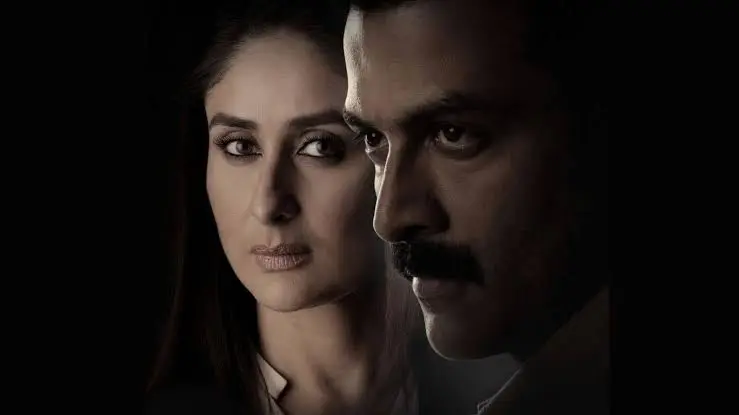
“Mera raasta alag hai,” says DCP Ajooni Kohli (Kareena Kapoor Khan) in Daayra as she walks away from DCP Raman Kumar (Prithviraj Sukumaran). He strides in the opposite direction. The camera slips into slow motion, a song kicks in, and the lyrics spell out the obvious: ‘alag raasta’. It is a thriller announcing its metaphor the way a trailer announces a clash, set to a song that is decidedly not ‘Ek Ladki Ko Dekha To Aisa Laga’.
That is Meghna Gulzar in 2026: still drawn to the space where law and justice stop being synonyms, still unwilling to let an image sit without a caption.
I’m all for filmmakers referencing their own work, or their parents’ work, as Meghna did in Talvar with Ijaazat. But naming a restaurant ‘Aarushi’ and throwing it in our face multiple times was both triggering and unnecessary. Because all Meghna really had to ask in Daayra was a simple question: are encounter killings justified in a country where justice is notoriously delayed and often denied? The answer is complex, and the moral mess at its centre could have made for a compelling watch.
Meghna’s film opens with DCP Kumar receiving adulation for having seemingly delivered justice. While investigating a heinous rape, he and his team shot dead four accused, claiming self-defence. In films, it is almost routine for vigilantism to have no consequences. Reality, thankfully, works differently. An encounter killing demands an enquiry, regardless of how convinced the public may be of the accused’s guilt.
In walks Officer Kohli, with Kareena Kapoor Khan oddly echoing her own ethereal Rosie from Talaash. Perhaps it is my over-familiarity with the actor’s work, but when she says, “Lad rahe hai… paanch saal se… court mein,” I could only hear Rosie telling ACP Shekhawat (Aamir Khan), “Main aajaungi aapke saath… police banke.” Kohli feels like a misfit for Kareena, leaving us far too detached to care whether the character evolves. Plus, the DOP (Saurabh Goswami) photographs her as if the assignment were a Mani Ratnam film: soft bloom, saintly catchlights, so the face never quite enters the khaki.
Daayra is not her weakest work in over a decade simply because she pouts. Daayra is her weakest work because the film keeps highlighting the pout.
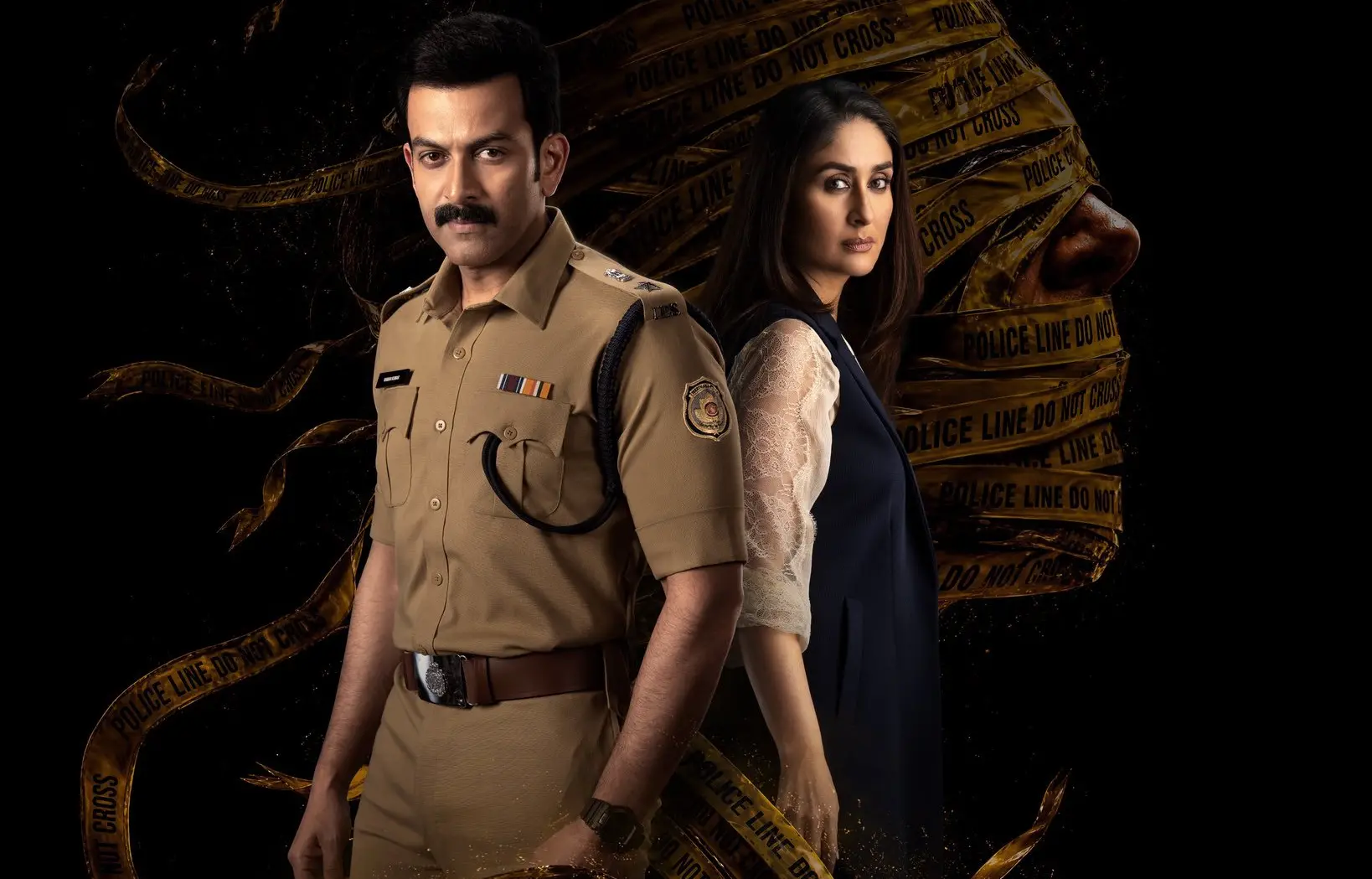
Prithviraj Sukumaran is the opposite story, which is to say he is the film’s only fully inhabited idea. The writers (Meghna Gulzar, Sima Agarwal, Yash Keswani) starve him of heavy dialogue, and he treats that as a gift. I liked the stillness of a man who has already held the trial in his head. Putting his practical, ground-reality cynicism next to Ajooni’s strict idealism gives Daayra its most compelling conflict. We wish the film would spend more time inside that dichotomy. Prithviraj, for once, wins the argument by refusing the sermon.
A good part of the film is spent telling us what we already know, especially since the case bears a resemblance to a widely covered incident. But unlike Talvar, this isn’t about figuring out what happened. It is about what should happen next.
In the broader debate on justice, opinions remain sharply divided over whether measures like capital punishment or chemical castration offer real solutions or merely primitive retribution. Daayra is interested in that uncomfortable gap. It wants us to examine why we hold our respective stances, and what concepts like justice, punishment, and human rights actually mean to us.
Daayra tries to give Ajooni a thicker psychological layer by making justice personal: her own father is fighting a case at home. Then there’s an NGO worker trying to rehabilitate a former juvenile criminal, cops insisting that 99 out of 100 missing girls return home the next day, and junior officers looking up to Raman Kumar with the fascination of interns. The film keeps finding ways to put its larger argument around its characters, turning what should have been organic drama into a structured briefing.
ALSO READ: ‘Bandar’ review – Rage and ruin in a mirrorless cage
Then there’s the victim’s family. Only the heartless would not listen to their cries and anger. Kshitee Jog, in particular, is gut-wrenchingly good. She does not represent public anger. She is a mother whose child is gone and whose country has offered her a choice between a funeral and a file. And yet, Daayra never quite rises above its ideas to match her performance.
The cracks become wider in the way the accused are written and played. No, we aren’t expecting Ashutosh Rana-level villainy from Dushman. But sick minds should at least feel sick. Here, we get four friends exchanging surface-level “mera dost” pleasantries, speaking in strangely rehearsed Hindi and casually chilling inside a truck. The costume (Karishma Sharma) and production design (Subrata Chakraborty) understand who these men are. The writing and performances don’t.
Mind you, Daayra isn’t a terrible film. It is something more frustrating: an almost-good one. At least in its politics and philosophy, you begin to understand why Meghna picked this story. And then you see how laboured the filmmaking is, how its ideas skim the surface, and how its complex people are too often reduced to Wikipedia entries. There is a genuinely interesting film buried somewhere inside it, but Meghna keeps explaining it instead of letting us feel it.
VERDICT: ★★★☆☆ (3/5)
For more reviews of Daayra, head to the Film Critics Guild.