2017 achieved something rather extraordinary for Bollywood. Seven of the ten films on this list were directed by filmmakers making their Hindi feature directorial debut. Of the remaining three, only Vikramaditya Motwane could truly be considered an established name. Which begs the question: have our so-called seasoned filmmakers become complacent? A glance at the 10 Best Bollywood Films of 2017 certainly suggests so.
For once, many of their big-budget, star-driven spectacles failed on both commercial and critical fronts. Despite being backed by some of Bollywood’s biggest superstars, several of these films collapsed after their opening weekend, exposing the limitations of formula-driven filmmaking.
At the same time, 2017 served as a welcome reality check. The industry isn’t going to change overnight, and star power will continue to dominate the market. Yet, there is something deeply satisfying about watching soulless, spectacle-driven cinema stumble while modestly budgeted films, powered by conviction and exceptional storytelling, emerge victorious. For an industry that has long struggled to distinguish genuine quality from commercial packaging, it was an immensely reassuring year.
Here are my picks for the 10 Best Bollywood Films of 2017, ranked not by box office success but by the quality of their storytelling, performances and filmmaking.
10. Tumhari Sulu (Suresh Triveni)
A spirited middle-class housewife unexpectedly lands a job as the host of a late-night radio show known for its playful, flirtatious tone. What could possibly go wrong?
Vidya Balan’s magnificent return to the kind of cinema that truly deserves her talent is undoubtedly the highlight of Suresh Triveni’s heartfelt domestic drama Tumhari Sulu. Beyond its delightful humour, the film offers a sensitive portrayal of marriage, ambition and family dynamics without ever becoming preachy. Its only noticeable flaw is a rushed and somewhat hurried climax that doesn’t quite do justice to everything that precedes it.
9. Poorna (Rahul Bose)
Rahul Bose’s Hindi directorial debut follows a familiar underdog template, one that cinema has revisited countless times. But then, who says every great film needs an unconventional narrative structure?
This inspiring biographical drama transports us to a world rarely explored in mainstream Hindi cinema. That setting is significant, especially at a time when several socially conscious films, such as Airlift and Padman, conveniently shifted their narratives towards more commercially palatable upper-caste North Indian settings. Poorna, on the other hand, fearlessly acknowledges the realities of rural and economically disadvantaged India without romanticising or exploiting them.
Blending the immediacy of a documentary with the emotional pull of fiction, Poorna is understated, inspiring and beautifully visualised. A special mention must go to Shajith Koyeri’s exceptional sound design, easily among the finest technical achievements of the year.
8. Lipstick Under My Burkha (Alankrita Shrivastava)
Few films dominated headlines in 2017 quite like Lipstick Under My Burkha, and for reasons that extended well beyond cinema.
Alankrita Shrivastava’s second feature is an uncompromising examination of the misogyny deeply embedded within Indian society. Through the interconnected lives of four women determined to reclaim their agency, the film exposes the countless ways in which patriarchy dictates their choices and aspirations.
Ironically, the resistance these women face on screen was mirrored by the opposition the film encountered off screen, making its eventual release feel even more significant. Sometimes, reality becomes the strongest endorsement of a film’s relevance.
7. Shubh Mangal Saavdhan (RS Prasanna)
Adapted from director RS Prasanna’s own Tamil film Kalyana Samayal Saadham, Shubh Mangal Saavdhan improves upon the original in more ways than one. Easily one of the funniest Hindi films in years, it tackles an unusually sensitive subject with remarkable maturity, never reducing it to cheap laughs or unnecessary melodrama.
By building a tender love story around an issue that society often treats as taboo, the film encourages couples to stand by one another, regardless of the challenges life throws at them. A special mention must go to Hitesh Kewalya’s razor-sharp dialogues, among the finest written this year. Their wit, warmth and remarkable repeat value elevate an already delightful film.
6. Meri Pyaari Bindu (Akshay Roy)
Arguably the most overlooked Hindi film of 2017, Meri Pyaari Bindu was dismissed by some but deeply cherished by those who embraced its emotional honesty.
Taking viewers on a bittersweet journey through the ’80s, ’90s and early 2000s, the film is less interested in exploiting nostalgia than in examining how memories shape our lives and relationships. Perhaps it was simply too real for audiences expecting a conventional romantic drama.
Think about it. If you were watching a love story with an ending like this alongside your spouse, partner or someone you hoped to build a future with, chances are you would find yourself questioning its emotional choices. Let’s call it the “Kabhi Alvida Naa Kehna syndrome,” where mature, uncomfortable endings often divide audiences more than they deserve to.
5. Mukti Bhawan (Shubhashish Bhutiani)
Shubhashish Bhutiani’s Mukti Bhawan is not an easy film to embrace, nor does it intend to be.
Deliberately paced and emotionally demanding, the film explores mortality, faith and family with remarkable restraint. Beyond offering fascinating insight into the concept of salvation as practised in Varanasi, it also becomes a profoundly moving portrait of the fragile bonds between parents and children.
Its unhurried storytelling demands patience, and perhaps even a second viewing, to fully appreciate the many emotional and philosophical layers beneath its deceptively simple narrative. The effort, however, is more than worthwhile.
4. Anaarkali of Aarah (Avinash Das)
Avinash Das’s remarkable debut, Anaarkali of Aarah, is the kind of revenge drama that leaves you walking out of the theatre with an indescribable sense of exhilaration.
What makes the film so compelling is its refusal to offer neat, conventional closure. Instead, Das embraces ambiguity, allowing the emotional impact of the narrative to linger long after the credits roll. The electrifying climax, punctuated by the rousing anthem “Sa Ra Ra Ra Ra”, firmly establishes him as a filmmaker with an assured voice, especially impressive for a first-time director.
It certainly helps that Das possesses an intimate understanding of the region and its social fabric, while his outstanding cast captures the local flavour with effortless authenticity.
3. Trapped (Vikramaditya Motwane)
One of the rare Indian films to forgo an interval, Vikramaditya Motwane’s Trapped would never have worked as effectively had it paused midway.
By placing Rajkummar Rao’s ordinary young man in an extraordinary situation, trapped inside a high-rise apartment with no means of escape, Motwane crafts a survival thriller that is both nerve-racking and deeply relatable. As the protagonist gradually sheds every worldly concern in his desperate fight to stay alive, even mice, insects and everyday household objects acquire startling dramatic significance.
Claustrophobic, inventive and relentlessly immersive, Trapped is a shining example of how contemporary Hindi cinema can create gripping entertainment from the simplest of premises.
2. A Death in the Gunj (Konkona Sen Sharma)
Family dramas have always been my favourite genre in cinema. From the quiet elegance of Yasujirō Ozu’s Tokyo Story to the emotionally explosive Festen by Thomas Vinterberg, the genre has produced some of the greatest films ever made.
Konkona Sen Sharma’s long-awaited directorial debut, A Death in the Gunj, beautifully bridges these two traditions. It combines the subtle emotional rhythms of domestic drama with an ever-growing sense of unease, creating a film that is as haunting as it is deeply humane.
With its exceptional ensemble cast, evocative period setting and intricately layered characters, the film quietly pulls you into its world before revealing its devastating emotional core. Sirsha Ray’s exquisite cinematography further heightens the atmosphere, while Konkona displays astonishing confidence and restraint for a first-time filmmaker.
By the time the film reaches its heartbreaking conclusion, it leaves you with a lump in your throat that lingers long after you’ve left the theatre.
1. Newton (Amit V Masurkar)
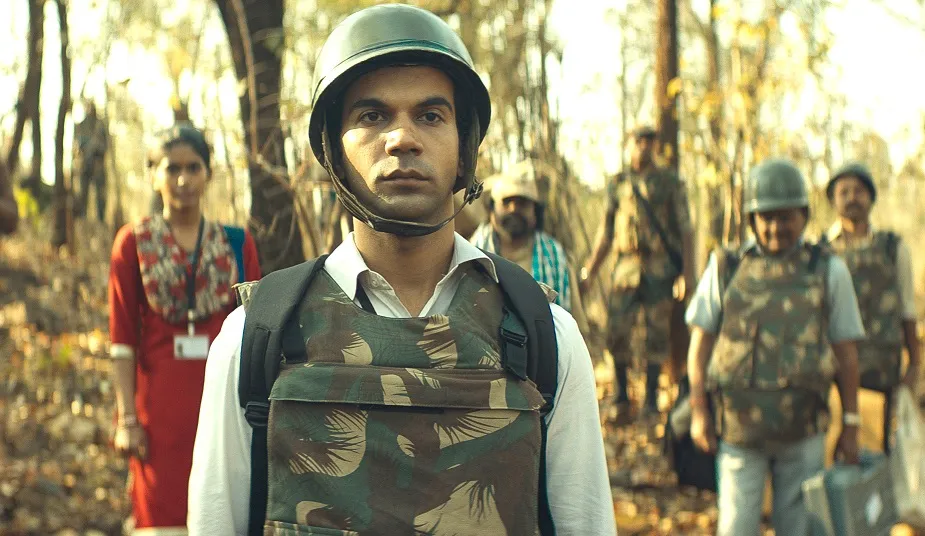
Somewhere along the way, Amit V. Masurkar’s Newton ceases to be merely a political satire. Nor is it simply the story of an underdog overcoming impossible odds. Its greatest strength lies in how profoundly relevant it remains to the times we live in.
Humorous yet quietly thought-provoking, the film reminds us of the power a single individual possesses to challenge a flawed system, regardless of whether that effort ultimately succeeds. Through a meticulously layered screenplay, Masurkar cleverly draws parallels between the film’s principled protagonist and Sir Isaac Newton’s own struggle against the establishment, making the title far more meaningful than it initially appears.
Anchored by terrific performances from Rajkummar Rao, Pankaj Tripathi, Raghubir Yadav and Anjali Patil, Newton is intelligent, deeply humane and endlessly engaging. Quite simply, it gave me the most rewarding cinematic experience of the year, making it a worthy topper on my list of the 10 Best Bollywood Films of 2017.
Special Mentions: Tu Hai Mera Sunday, Jagga Jasoos, Monsoon Shootout and Bareilly Ki Barfi.
Looking back, the 10 Best Bollywood Films of 2017 proved that fresh voices and compelling storytelling could triumph over formula and star power. It was a year when debutants challenged the status quo, content outshone spectacle and Hindi cinema briefly rediscovered the courage to tell original stories. Long after the box office numbers have faded from memory, these films continue to stand as some of the finest examples of contemporary Bollywood filmmaking.